

In the beginning
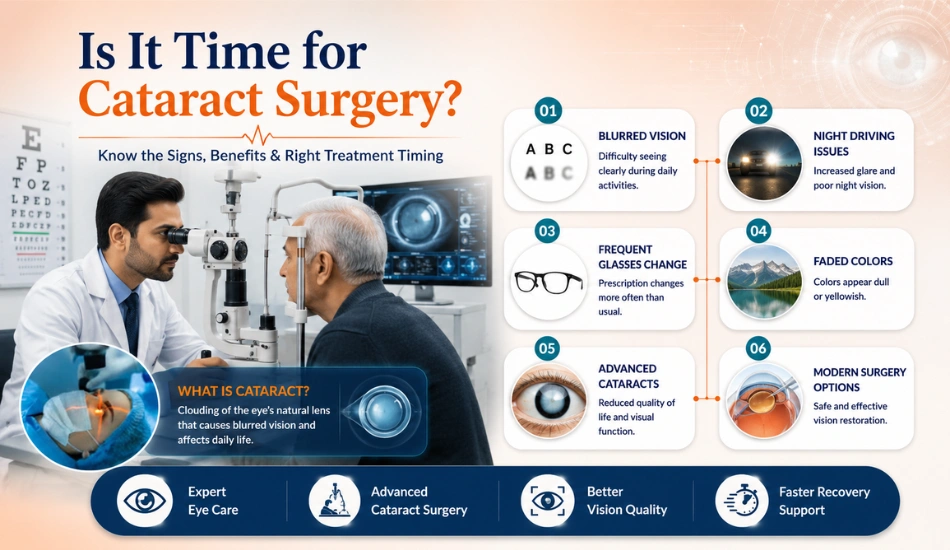
Cataracts are one of the leading causes of vision impairment worldwide, especially among older adults. A cataract develops when the natural lens of the eye becomes cloudy, making it difficult to see clearly. Many patients diagnosed with cataracts often ask the same question: When is the right time for cataract surgery? The answer depends on how much the cataract is affecting your daily activities, vision quality, and overall quality of life.
Modern cataract surgery is one of the safest and most successful eye procedures available today. Advances in ophthalmology have made the procedure quick, painless, and highly effective, allowing patients to regain clear vision and return to their normal activities within a short period. Understanding when to get cataract surgery can help prevent unnecessary vision loss and improve long-term eye health.
Establishing An Understanding Of Cataracts :
A cataract occurs when proteins within the eye's natural lens begin to break down and clump together, causing cloudiness. This clouding blocks light from reaching the retina properly, resulting in blurred or distorted vision.
Cataracts usually develop gradually and may affect one or both eyes. While aging is the most common cause, cataracts can also develop due to diabetes, eye injuries, prolonged steroid use, smoking, or excessive exposure to ultraviolet (UV) rays.
Just Why Timing Matters ?
Many people mistakenly believe they should wait until a cataract becomes "mature" before considering surgery. Modern eye specialists no longer recommend delaying treatment unnecessarily. Cataract surgery should be considered when vision problems begin interfering with daily activities such as reading, driving, working, watching television, using digital devices, or recognizing faces.
Delaying surgery for too long may increase surgical complexity and further reduce quality of life.
Table of Contents
1. Understanding Cataracts
2. Common Symptoms of Cataracts
3. Early Warning Signs
4. When to Get Cataract Surgery
5. Who Should Consider Cataract Surgery?
6. Benefits of Early Cataract Treatment
7. Cataract Surgery Procedure
8. Types of Intraocular Lenses (IOLs)
9. Recovery After Cataract Surgery
10. Precautions Before and After Surgery
11. Frequently Asked Questions
Common Symptoms of Cataracts
| Symptom | Description |
|---|---|
| Blurred Vision | Objects appear cloudy or out of focus. |
| Difficulty Seeing at Night | Reduced vision in dim lighting conditions. |
| Glare Sensitivity | Bright lights may cause discomfort. |
| Frequent Prescription Changes | Glasses may no longer provide clear vision. |
| Double Vision | May occur in one eye. |
| Faded Colors | Colors appear dull or yellowish. |
| Halos Around Lights | Common while driving at night. |
Early Warning Signs You Should Not Ignore
Many patients live with cataracts for years before seeking treatment. However, the following symptoms often indicate that a consultation with an eye specialist is necessary:
- Increasing difficulty reading books or newspapers.
- Trouble recognizing faces.
- Problems driving, especially at night.
- Frequent changes in eyeglass prescription.
- Reduced independence in daily activities.
- Difficulty working on computers or mobile devices.
- Persistent glare from sunlight or vehicle headlights.
Patient Preparation :
Before recommending surgery, an ophthalmologist performs a comprehensive eye examination. Diagnostic evaluations may include:
- Visual acuity testing.
- Slit lamp examination.
- Retinal examination.
- Eye pressure assessment.
- Biometry measurements for lens selection.
- Corneal measurements.
These tests help determine the severity of the cataract and identify the most suitable lens implant.
When to Get Cataract Surgery?
The right time for cataract surgery is not based solely on the size or maturity of the cataract. Instead, doctors focus on how much the cataract affects your vision and daily life.
| Situation | Should Surgery Be Considered? |
|---|---|
| Difficulty Reading | Yes, if vision affects daily activities. |
| Night Driving Problems | Yes, especially if safety is compromised. |
| Frequent Falls Due to Poor Vision | Yes, prompt evaluation is recommended. |
| Blurred Vision Despite Glasses | Yes, surgery may provide significant improvement. |
| Interference With Work | Yes, especially for visually demanding jobs. |
| No Symptoms | Regular monitoring may be sufficient. |
Who Should Consider Cataract Surgery?
Cataract surgery may be recommended for patients who:
- Have blurred vision affecting daily activities.
- Experience glare while driving.
- Cannot perform routine tasks comfortably.
- Have cataracts interfering with treatment of other eye diseases.
- Wish to improve quality of life and visual independence.
Benefits of Early Cataract Treatment
| Benefit | Impact |
|---|---|
| Improved Vision | Clearer and sharper eyesight. |
| Enhanced Safety | Reduced risk of falls and accidents. |
| Better Quality of Life | Greater independence and confidence. |
| Easier Surgery | Less complex compared to advanced cataracts. |
| Faster Recovery | Most patients recover quickly. |
The day of the magical operation :
Cataract surgery is typically performed as a day-care procedure. During surgery, the cloudy natural lens is removed and replaced with a clear artificial intraocular lens (IOL).
The procedure usually involves:
- Local anesthesia.
- Small incision surgery.
- Phacoemulsification technology.
- Artificial lens implantation.
- Same-day discharge in most cases.
The entire procedure generally takes less than 30 minutes.
The Superhero Tools :
Modern eye hospitals use advanced technologies such as:
- Phacoemulsification systems.
- Premium intraocular lenses (IOLs).
- Digital eye imaging.
- Computer-guided lens calculations.
- Advanced retinal evaluation systems.
These technologies improve surgical precision and visual outcomes.
Types of Intraocular Lenses (IOLs)
| Lens Type | Features |
|---|---|
| Monofocal IOL | Provides clear vision at one distance. |
| Multifocal IOL | Improves near and distance vision. |
| Toric IOL | Corrects astigmatism. |
| Premium IOL | Offers advanced visual correction options. |
Recovery Time :
Recovery after cataract surgery is generally quick. Most patients notice improved vision within a few days. Complete healing typically occurs within four to six weeks.
| Recovery Period | Expected Progress |
|---|---|
| 24 Hours | Mild discomfort may occur. |
| 1 Week | Vision begins improving significantly. |
| 2–4 Weeks | Most daily activities can be resumed. |
| 4–6 Weeks | Complete healing for most patients. |
Taking Care of Yourself :
After cataract surgery, patients should:
- Use prescribed eye drops regularly.
- Avoid rubbing the eyes.
- Wear protective sunglasses outdoors.
- Avoid heavy lifting for a few weeks.
- Attend scheduled follow-up appointments.
- Maintain proper eye hygiene.
A Guide to Feeling Better :
If you are wondering when to get cataract surgery , the answer is simple: when cataracts begin affecting your vision, independence, safety, or quality of life. Modern cataract surgery is safe, highly effective, and capable of restoring clear vision for most patients. Early consultation with an experienced ophthalmologist can help determine the ideal timing and ensure the best possible visual outcomes. With advanced surgical techniques and premium lens options available today, cataract treatment offers an excellent opportunity to regain clear, comfortable vision and enjoy everyday life with confidence.
FAQs
1. When is the right time to get cataract surgery?
Cataract surgery is usually recommended when vision problems begin interfering with daily activities such as reading, driving, or working.
2. Can I wait before having cataract surgery?
Yes, if cataracts are mild and not affecting your lifestyle. However, regular eye examinations are important to monitor progression.
3. Is cataract surgery painful?
No. Cataract surgery is typically performed under local anesthesia and is generally painless.
4. How long does cataract surgery take?
Most cataract surgeries are completed within 20–30 minutes and patients usually return home the same day.
5. Will I still need glasses after cataract surgery?
Depending on the type of lens implanted, some patients may still require glasses for certain activities, while others may experience significantly reduced dependence on glasses.