
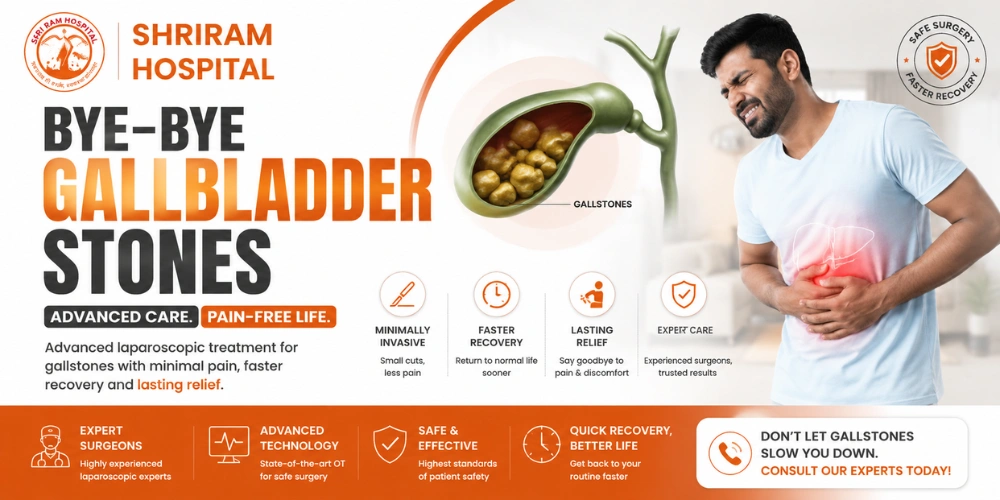
Gallstone Treatment at Shri Ram Hospital, Vikaspuri
Gallbladder stones, or gallstones, are one of the most common digestive disorders. They form when substances in bile, such as cholesterol or bilirubin, harden into stone-like deposits inside the gallbladder. Many people have no symptoms, but others develop severe abdominal pain, nausea, vomiting and digestive problems that need medical attention.
If you are looking for gallstones treatment in Delhi, early diagnosis and timely treatment help prevent serious complications such as gallbladder infection, bile duct blockage or pancreatitis. At Shri Ram Hospital we offer complete gallbladder stone treatment using advanced diagnostics and minimally invasive laparoscopic surgery by experienced surgeons.
Located in Vikaspuri, West Delhi, we treat patients from Janakpuri, Dwarka, Uttam Nagar, Tilak Nagar, Rajouri Garden, Paschim Vihar, Punjabi Bagh, Kirti Nagar, Naraina, Peeragarhi, Nangloi and across Delhi NCR.
What Are Gallbladder Stones?
Gallbladder stones, medically called cholelithiasis, are hardened deposits of cholesterol, bile pigments or other substances inside the gallbladder. The gallbladder is a small pear-shaped organ under the liver that stores bile, a digestive fluid that helps break down fats.
Stones can range from tiny grains of sand to several centimetres across. You may have one stone or many. In many cases stones stay silent, but when they block the bile ducts they can cause severe pain, inflammation and infection.
Gallbladder Stones: Medical Terms
- Cholelithiasis: The medical term for gallbladder stones, commonly seen in ultrasound reports.
- Cholecystitis: Inflammation or infection of the gallbladder, often with severe pain, fever, nausea and vomiting. It may need urgent treatment.
- Choledocholithiasis: A stone blocking the common bile duct, which can cause jaundice, infection or pancreatitis and needs prompt treatment.
Knowing these terms helps you understand your ultrasound report and your doctor's advice.
Symptoms of Gallbladder Stones
Many people have no symptoms until a stone blocks the flow of bile. Then sudden abdominal pain and digestive symptoms may appear. If you have persistent abdominal pain, fever, jaundice or repeated vomiting, seek medical attention at once.
Common Symptoms of Gallbladder Stones
- Sudden pain in the upper right abdomen: One of the most common symptoms. It can start suddenly and last from minutes to a few hours.
- Pain after fatty or oily meals: The gallbladder contracts to release bile after fried or fatty food.
- Pain spreading to the back or right shoulder: Pain may radiate to the back or right shoulder blade.
- Nausea and vomiting: Attacks are often accompanied by nausea and repeated vomiting.
- Indigestion: Persistent indigestion, heaviness or discomfort after even small meals.
- Bloating: A feeling of fullness, especially after fatty meals.
- Excessive gas: Frequent gas, belching and digestive discomfort.
- Fever and chills: May indicate gallbladder infection or inflammation and should never be ignored.
- Yellowing of the eyes or skin (jaundice): A stone blocking the bile duct stops bile from draining properly.
- Dark urine or pale stools: Changes in urine and stool colour may point to bile duct obstruction.
Causes of Gallbladder Stones
Gallstones usually form when the substances that make up bile are out of balance. Women and people over 40 generally have a higher risk because of hormonal and metabolic factors.
Common Causes and Risk Factors
- High cholesterol in bile: Excess cholesterol can crystallise and form cholesterol stones, the most common type.
- Excess bilirubin production: Some liver diseases, blood disorders or infections raise bilirubin and cause pigment stones.
- Obesity: Being overweight increases cholesterol in bile and raises the risk.
- Diabetes: Changes in fat metabolism and gallbladder function raise the risk.
- Pregnancy: Hormonal changes may slow gallbladder emptying.
- Rapid weight loss: Losing weight too quickly makes the liver release extra cholesterol into bile.
- High-fat diet: Regular oily, fried and fatty food may upset cholesterol balance.
- Family history: A family history of gallstones raises your chances.
- Increasing age: The risk rises with age, particularly after 40.
- Sedentary lifestyle: Lack of activity contributes to obesity and poor metabolism.
Gallbladder Stone Report: Understanding Your Diagnosis
Many patients feel anxious after getting a gallbladder stone report from an ultrasound. Understanding the findings helps you discuss treatment with your doctor.
What a Gallbladder Stone Report May Include
| Report Finding | What It Indicates |
|---|---|
| Number of gallstones | Shows whether there is a single stone or multiple stones. |
| Size of the stones | Measures each stone, which helps in treatment planning. |
| Gallbladder wall thickness | A thick wall may indicate inflammation or infection. |
| Presence of sludge | Thick bile that may raise the risk of future stones. |
| Signs of inflammation | Findings may suggest acute or chronic gallbladder inflammation. |
| Stones in the bile duct | Shows whether stones have moved into the common bile duct, which may need urgent treatment. |
Your doctor reads the report together with your symptoms, examination and overall health. The size of the stone alone does not decide whether surgery is needed.
Gallstones Treatment
The right treatment depends on your symptoms, the size and number of stones, any complications and your overall health. Some patients only need monitoring, while others need surgery for long-term relief.
Observation
If stones are found by chance and cause no symptoms, immediate treatment may not be needed. Your doctor may advise regular follow-up and periodic imaging. Many people with silent stones never develop symptoms, but you should seek advice immediately if you get abdominal pain, fever, jaundice or digestive problems.
Medicine for Gallstones
Many patients ask whether medicine can remove gallstones. In selected cases, certain medicines may dissolve small cholesterol stones, but they are not suitable for everyone.
| Limitation | Description |
|---|---|
| Suitable for selected patients | Effective only for certain small cholesterol stones, not every type of stone. |
| Long treatment duration | Treatment may continue for months or even years before results appear. |
| Limited effectiveness | Many stones, especially larger or pigment stones, do not respond. |
| Risk of recurrence | Stones may form again after stopping medicine if the gallbladder is not removed. |
For symptomatic gallstones, medicine alone is generally not the most effective long-term treatment. Surgery usually gives a permanent solution.
Best Treatment for Gallbladder Stone
For patients with repeated pain, infection or gallstone attacks, surgery is the most effective and permanent treatment. Laparoscopic cholecystectomy is the gold standard for symptomatic gallstones. The gallbladder is removed through small incisions using specialised instruments and a high-definition camera.
Benefits of Laparoscopic Gallbladder Surgery
- Smaller incisions: Tiny cuts mean minimal scarring and faster wound healing.
- Less pain after surgery: Most patients have much less pain than with open surgery.
- Minimal bleeding: Modern laparoscopic techniques reduce blood loss.
- Faster recovery: You recover sooner and return to routine activities earlier.
- Short hospital stay: Most patients go home within 24 hours, depending on health.
- Lower risk of infection: Smaller incisions reduce wound infection and other complications.
- Quick return to normal activities: Most people resume light daily activities within a few days.
Removing the gallbladder prevents new gallstones and gives long-term relief from gallstone symptoms.
Gallbladder Stone Removal
Many patients think only the stones are removed. In most cases, gallbladder stone removal means removing the entire gallbladder, because leaving it in place may allow new stones to form.
The gallbladder is not essential for digestion. After surgery, bile flows directly from the liver into the small intestine and digestion continues normally.
Why Is the Entire Gallbladder Removed?
- Prevents new gallstones: Removing the gallbladder removes the place where stones form.
- Provides permanent relief: Surgery relieves repeated gallstone attacks and digestive symptoms.
- Reduces future complications: Helps prevent infection, bile duct obstruction, pancreatitis and emergency admissions.
Gallbladder Stone Surgery and Operation
Gallbladder stone surgery is recommended when stones cause symptoms or serious complications. Delaying treatment then may increase the risk of infection and damage to nearby organs.
When Is Gallbladder Stone Surgery Recommended?
| Medical Condition | Reason for Surgery |
|---|---|
| Recurrent abdominal pain | Repeated attacks that affect daily life usually need surgery. |
| Acute gallbladder infection | Inflammation or infection needs prompt surgical management. |
| Gallstone pancreatitis | Stones blocking the pancreatic duct can cause pancreatitis and need urgent treatment. |
| Obstruction of the bile duct | Blocked ducts may cause jaundice, infection and liver complications. |
| Persistent nausea and vomiting | Ongoing symptoms that affect nutrition and quality of life may need surgery. |
| Jaundice | Yellow skin or eyes suggests bile duct blockage and needs immediate evaluation. |
| Repeated emergency hospital visits | Frequent severe attacks show the need for definitive surgery. |
Steps Involved During the Operation
A gallbladder stone operation is usually done under general anaesthesia using minimally invasive laparoscopic techniques.
- Small incisions are made: A few tiny cuts in the abdomen give safe access to the gallbladder.
- Laparoscope is inserted: A thin tube with a high-definition camera gives a clear internal view.
- Gallbladder is removed: Specialised instruments carefully remove the gallbladder with the stones.
- Incisions are closed: The small cuts are closed with minimal scarring for faster healing.
Most patients walk within a few hours after surgery and go home within 24 hours, depending on health and recovery.
Is Laser Treatment for Gallbladder Stone Available?
Many patients search for laser treatment for gallbladder stone. However, laparoscopic gallbladder removal (laparoscopic cholecystectomy) remains the internationally accepted gold-standard treatment for symptomatic gallstones.
Unlike kidney stones, gallbladder stones are not routinely treated with laser. Surgeons remove the entire gallbladder, because removing only the stones may allow new ones to form.
Important Facts About Laser Treatment for Gallbladder Stones
- Not the standard treatment: Laser is not the routine or recommended procedure for symptomatic gallbladder stones.
- Laparoscopic surgery is preferred: It is the safest, most effective and most widely accepted treatment worldwide.
- Personalised treatment plan: Your surgeon recommends the best option after reviewing symptoms, ultrasound and overall health.
Liver Stone Treatment: Is It the Same?
Many people search for liver stone treatment, assuming liver stones and gallbladder stones are the same. They are different conditions that need separate evaluation. The liver produces bile, while the gallbladder stores and concentrates bile. Most stones form in the gallbladder, not the liver.
Difference Between Liver Stones and Gallbladder Stones
| Gallbladder Stones | Liver Stones |
|---|---|
| Develop inside the gallbladder. | Develop within the bile ducts inside the liver. |
| Usually caused by cholesterol or pigment deposits. | May occur due to bile duct abnormalities, infections or other liver-related conditions. |
| Commonly treated with laparoscopic gallbladder removal. | Treatment depends on the exact location, cause and severity. |
A proper examination, ultrasound, CT scan, MRCP or other imaging may be needed to find the exact location of the stones and choose the right treatment.
Why Choose Shri Ram Hospital for Gallstones Treatment in Delhi?
We combine experienced surgeons, advanced technology and personalised care for safe, effective gallbladder stone treatment. Our team focuses on accurate diagnosis, minimally invasive surgery and complete post-operative care.
Why Patients Trust Shri Ram Hospital
| Our Expertise | Patient Benefits |
|---|---|
| Experienced laparoscopic surgeons | Surgeons skilled in advanced minimally invasive gallbladder surgery. |
| Advanced diagnostic facilities | Modern ultrasound and laboratory services for accurate diagnosis and planning. |
| Modern modular operation theatres | Well-equipped theatres for safe, advanced laparoscopic procedures. |
| High-definition laparoscopic equipment | Advanced imaging for greater surgical precision and safety. |
| Personalised treatment plans | Recommendations based on your symptoms, investigations and overall health. |
| 24x7 emergency services | Immediate care for severe gallstone attacks and emergency gallbladder conditions. |
| Intensive care support | ICU facilities for patients needing specialised monitoring and post-operative care. |
| Comprehensive post-operative care | Follow-up consultations and recovery support for better long-term outcomes. |
| NABH-standard patient safety protocols | Strict quality and safety practices throughout treatment. |
| Cashless treatment for eligible patients | Cashless care through approved insurance providers and government health schemes. |
Recovery After Gallbladder Surgery
Recovery after laparoscopic gallbladder surgery is generally smooth and much faster than after open surgery. Follow your surgeon's advice, take medicines as prescribed and attend follow-up visits for a safe recovery.
Recovery Timeline After Gallbladder Surgery
| Recovery Milestone | Expected Recovery Time |
|---|---|
| Walking after surgery | Most patients are encouraged to walk on the same day. |
| Light daily activities | Usually resumed within 2-3 days. |
| Return to office work | Most patients return within one week, depending on recovery. |
| Normal diet | A regular diet is resumed gradually as advised by the surgeon. |
| Regular physical activities | Gradually resumed after medical clearance. |
How to Prevent Gallbladder Stones
Not every case of gallstones can be prevented, but a healthy lifestyle greatly reduces the risk and supports better digestive health.
Tips to Help Prevent Gallbladder Stones
- Eat a balanced, fibre-rich diet: Fresh fruit, vegetables and whole grains support healthy digestion and bile metabolism.
- Maintain a healthy body weight: An ideal weight lowers the risk of cholesterol stones.
- Exercise regularly: Physical activity improves metabolism and digestion.
- Avoid rapid weight loss: Lose weight gradually, because rapid loss increases cholesterol release into bile.
- Drink enough water: Good hydration supports normal bile production.
- Manage cholesterol and diabetes: Good control reduces several risk factors for gallstones.
- Limit excessive fatty foods: Less oily, fried and high-fat food may reduce cholesterol build-up in bile.
This page gives general information and is not a substitute for medical advice. Treatment depends on a doctor's examination. In an emergency call +91 62623 04050.