
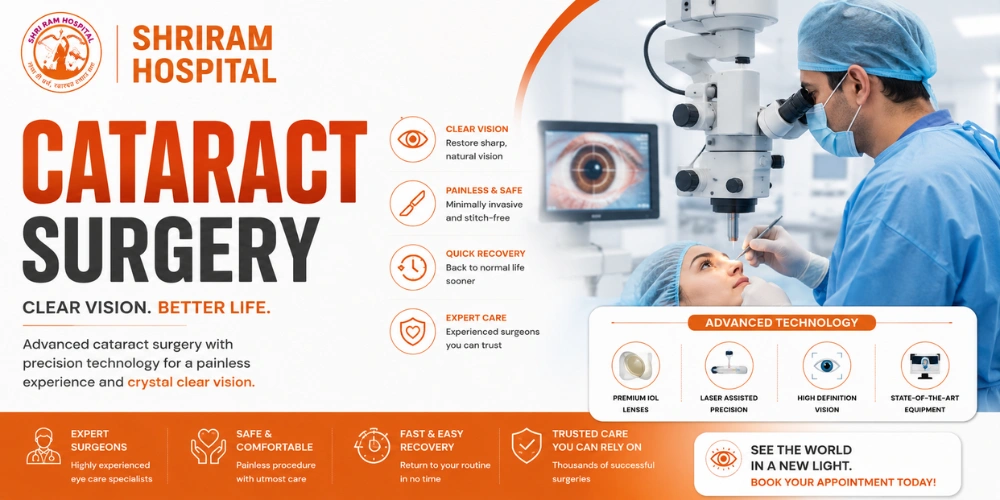
Cataract Surgery at Shri Ram Hospital, Vikaspuri
Cataracts are one of the leading causes of vision loss, especially among older adults. A cataract develops when the eye's natural lens becomes cloudy, causing blurred vision, glare, poor night vision and reduced clarity. Cataract surgery is a safe and highly successful procedure that restores vision by replacing the cloudy lens with an artificial intraocular lens (IOL).
If you are searching for the cataract surgery cost in Delhi, it helps to understand the lens types, surgical techniques and factors that affect the overall cost. At Shri Ram Hospital we use modern phacoemulsification technology and high-quality lenses, with a plan tailored to each patient's visual needs.
Located in Vikaspuri, West Delhi, we treat patients from Janakpuri, Uttam Nagar, Dwarka, Tilak Nagar, Paschim Vihar, Rajouri Garden, Punjabi Bagh, Kirti Nagar, Naraina, Peeragarhi, Nangloi and across Delhi NCR.
What Is a Cataract?
A cataract is a common eye condition in which the eye's natural lens gradually becomes cloudy, leading to blurred or unclear vision. The lens focuses light onto the retina, so when it loses transparency, reading, driving and recognising faces become difficult.
Cataracts usually develop with ageing. They may also occur due to diabetes, eye injury, long-term steroid use, previous eye surgery or certain inherited conditions. They progress slowly, and symptoms become more noticeable over time.
Early diagnosis and timely treatment help preserve vision. Once a cataract interferes with daily activities, surgery is the only effective and permanent treatment.
Common Symptoms of Cataracts
- Blurred or cloudy vision: Objects look foggy, hazy or out of focus.
- Difficulty reading: Reading books, newspapers or mobile screens becomes hard, even with spectacles.
- Poor night vision: Difficulty seeing clearly at night, especially while driving.
- Sensitivity to bright lights: Sunlight or indoor lights cause discomfort.
- Glare around headlights: Halos or glare around vehicle headlights at night.
- Frequent change in spectacle number: Repeated prescription changes without real improvement may indicate a cataract.
- Faded colours: Colours look dull or yellowish.
- Double vision in one eye: Double or multiple images in the affected eye.
What Is an Intraocular Lens (IOL)?
An intraocular lens (IOL) is an artificial lens implanted inside the eye after the cloudy natural lens is removed. It permanently replaces the natural lens and restores clear vision.
Modern IOLs are made from advanced biocompatible materials. The choice of lens affects your vision after surgery, your dependence on spectacles and the overall cataract surgery lens cost.
Benefits of an Intraocular Lens
- Restores clear vision: Replaces the cloudy lens and greatly improves clarity.
- Permanent implant: The lens stays in the eye and generally does not need replacement.
- Better quality of life: Comfortable reading, driving and watching television.
- Customised vision correction: Different designs let the surgeon match the lens to your lifestyle and expectations.
Types of Intraocular Lenses
Your ophthalmologist recommends the most suitable lens after a comprehensive eye examination.
| Lens Type | Description |
|---|---|
| Monofocal lens | Clear vision at one fixed distance, usually far. Reading glasses may still be needed for near work. |
| Multifocal lens | Clear vision at multiple distances, reducing dependence on spectacles. |
| Toric lens | Designed for patients with astigmatism to improve visual quality and reduce the need for glasses. |
| Premium intraocular lens | Advanced technology for better distance, intermediate and near vision, with improved contrast and less glare. |
Monofocal Lens Price
Many patients ask about the monofocal lens price before surgery. The cost varies with the lens selected, hospital facilities and the surgical package. Monofocal lenses are among the most commonly used, but choose a lens for your visual needs rather than price alone.
Factors Affecting Monofocal Lens Price
| Factor | How It Influences the Cost |
|---|---|
| Lens manufacturer | Manufacturers differ in technology, certification and pricing. |
| Lens material | Quality and biocompatibility of the material affect durability and cost. |
| Optical design | Advanced optical designs may improve visual quality and slightly raise the price. |
| Imported or Indian lens | Imported lenses generally cost more than Indian-manufactured lenses. |
| Hospital package | Investigations and post-operative care are part of the total cost. |
| Surgical technique | The method and equipment used may influence the final cost. |
Cataract Lens Price List
Many patients look for a cataract lens price list. There is no universal list, because the cost of an IOL depends on the brand, technology, manufacturer and your eye condition.
The surgery package includes much more than the lens. A detailed eye examination is needed before your ophthalmologist can recommend a lens and give an accurate estimate.
What Is Included in the Cataract Surgery Package?
| Service | Description |
|---|---|
| Pre-operative eye examination | Comprehensive evaluation of the cataract and overall eye health. |
| Diagnostic investigations | Eye measurements and tests for accurate surgical planning. |
| Surgeon charges | Consultation and surgical expertise of the ophthalmologist. |
| Operating theatre charges | Use of advanced operation theatre facilities and equipment. |
| Intraocular lens (IOL) | The artificial lens implanted after the cloudy lens is removed. |
| Medicines | Eye drops and medicines before and after surgery. |
| Follow-up visits | Post-operative consultations to monitor healing. |
Clareon Lens Price in Delhi
Many patients search for the Clareon lens price in Delhi or in India. Clareon is an advanced premium lens platform used in cataract surgery for excellent visual quality and long-term performance.
After a detailed eye examination, your ophthalmologist will tell you whether this premium lens suits your vision needs.
Factors Affecting Clareon Lens Cost
| Factor | Impact on Cost |
|---|---|
| Lens model | Different Clareon models have different optical technologies and features. |
| Hospital package | The overall surgery package influences the final cost. |
| Surgical technology | The technique and equipment used may affect the expense. |
| Individual eye condition | Existing eye conditions and visual needs decide the most suitable lens. |
| Additional investigations | Specialised pre-surgery tests may add to the cost. |
Cataract Surgery Cost in Delhi
The cataract surgery cost in Delhi differs from patient to patient because every cataract is different. The total depends on the surgical technique, the lens selected, hospital facilities and the complexity of the procedure.
At Shri Ram Hospital, every patient has a comprehensive eye examination first, and then receives an individual treatment plan and cost estimate.
Factors Affecting Cataract Surgery Cost
| Factor | How It Affects the Cost |
|---|---|
| Type of cataract | Different cataract types may need different surgical approaches. |
| Surgical technique | The type of surgery performed influences the overall cost. |
| Choice of intraocular lens | Standard and premium lenses differ in technology and pricing. |
| Surgeon experience | The surgeon's expertise contributes to treatment quality. |
| Diagnostic tests | Pre-operative tests are essential for accurate lens calculation. |
| Hospital infrastructure | Advanced operation theatres and technology may influence the package. |
| Complexity of the procedure | Complicated cataracts or associated eye diseases may need additional care. |
| Post-operative care | Medicines, follow-up visits and recovery support are part of the plan. |
An accurate estimate can only be given after a detailed eye examination and consultation with an ophthalmologist.
Cataract Operation Cost
The cataract operation cost generally covers the essential services needed before, during and after surgery. The final package depends on the lens, the technique and your eye condition.
What Is Included in Cataract Operation Cost?
| Included Service | Description |
|---|---|
| Eye consultation | Comprehensive consultation with an ophthalmologist before surgery. |
| Vision assessment | Detailed evaluation of visual acuity and eye health. |
| Biometry for lens calculation | Precise eye measurements to calculate the right lens power. |
| Blood investigations | Done whenever medically required before surgery. |
| Cataract surgery | Removal of the cloudy lens using advanced techniques. |
| Intraocular lens implantation | Implantation of the selected artificial lens. |
| Day-care admission | Most surgeries are day-care, so you can go home the same day. |
| Post-operative medicines | Eye drops and medicines to support healing and prevent infection. |
| Follow-up consultations | Scheduled visits to monitor recovery and vision. |
Additional charges may apply if premium lenses or advanced surgical technologies are chosen.
Eye Cataract Surgery Cost
The eye cataract surgery cost differs for every patient because every eye has unique clinical needs. Your ophthalmologist evaluates several medical factors before recommending a plan.
Factors Affecting Eye Cataract Surgery Cost
- Cataract maturity: Advanced or mature cataracts may need additional surgical expertise and planning.
- Existing eye diseases: Glaucoma, diabetic retinopathy or corneal disorders may influence the approach.
- Lens selection: Monofocal, multifocal, toric or premium lenses affect the total cost.
- Surgical complexity: Complex cases may need specialised techniques and equipment.
- Use of premium technology: Advanced imaging or laser-assisted procedures may increase the cost.
- Additional eye procedures: Some patients need additional or combined procedures.
Laser Cataract Surgery Cost
Many patients ask about the laser cataract surgery cost. Laser-assisted surgery uses femtosecond laser technology in selected steps of the procedure to improve precision in suitable patients.
It is not necessary for every patient. Your ophthalmologist will decide whether it offers extra benefit based on your eye condition and visual needs.
Factors Affecting Laser Cataract Surgery Cost
| Factor | How It Influences the Cost |
|---|---|
| Laser technology | Advanced femtosecond laser systems add to the treatment cost. |
| Type of intraocular lens | The selected monofocal, multifocal, toric or premium lens affects the package. |
| Hospital facilities | Modern operation theatres and ophthalmic equipment affect cost. |
| Surgeon expertise | The surgeon's experience and specialisation play a role in quality and pricing. |
Why Does Cataract Surgery Price Vary?
The cataract surgery price differs between hospitals because it depends on clinical, technological and hospital-related factors, not a single fixed price. A suitable plan is prepared only after a comprehensive eye examination.
Factors That Influence Cataract Surgery Price
| Factor | How It Affects the Cost |
|---|---|
| Experience of the ophthalmologist | Experienced surgeons bring advanced expertise and personalised care. |
| Type of cataract surgery | The technique selected plays a major role in the overall cost. |
| Lens technology | Monofocal, multifocal, toric and premium lenses differ significantly in price. |
| Imported or Indian lens | Imported lenses generally cost more because of technology and manufacturing standards. |
| Hospital infrastructure | Modern operation theatres and equipment contribute to the package. |
| Diagnostic facilities | Accurate investigations and lens measurements are essential for good outcomes. |
| Follow-up care | Consultations, medicines and eye examinations ensure proper healing. |
| Existing medical conditions | Diabetes, glaucoma or retinal disease may need extra investigations or care. |
Instead of choosing on cost alone, consider the surgeon's experience, hospital quality, safety standards and expected long-term vision.
Why Choose Shri Ram Hospital for Cataract Surgery?
Patients looking for safe, advanced and reliable cataract treatment in Delhi choose Shri Ram Hospital for our experienced ophthalmologists, modern surgical technology and patient-centred approach.
Why Patients Trust Shri Ram Hospital
| Our Expertise | Patient Benefits |
|---|---|
| Experienced ophthalmologists | Qualified eye specialists experienced in all types of cataracts. |
| Advanced phacoemulsification surgery | Minimally invasive surgery with precision, faster recovery and excellent visual outcomes. |
| Modern operation theatres | Modular operation theatres with advanced ophthalmic technology. |
| High-quality intraocular lenses | A range of premium and standard lenses to suit your needs and lifestyle. |
| Comprehensive eye evaluation | Detailed assessment for accurate diagnosis and treatment planning. |
| Personalised lens selection | Lens advice based on eye health, profession, activities and expectations. |
| Evidence-based treatment | Protocols based on current ophthalmology guidelines. |
| Patient-focused post-operative care | Follow-up visits, medicine guidance and support for smooth recovery. |
| Cashless treatment for eligible patients | Cashless care through approved insurance providers and government health schemes. |
Recovery After Cataract Surgery
Recovery is generally quick, and most patients notice a clear improvement in vision within the first few days. Complete healing happens gradually over the following weeks. Following your ophthalmologist's instructions is essential for healing and the best visual outcome.
Recovery Guidelines After Cataract Surgery
| Recommendation | Why It Is Important |
|---|---|
| Use prescribed eye drops regularly | Prevents infection, reduces inflammation and supports healing. |
| Avoid rubbing the operated eye | Rubbing may interfere with healing and raise the risk of infection or injury. |
| Wear protective glasses | Shields the eye from dust, accidental injury and bright sunlight. |
| Avoid heavy lifting | Reduces pressure on the healing eye for a short period. |
| Attend scheduled follow-up visits | Lets your ophthalmologist monitor healing and recovery. |
Most patients resume normal daily activities within a few days, while complete visual stabilisation may take several weeks.
This page gives general information and is not a substitute for medical advice. Treatment depends on a doctor's examination. In an emergency call +91 62623 04050.