24/7 In-House Pharmacy at Shri Ram Hospital, Vikaspuri
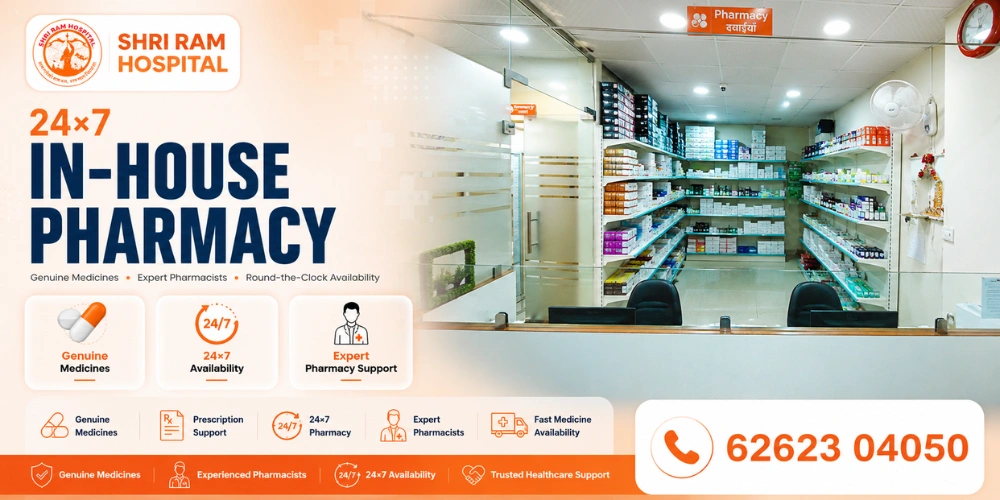
Medicines are a key part of treatment, and delays can slow recovery. The in-house pharmacy at Shri Ram Hospital is inside the hospital and open 24 hours a day, so patients can get prescribed medicines without leaving the building or searching for a shop at night.
The pharmacy supports emergency care, inpatient treatment, OPD consultations, post-surgical recovery and long-term disease management. It works closely with our doctors and nurses, so the medicines you receive match what was prescribed.
We are in Vikaspuri, West Delhi, and serve patients from Janakpuri, Uttam Nagar, Dwarka, Tilak Nagar, Paschim Vihar, Rajouri Garden and across Delhi NCR.
Why Choose Shri Ram Hospital's In-House Pharmacy?
A pharmacy inside the hospital saves time and lowers the chance of mix-ups, which matters most when someone is unwell or in a hurry.
What Sets Our Pharmacy Apart
| Our Strength | Patient Benefit |
|---|---|
| Open 24x7, all year | Medicines are available at night, on weekends and on holidays. |
| Inside the hospital | No travel after a consultation, surgery or discharge, which helps elderly and unwell patients. |
| Qualified pharmacists | Prescriptions are checked and dispensed by trained pharmacy staff. |
| Wide range of medicines | Common prescription medicines, emergency drugs, post-operative medicines and medical consumables. |
| Coordination with doctors | The team can clarify a prescription with the treating doctor, so treatment stays on track. |
| Support for emergency and ICU care | Urgently needed medicines can be arranged quickly for patients under treatment. |
| NABH and ISO accredited hospital | Recognised standards of quality and patient safety. |
Availability of a specific brand or medicine can vary. Our team will guide you if an alternative is needed, in consultation with your doctor.
How the Pharmacy Helps Different Patients
Different patients have different needs. Here is how an in-house pharmacy helps.
Benefits by Patient Type
- Emergency patients: Quick access to emergency medicines supports faster treatment when time matters.
- Surgical patients: Antibiotics, pain relief, wound care items and recovery medicines can be collected without leaving the hospital.
- Patients with long-term conditions: People managing diabetes, blood pressure, heart disease, neurological problems or arthritis get steady access to their regular medicines and advice.
- Senior citizens: Less travel and shorter waiting makes the process easier for elderly patients and their caregivers.
- Families of admitted patients: Relatives can collect medicines quickly and return to the bedside.
Pharmacy Services Available
Our pharmacy offers the following services for admitted patients and for outpatients.
What You Can Get
- 24/7 medicine dispensing: Prescribed medicines are available through the day and night.
- Prescription fulfilment: Medicines prescribed by our doctors are dispensed accurately.
- Emergency medication support: Medicines needed during urgent and critical care.
- Post-discharge medicines: Medicines and guidance for patients going home after treatment or surgery.
- Over-the-counter products: Commonly used non-prescription medicines and health products.
- Medication counselling: Advice on how and when to take a medicine, precautions and common side effects.
- Surgical and medical consumables: Wound care products and other essential medical supplies.
- Inpatient and outpatient support: Services for admitted patients as well as OPD visitors.
How to Get Your Medicines
The process is simple, and our team is happy to help if you are unsure about any step.
Step by Step
- Consult your doctor: After your OPD visit, admission or discharge, you receive a prescription or treatment advice.
- Visit the pharmacy: Go to the in-house pharmacy or ask a family member to collect the medicines. In the ward, the nursing staff can guide you.
- Prescription check: The pharmacist reads the prescription and checks the medicines, strength and quantity.
- Counselling: You are told how to take each medicine, with food or without, and for how long.
- Ask questions: If anything is unclear, ask before you leave. It is always better to clarify than to guess.
Tips for Safe Medicine Use
Medicines work best, and are safest, when used correctly. These simple habits help.
Good Habits to Follow
- Take medicines as prescribed: Follow the dose, timing and duration your doctor advised. Do not stop an antibiotic early unless your doctor says so.
- Tell your doctor about all your medicines: Include supplements, herbal products and over-the-counter medicines, since some can interact.
- Mention allergies: Tell the doctor and pharmacist about any past drug allergy or reaction.
- Do not share prescription medicines: A medicine that suits one person may harm another.
- Store medicines properly: Keep them in a cool, dry place away from children, and check the expiry date.
- Ask before changing anything: Check with your doctor before skipping, doubling or switching a medicine.
Pharmacists can explain how to take a medicine, but they do not replace your doctor. For new or worsening symptoms, consult a doctor.
Part of Complete Hospital Care
The pharmacy works together with the rest of the hospital, so care moves smoothly from one step to the next.
Services That Work Together
- 24-hour emergency department: Urgent medicines for patients under emergency care.
- ICU with modern ventilators: Critical care medicines for seriously ill patients.
- Modular operation theatre: Medicines and supplies for surgery and recovery.
- Digital X-ray and diagnostics: Tests that help doctors choose the right treatment.
- Specialist consultants: Doctors across specialities who prescribe and review your treatment.
This page gives general information and is not a substitute for medical advice. Treatment depends on a doctor's examination. In an emergency call +91 62623 04050.