DVT Treatment at Shri Ram Hospital, Vikaspuri
Deep Vein Thrombosis (DVT) is a serious vascular condition in which a blood clot forms in a deep vein, most commonly in the leg. If it is not diagnosed and treated promptly, the clot can travel to the lungs and cause a pulmonary embolism (PE), a potentially life-threatening emergency.
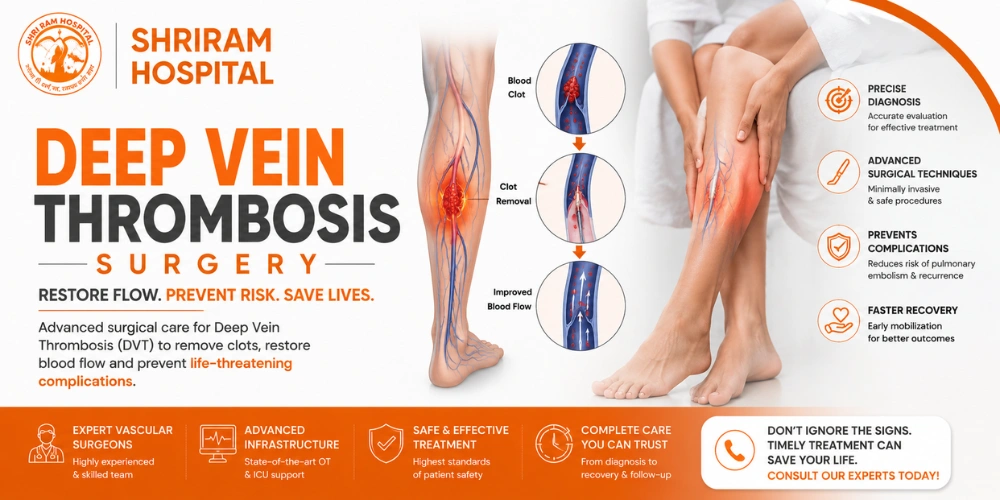
At Shri Ram Hospital we provide comprehensive Deep Vein Thrombosis treatment in Delhi: rapid diagnosis, advanced vascular imaging, medicine management, catheter-based procedures and surgery when required. Our focus is to prevent complications, restore healthy blood flow and reduce the risk of recurrence.
Located in Vikaspuri, West Delhi, we treat patients from Janakpuri, Dwarka, Uttam Nagar, Tilak Nagar, Rajouri Garden, Paschim Vihar, Punjabi Bagh, Kirti Nagar, Naraina, Peeragarhi, Nangloi and across Delhi NCR.
Why Choose Shri Ram Hospital for DVT Treatment?
Every patient receives a personalised plan based on the location of the clot, severity of symptoms, overall health and individual risk factors. Our goal is to restore healthy circulation while minimising the risk of clot recurrence and pulmonary embolism.
Why Patients Trust Shri Ram Hospital
| Our Expertise | Patient Benefits |
|---|---|
| Experienced vascular surgeons and physicians | Specialists experienced in diagnosing and treating DVT and other vascular disorders. |
| Early diagnosis with Duplex Doppler ultrasound | Rapid, accurate identification of blood clots for timely treatment. |
| Advanced treatment for blood clots | Medical and minimally invasive options depending on the severity of the clot. |
| Catheter-directed thrombolysis | Targeted clot-dissolving therapy for selected patients that helps restore blood flow and reduce long-term vein damage. |
| Surgical thrombectomy | Surgical clot removal for carefully selected patients with severe or limb-threatening DVT. |
| Comprehensive vascular care and monitoring | Continuous monitoring for safe recovery and lower risk of complications and recurrence. |
| NABH and ISO accredited multispeciality hospital | Recognised standards of quality and patient safety. |
| Cashless treatment for eligible patients | Cashless care through approved insurance providers. |
| Personalised follow-up and clot prevention | Anticoagulation management, lifestyle guidance and regular follow-up to reduce future clots. |
What Is Deep Vein Thrombosis (DVT)?
Deep Vein Thrombosis (DVT) is a condition in which a blood clot (thrombus) develops inside a deep vein, most commonly in the calf, thigh or pelvis. The clot partly or completely blocks normal blood flow and causes pain, swelling and other symptoms.
The greatest concern is that part of the clot may break away and travel to the lungs, causing a pulmonary embolism (PE), which needs immediate medical attention. Early diagnosis and prompt treatment are vital to prevent serious complications and protect long-term vein health.
Symptoms of Deep Vein Thrombosis
Symptoms depend on the size and location of the clot. Some patients have obvious warning signs, while others have very mild symptoms or none at all. Anyone with persistent swelling or pain in one leg should seek immediate evaluation from a vascular specialist.
Common Symptoms of DVT
- Swelling in one leg: Sudden or gradually increasing swelling in one leg is one of the most common signs.
- Pain or tenderness in the calf: Pain often worsens while standing or walking and may feel like a muscle cramp.
- Warmth over the affected area: The skin over the clot may feel warmer than the surrounding area.
- Red or discoloured skin: Redness or bluish discolouration due to poor blood flow.
- Leg heaviness: A persistent feeling of heaviness or tightness in the leg.
- Enlarged surface veins: Surface veins may become more visible because of changed blood flow.
- No symptoms in some patients: Some people have no obvious symptoms, so early testing matters for high-risk patients.
Who Is at Risk of DVT?
Several medical conditions and lifestyle factors increase the chance of DVT. Knowing them helps you take preventive steps and seek timely evaluation.
Common Risk Factors for DVT
- Prolonged bed rest: Long periods of immobility reduce blood flow and raise the risk of clots.
- Recent surgery: Major operations, especially orthopaedic and abdominal, temporarily raise clotting risk.
- Long-distance travel: Sitting for hours on flights or road trips slows leg circulation.
- Pregnancy: Hormonal changes and pressure on pelvic veins increase susceptibility.
- Obesity: Extra body weight puts pressure on the veins.
- Smoking: Smoking damages blood vessels and raises the tendency to form clots.
- Cancer: Certain cancers and cancer treatments significantly increase the risk.
- Previous DVT: A history of DVT raises the chance of recurrence.
- Family history of blood clots: Genetic factors may increase abnormal clotting.
- Hormonal medicines: Birth control pills and hormone replacement therapy may raise the risk in some people.
- Increasing age: The risk rises gradually with age, particularly after 60 years.
DVT Assessment and Test for DVT in the Leg
Accurate and timely diagnosis is essential, because untreated DVT can lead to pulmonary embolism and long-term vein damage. Many patients ask about the most accurate test for DVT in the leg. The choice of test depends on your symptoms, examination and medical history.
Common Tests Used to Diagnose DVT
| Diagnostic Test | Purpose |
|---|---|
| Clinical assessment | Detailed review of symptoms, medical history, previous clots, medicines and risk factors. |
| Duplex Doppler ultrasound | The first-line imaging test to detect blood clots and evaluate blood flow in deep veins. |
| D-Dimer blood test | Supports diagnosis by showing increased clotting activity in selected patients. |
| Venography (selected cases) | A specialised imaging study when additional vascular assessment is needed. |
| CT venography | Detailed images of deep veins, especially in complex pelvic or abdominal clotting. |
| MRI venography | An advanced option for selected patients who need detailed vascular evaluation. |
Your vascular specialist recommends the most suitable test based on your symptoms, risk factors and overall condition.
Deep Vein Thrombosis Treatment
Treatment is individual for every patient. The main goals are to stop the clot from growing, prevent pulmonary embolism, restore healthy blood flow and reduce long-term complications.
Factors That Determine Treatment
- Size of the clot: Larger clots may need more advanced treatment.
- Location: Clots in the thigh or pelvis often need closer monitoring than smaller calf clots.
- Severity of symptoms: Pain, swelling, circulation and overall condition guide the choice.
- Risk of pulmonary embolism: Higher-risk patients may need urgent intervention.
- Overall health: Existing conditions, bleeding risk and medicines are checked before treatment.
Non-Surgical DVT Treatment
Many patients with DVT are treated successfully without surgery, using medicines and supportive vascular care.
- Blood thinners (anticoagulants): Stop the clot from growing and lower the risk of new clots.
- Compression stockings: Improve circulation, reduce swelling and lower the risk of post-thrombotic syndrome.
- Leg elevation: Raising the affected leg improves venous flow and reduces swelling.
- Early mobilisation: Gentle walking, once medically appropriate, supports circulation and recovery.
DVT Surgical and Catheter-Based Treatment
Advanced procedures may be recommended when the clot is extensive, causes severe symptoms or threatens limb function.
- Catheter-directed thrombolysis: A catheter delivers clot-dissolving medicine directly into the clot in carefully selected patients. Benefits include faster clot removal, improved blood flow and less long-term vein damage in selected patients.
- Mechanical thrombectomy: Catheter-based devices remove the clot without major surgery and help restore circulation.
- Surgical thrombectomy: Open clot removal, reserved for selected patients with severe or limb-threatening DVT when other options are not suitable.
Can Deep Vein Thrombosis Be Cured?
A common question is whether DVT can be cured. In many cases, yes, DVT can be treated successfully, especially when it is diagnosed early and managed with proper medical care. The plan depends on the clot size, its location, your overall health and the underlying cause.
Benefits of Early DVT Treatment
- Prevent clot enlargement: Early treatment stops the clot from growing and blocking more of the vein.
- Lower the risk of pulmonary embolism: Timely care greatly reduces the chance of the clot travelling to the lungs.
- Improve blood circulation: Proper treatment restores blood flow and reduces swelling and discomfort.
- Minimise long-term complications: Lowers the chance of chronic venous insufficiency and post-thrombotic syndrome.
- Long-term follow-up: Some patients need regular follow-up and blood thinners for several months or longer, depending on the cause and risk of recurrence.
DVT Treatment: What to Expect
While many patients recover with medicines alone, some with extensive clots or severe symptoms need catheter-based procedures or surgery. Every plan at Shri Ram Hospital is personalised after a complete vascular evaluation and follows accepted treatment guidelines.
Step 1: Consultation
A detailed consultation reviews your symptoms, overall health and risk factors before the treatment approach is chosen.
- Symptoms: Leg swelling, pain, tenderness and skin changes are assessed.
- Medical history: Existing conditions, medicines, previous surgeries and lifestyle are reviewed.
- Risk factors: Immobility, pregnancy, obesity, smoking, recent surgery or cancer are evaluated.
- Previous clots: A history of DVT or pulmonary embolism guides treatment and prevention.
Step 2: Diagnostic Tests
| Investigation | Purpose |
|---|---|
| Duplex Doppler ultrasound | Detects clots, evaluates blood flow and assesses vein function. |
| Blood tests | Check overall health, clotting status, kidney function and suitability for blood thinners or procedures. |
| ECG (if required) | Evaluates heart function in selected patients, especially those with heart conditions. |
| CT or MR venography (selected cases) | Gives detailed images when the clot involves deeper pelvic veins or ultrasound is inconclusive. |
Step 3: Treatment Planning
The vascular specialist prepares an individual plan based on your clinical condition and risk profile.
- Clot location: Decides the urgency and type of treatment.
- Severity: Larger or more extensive clots may need catheter-based procedures.
- Duration of symptoms: Time since symptoms began influences treatment and expected outcome.
- Bleeding risk: Assessed carefully before blood thinners or invasive procedures.
- Overall health: Age, mobility, existing illness and medical fitness are considered.
Step 4: Procedure (If Needed)
Selected patients with extensive or severe DVT may need advanced procedures to restore blood flow quickly and reduce long-term vein damage.
Catheter-based treatment uses a thin catheter in the affected vein to deliver clot-dissolving medicine or remove the clot with specialised devices. Mechanical thrombectomy removes large clots through minimally invasive techniques. Open surgical thrombectomy is reserved for limb-threatening DVT or when minimally invasive treatment is not suitable.
The aim of these procedures is to restore normal blood flow, preserve vein function and reduce the risk of permanent vascular damage.
Recovery After DVT Treatment
Recovery depends on the severity of the clot, the treatment performed and your overall health. Careful follow-up and lifestyle changes help prevent recurrence. Follow your vascular specialist's advice on medicines, activity, compression therapy and follow-up visits.
First Few Days After Treatment
- Take medicines exactly as prescribed: Never stop or change blood thinners without medical advice.
- Wear compression stockings: They improve circulation, reduce swelling and lower the risk of post-thrombotic syndrome.
- Stay active with gentle walking: Walking improves blood flow once your doctor approves.
- Avoid prolonged sitting: Regular movement lowers the risk of new clots.
- Attend scheduled follow-up visits: Monitoring lets your doctor check recovery and adjust treatment.
Long-Term Recovery and Prevention
- Maintain a healthy weight: Reduces stress on the circulatory system.
- Stay physically active: Regular exercise improves circulation and lowers the risk of recurrent DVT.
- Avoid smoking: Smoking damages blood vessels and raises clotting risk.
- Stay hydrated: Enough water supports healthy blood flow.
- Manage underlying conditions: Good control of diabetes, heart disease and obesity supports vein health.
- Continue anticoagulant therapy if prescribed: Some patients need blood thinners for several months or longer to prevent new clots.
With timely treatment, regular follow-up and healthy habits, most patients recover well and greatly reduce the risk of future DVT.
Why Early Treatment of DVT Is Important
DVT is potentially life-threatening and should never be ignored. Without timely treatment, a clot can grow, damage the vein or travel to the lungs and cause a pulmonary embolism. Early evaluation by an experienced vascular specialist allows prompt treatment and better long-term recovery.
Complications of Delaying DVT Treatment
- Pulmonary embolism (PE): A piece of the clot may travel to the lungs and block blood flow, which is a life-threatening emergency.
- Permanent vein damage: Long-standing clots may damage vein valves, causing poor circulation and chronic venous disease.
- Chronic leg swelling: Swelling may continue even after the clot resolves because of deep vein damage.
- Post-thrombotic syndrome: A long-term problem with chronic leg pain, swelling, heaviness, skin discolouration and, in severe cases, venous ulcers.
- Recurrent blood clots: Untreated or poorly managed DVT carries a higher risk of future clots.
- Reduced quality of life: Ongoing pain, limited mobility and worry about recurrence affect daily life.
This page gives general information and is not a substitute for medical advice. Treatment depends on a doctor's examination. In an emergency call +91 62623 04050.