In the beginning
Headaches are among the most common health complaints experienced by people of all ages. While many headaches are mild and improve with rest or hydration, others may be a sign of an underlying neurological condition. One of the most confusing situations for patients is understanding whether they are experiencing a normal headache or a migraine. Knowing the difference is important because migraines often require specialized evaluation and treatment to prevent frequent attacks and improve quality of life.
Many people continue self-medicating for years without realizing that recurring severe headaches may actually be migraines. Early diagnosis by an experienced neurologist can help identify the exact cause, reduce the frequency of attacks, and prevent complications. If you experience frequent or disabling headaches, it is advisable to book free Neurology consultation today in Delhi for a comprehensive neurological evaluation.
This complete guide explains the difference between migraine and normal headaches, their symptoms, causes, warning signs, diagnostic tests, treatment options, prevention strategies, and when you should consult a neurologist.
Understanding Headaches
A headache is pain or discomfort occurring anywhere in the head, scalp, or neck. Headaches may be occasional or chronic and can range from mild discomfort to severe pain that affects daily activities. Most headaches are not dangerous, but persistent or recurrent headaches should never be ignored.
What is a Migraine?
Migraine is a neurological disorder that causes repeated episodes of moderate to severe headache, often accompanied by nausea, vomiting, sensitivity to light, sensitivity to sound, and visual disturbances. Unlike ordinary headaches, migraines usually interfere with work, sleep, and normal daily activities.
Table of Contents
1. Understanding Headaches
2. What is a Migraine?
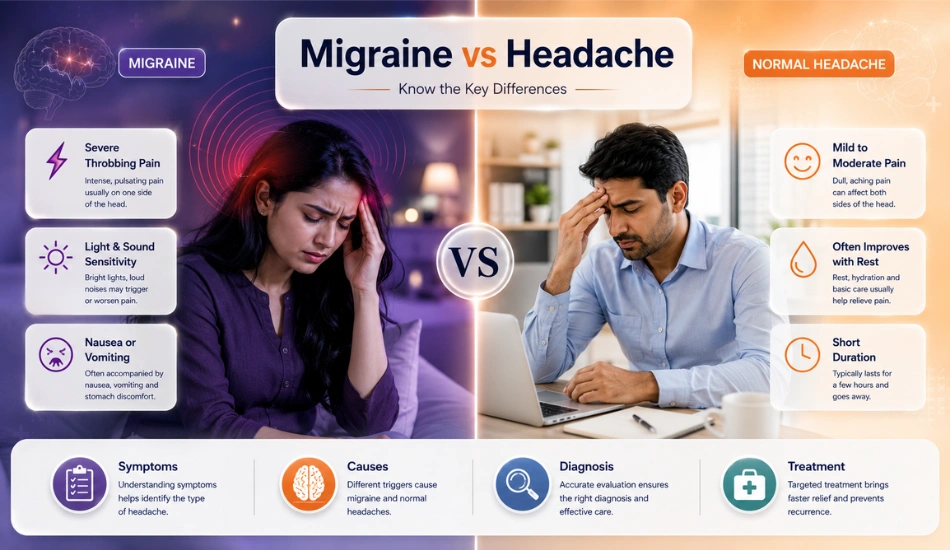
3. Migraine vs Normal Headache
4. Common Symptoms of Migraine
5. Symptoms of a Normal Headache
6. Causes and Risk Factors
7. Migraine Triggers
8. When Should You See a Neurologist?
9. Diagnostic Tests
10. Treatment Options
11. Lifestyle Changes
12. Prevention Tips
13. FAQs
Migraine vs Normal Headache: Key Differences
Although both conditions cause head pain, they differ significantly in symptoms, severity, duration, and treatment approach.
| Feature | Migraine | Normal Headache |
|---|---|---|
| Pain Intensity | Moderate to severe | Mild to moderate |
| Location | Usually one side of the head | Often both sides |
| Pain Type | Throbbing or pulsating | Dull or pressure-like |
| Duration | 4 to 72 hours | 30 minutes to several hours |
| Nausea | Common | Rare |
| Vomiting | May occur | Usually absent |
| Light Sensitivity | Very common | Uncommon |
| Sound Sensitivity | Common | Rare |
| Daily Activities | Often severely affected | Usually manageable |
Common Symptoms of Migraine
Migraine symptoms vary from person to person, but the following are commonly reported.
- Severe throbbing headache.
- Pain on one side of the head.
- Nausea.
- Vomiting.
- Sensitivity to bright light.
- Sensitivity to loud sounds.
- Blurred vision.
- Visual aura such as flashing lights.
- Dizziness.
- Difficulty concentrating.
- Fatigue.
- Neck stiffness.
Common Symptoms of a Normal Headache
Normal headaches are generally less severe and often improve with hydration, adequate sleep, stress reduction, or over-the-counter medications.
- Dull aching pain.
- Pressure around the forehead.
- Pain on both sides of the head.
- Mild neck discomfort.
- No nausea.
- No visual disturbances.
- Usually does not worsen with physical activity.
What Causes Migraine?
Migraine is believed to result from abnormal brain activity involving nerves, blood vessels, and certain brain chemicals. Several genetic and environmental factors contribute to migraine attacks.
| Cause | Explanation |
|---|---|
| Genetics | Family history increases risk. |
| Hormonal Changes | Common in women. |
| Stress | One of the leading triggers. |
| Lack of Sleep | May trigger attacks. |
| Certain Foods | Chocolate, processed foods, aged cheese. |
| Bright Lights | Can trigger migraines. |
| Strong Smells | Common trigger in sensitive individuals. |
| Weather Changes | Pressure changes may trigger symptoms. |
Common Triggers That Can Worsen Migraine
- Skipping meals.
- Dehydration.
- Stress and anxiety.
- Poor sleep.
- Excess caffeine.
- Alcohol.
- Long screen time.
- Hormonal fluctuations.
- Strong perfumes.
- Bright sunlight.
When Should You Consult a Neurologist?
Seek medical evaluation if your headaches become frequent, severe, interfere with daily activities, wake you from sleep, are associated with weakness, confusion, vision loss, seizures, or develop suddenly with maximum intensity. Early neurological assessment helps identify the underlying cause and guides appropriate treatment.
Continue in Part 2: Diagnostic tests, treatment options, migraine management, lifestyle modifications, prevention tips, FAQs, and conclusion.
Diagnostic Tests for Migraine and Headaches
There is no single test that confirms a migraine. Neurologists diagnose migraines primarily based on the patient's medical history, symptoms, frequency of attacks, and neurological examination. However, when headaches are unusual, severe, or associated with neurological symptoms, additional investigations may be recommended to rule out other serious conditions.
| Diagnostic Test | Purpose |
|---|---|
| Neurological Examination | Evaluates brain, nerve, muscle, and reflex function. |
| MRI Brain | Detects tumors, stroke, multiple sclerosis, or other neurological disorders. |
| CT Scan | Helps identify bleeding, trauma, or structural abnormalities. |
| Blood Tests | Checks for infections, inflammation, thyroid disorders, and vitamin deficiencies. |
| Eye Examination | Rules out vision-related causes of headaches. |
| Blood Pressure Monitoring | Identifies hypertension-related headaches. |
How is Migraine Treated?
Migraine treatment depends on the severity, frequency, duration of attacks, and the patient's overall health. The primary goals are to relieve symptoms during an attack, reduce attack frequency, improve quality of life, and prevent long-term complications.
| Treatment Option | Purpose |
|---|---|
| Pain-relieving Medicines | Provide relief during migraine attacks. |
| Preventive Medications | Reduce frequency of migraine episodes. |
| Lifestyle Modification | Helps avoid known migraine triggers. |
| Stress Management | Reduces emotional triggers. |
| Sleep Improvement | Maintains regular sleep patterns. |
| Hydration | Prevents dehydration-induced headaches. |
Treatment for Normal Headaches
Most tension-type headaches improve with simple lifestyle measures and conservative treatment.
- Adequate hydration.
- Regular sleep schedule.
- Stress reduction.
- Balanced meals.
- Good posture.
- Limiting excessive screen time.
- Doctor-recommended pain relief medications when necessary.
Can Migraine Be Prevented?
Although migraines cannot always be completely prevented, many patients experience fewer attacks by identifying and avoiding personal triggers while maintaining a healthy lifestyle.
| Prevention Strategy | Benefit |
|---|---|
| Maintain Regular Sleep | Reduces migraine frequency. |
| Drink Enough Water | Prevents dehydration. |
| Exercise Regularly | Improves overall neurological health. |
| Avoid Skipping Meals | Maintains stable blood sugar. |
| Manage Stress | Reduces common migraine triggers. |
| Limit Screen Exposure | Protects against eye strain and headaches. |
| Maintain a Migraine Diary | Helps identify personal triggers. |
Foods That May Trigger Migraine
Dietary triggers vary among individuals. Maintaining a food diary may help identify foods that consistently trigger migraine attacks.
| Foods That May Trigger Migraine | Healthier Alternatives |
|---|---|
| Processed Foods | Fresh home-cooked meals. |
| Aged Cheese | Fresh dairy products. |
| Processed Meats | Lean fresh protein. |
| Alcohol | Water or fresh fruit juices. |
| Excess Caffeine | Moderate caffeine intake. |
| Artificial Sweeteners | Natural sweeteners when appropriate. |
Healthy Habits That Support Brain Health
- Sleep for 7–8 hours daily.
- Stay physically active.
- Maintain a healthy weight.
- Practice meditation or yoga.
- Stay hydrated throughout the day.
- Avoid smoking.
- Limit alcohol consumption.
- Eat a balanced diet rich in fruits and vegetables.
- Schedule regular health checkups.
When is a Headache a Medical Emergency?
Although most headaches are not dangerous, some require immediate emergency medical attention.
- Sudden severe "worst headache of your life."
- Headache after head injury.
- Headache with high fever.
- Headache with confusion.
- Difficulty speaking.
- Weakness or numbness.
- Vision loss.
- Seizures.
- Persistent vomiting.
- Loss of consciousness.
Benefits of Early Neurological Evaluation
Consulting a neurologist early helps determine whether headaches are caused by migraine, tension headaches, sinus disease, high blood pressure, nerve disorders, or other neurological conditions. Early diagnosis improves treatment outcomes and reduces unnecessary suffering.
- Accurate diagnosis.
- Personalized treatment.
- Reduced frequency of attacks.
- Better pain control.
- Improved quality of life.
- Lower risk of complications.
- Identification of serious neurological disorders.
FAQs
1. How can I tell if my headache is a migraine?
Migraine usually causes throbbing pain, often on one side of the head, along with nausea, sensitivity to light, or sensitivity to sound. A neurologist can help confirm the diagnosis.
2. Can stress cause migraines?
Yes. Emotional stress is one of the most common migraine triggers and may increase both the frequency and severity of attacks.
3. Should I get an MRI for frequent headaches?
Your neurologist may recommend an MRI if your headaches are unusual, progressively worsening, associated with neurological symptoms, or require further evaluation.
4. Can migraines be cured permanently?
There is currently no permanent cure for migraine, but proper treatment and lifestyle modifications can significantly reduce the frequency and severity of attacks.
5. When should I consult a neurologist for headaches?
You should seek neurological evaluation if headaches are severe, frequent, interfere with daily life, or are accompanied by weakness, vision changes, seizures, confusion, or persistent vomiting.
Conclusion
Although headaches are extremely common, not every headache is a migraine. Understanding the differences between migraine and normal headaches helps patients seek timely medical care and receive the most appropriate treatment. While ordinary headaches often improve with rest, hydration, and stress management, migraines are neurological conditions that may require specialized evaluation and long-term management.
Ignoring recurrent or severe headaches can affect work, sleep, productivity, and overall quality of life. Early diagnosis allows neurologists to identify triggers, recommend personalized treatment, and help prevent future attacks through medication, lifestyle changes, and preventive strategies.
If your headaches are becoming more frequent, severe, or are associated with warning signs such as vision changes, dizziness, weakness, or nausea, do not delay seeking medical advice. You can book free Neurology consultation today in Delhi to receive expert evaluation, identify the underlying cause of your symptoms, and begin an effective treatment plan for better neurological health.