Spine Surgery at Shri Ram Hospital, Vikaspuri
Persistent neck pain, back pain, slipped disc, spinal stenosis or nerve compression can seriously affect daily activities and quality of life. Whether your spine problem is caused by ageing, injury, poor posture or degenerative conditions, early diagnosis and expert treatment are essential to prevent long-term complications.
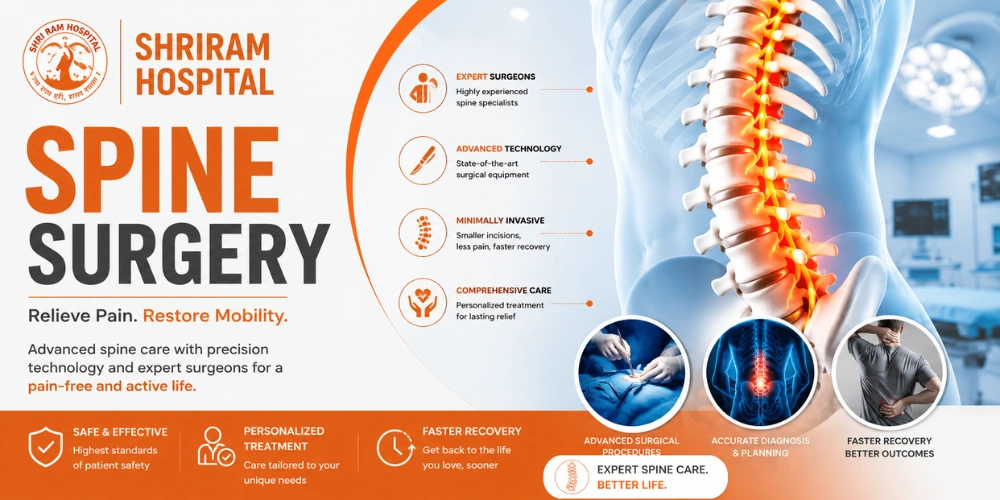
At Shri Ram Hospital, we offer comprehensive spine care with advanced diagnostic facilities, minimally invasive procedures and expert surgical treatment. Our orthopaedic spine surgeons and neurosurgeons treat complex spine disorders using modern techniques, including endoscopic spine surgery, microscopic spine surgery and minimally invasive spinal procedures tailored to each patient.
Located in Vikaspuri, West Delhi, we treat patients from Janakpuri, Dwarka, Uttam Nagar, Tilak Nagar, Rajouri Garden, Paschim Vihar, Punjabi Bagh, Kirti Nagar, Naraina, Peeragarhi, Nangloi and across Delhi NCR.
Why Choose Shri Ram Hospital for Spine Surgery?
The Spine Centre at Shri Ram Hospital combines experienced spine specialists, advanced diagnostic technology and modern minimally invasive techniques to provide safe, effective, evidence-based treatment for a wide range of spinal disorders. Our team focuses on relieving pain, restoring mobility, protecting nerve function and helping you return to an active life.
Every patient receives a personalised plan after a detailed clinical evaluation, so that the most appropriate treatment, surgical or non-surgical, is recommended for your condition and lifestyle.
Why Patients Trust Shri Ram Hospital
| Our Expertise | Patient Benefits |
|---|---|
| Experienced spine surgeons | Specialists experienced in diagnosing and treating both simple and complex spinal disorders. |
| Expert orthopaedic spine specialists | Care for degenerative spine conditions, deformities, fractures and sports-related spine injuries. |
| Skilled neuro spine surgeons | Surgical care for spinal cord compression, nerve disorders and complex neurological spine conditions. |
| Advanced endoscopic spine surgery | Procedures through small incisions for faster recovery and less post-operative pain. |
| Minimally invasive spine procedures | Techniques that reduce muscle damage, blood loss and hospital stay. |
| Modern MRI and digital imaging | Accurate diagnosis and precise treatment planning. |
| High-precision operating microscopes | Greater accuracy during delicate spine and nerve procedures. |
| NABH and ISO accredited multispeciality hospital | Recognised standards of patient safety and quality. |
| Comprehensive rehabilitation and physiotherapy | Structured programmes to restore strength, flexibility, posture and spinal function. |
| Personalised treatment plans | Care based on your diagnosis, lifestyle, age and long-term recovery goals. |
Our objective is to relieve pain, restore spinal stability, preserve nerve function and help you return to normal daily activities with confidence.
Comprehensive Spine Care Under One Roof
Our spine specialists diagnose and treat a wide range of disorders affecting the neck, upper back, lower back, spinal cord and nerves. We provide complete care, from advanced diagnostics and conservative treatment to minimally invasive surgery and rehabilitation, under one roof.
Conditions We Treat
- Herniated (slipped) disc: A damaged disc that presses on nearby nerves, causing pain, numbness or weakness.
- Cervical disc disease: Degeneration or injury of the neck discs, leading to neck pain and arm symptoms.
- Lumbar disc prolapse: A slipped disc in the lower back that commonly causes back pain and sciatica.
- Sciatica: Sciatic nerve compression causing pain, tingling or numbness down the leg.
- Spinal stenosis: Narrowing of the spinal canal that presses on the spinal cord or nerve roots.
- Cervical spondylosis: Age-related wear and tear of the neck spine and surrounding structures.
- Lumbar spondylosis: Degenerative changes in the lower spine causing chronic back pain and stiffness.
- Degenerative disc disease: Progressive deterioration of spinal discs that may cause chronic pain and reduced mobility.
- Spine fractures: Traumatic or osteoporotic fractures affecting spinal stability.
- Spine infections: Serious infections of the spine or surrounding tissues that need prompt treatment.
- Spinal tumours: Benign or malignant growths affecting the spine or spinal cord.
- Spinal cord compression: Pressure on the spinal cord that may cause weakness, numbness, balance problems or loss of bladder control.
- Neck pain: Acute or chronic neck pain caused by muscle, disc or degenerative conditions.
- Chronic back pain: Persistent back pain that affects daily activities and quality of life.
- Spine deformities: Structural abnormalities such as scoliosis or kyphosis that need specialised care.
When Should You Consult a Spine Specialist?
Persistent neck or back pain should never be ignored, especially with weakness, numbness or difficulty walking. Early consultation with an experienced spine specialist doctor helps find the underlying problem before permanent nerve damage develops.
Warning Signs That Need Medical Evaluation
- Persistent neck pain: Ongoing neck pain that does not improve with rest or medicines.
- Chronic back pain: Continuous lower or upper back pain lasting several weeks or longer.
- Pain radiating to the arms or legs: Nerve compression may cause pain extending into the limbs.
- Numbness or tingling: Loss of sensation or tingling may indicate nerve involvement.
- Weakness in the hands or legs: Muscle weakness may result from spinal cord or nerve compression.
- Difficulty walking or loss of balance: Changes in balance or walking need prompt evaluation.
- Spinal injury: Trauma after an accident or fall should always be assessed by a spine specialist.
- Bladder or bowel control problems: Sudden changes in bladder or bowel function need immediate medical attention.
- Severe sciatica: Intense pain from the lower back into the leg may indicate significant nerve compression.
Early diagnosis and appropriate treatment help relieve pain, preserve nerve function and prevent permanent disability.
Non-Surgical Spine Treatment
Treatment depends on the diagnosis, severity of symptoms and your overall health. We always consider conservative treatment first whenever appropriate. Surgery is recommended only when non-surgical treatment fails or when there is significant nerve compression or spinal instability.
Many spine conditions improve without surgery through a structured plan supervised by experienced spine specialists.
Conservative Treatment Options
- Medicines: Help reduce pain, inflammation and muscle spasm.
- Physiotherapy: Customised exercises improve flexibility, posture, muscle strength and spinal stability.
- Lifestyle modification: Weight management, proper ergonomics and healthy daily habits reduce spinal stress.
- Spine strengthening exercises: Core strengthening improves spinal support and reduces future injuries.
- Posture correction: Proper sitting, standing and lifting techniques reduce strain on the spine.
- Image-guided injections: Precision-guided injections may help relieve pain and inflammation in selected patients.
- Pain management: Comprehensive pain management improves comfort and daily functioning.
When conservative treatment no longer gives adequate relief, minimally invasive spine surgery may be recommended.
Endoscopic Spine Surgery
Endoscopic spine surgery is one of the most advanced minimally invasive techniques for selected spinal disorders. Using a high-definition endoscope and specialised instruments, surgeons perform precise procedures through very small incisions while preserving surrounding muscles and tissues.
Compared with traditional open spine surgery, endoscopic techniques generally give faster recovery, less post-operative discomfort and an earlier return to normal activities.
Benefits of Endoscopic Spine Surgery
- Small incision: Tiny incisions reduce tissue damage and improve cosmetic outcome.
- Less pain: Minimal muscle disruption leads to reduced post-operative pain.
- Minimal blood loss: Minimally invasive techniques significantly reduce bleeding.
- Faster recovery: Patients usually regain mobility earlier than with conventional surgery.
- Reduced hospital stay: Many patients are discharged sooner.
- Lower infection risk: Smaller wounds reduce the likelihood of infection.
- Early return to daily activities: Faster healing helps you resume work and routine activities sooner.
Minimally Invasive Spine Surgery
Modern minimally invasive spine surgery treats spinal disorders while limiting damage to muscles, ligaments and surrounding healthy tissue. These techniques help reduce post-operative pain, shorten recovery and improve long-term functional outcomes.
Common Minimally Invasive Spine Procedures
- Endoscopic discectomy: Removal of a herniated disc through a very small incision using endoscopic technology.
- Microdiscectomy: Microsurgical removal of disc material compressing spinal nerves.
- Minimally invasive lumbar decompression: Relieves pressure on spinal nerves caused by lumbar spinal stenosis.
- Cervical spine surgery: Procedures for disorders affecting the neck region of the spine.
- Lumbar spine surgery: Surgical treatment for lower back disorders causing nerve compression and chronic pain.
- Spinal fusion (when indicated): Stabilises unstable spinal segments using specialised implants and bone grafts.
Cervical Spine Surgery
Cervical spine surgery may be recommended when significant nerve or spinal cord compression causes persistent pain, weakness, numbness or difficulty with daily activities. The aim is to relieve pressure on the nerves, restore spinal stability and prevent permanent neurological damage.
Conditions That May Need Cervical Spine Surgery
- Cervical disc prolapse: A slipped disc in the neck compressing nearby nerves or the spinal cord.
- Cervical myelopathy: Spinal cord compression causing weakness, balance problems and reduced hand function.
- Nerve compression: Pressure on cervical nerves causing neck pain, arm pain, tingling or numbness.
- Severe cervical spondylosis: Advanced age-related degeneration of the cervical spine.
- Cervical spinal stenosis: Narrowing of the spinal canal leading to spinal cord or nerve compression.
Early treatment helps relieve neck pain, reduce arm symptoms, restore normal nerve function and protect the spinal cord from long-term damage.
Conditions That May Require Spine Surgery
Spine surgery is recommended only after a thorough clinical evaluation, and when conservative treatments such as medicines, physiotherapy, lifestyle changes and pain management no longer give adequate relief. The decision depends on the severity of symptoms, neurological findings, imaging results and your overall health.
When Spine Surgery May Be Recommended
- Severe pain despite conservative treatment: Neck or back pain that does not improve despite medicines, physiotherapy and other non-surgical treatment.
- Progressive neurological weakness: Increasing weakness in the arms or legs due to compression of spinal nerves or the spinal cord.
- Difficulty walking: Imbalance, reduced coordination or progressive difficulty in movement caused by spinal disorders.
- Spinal instability: The spine becomes unstable because of fractures, degeneration or ligament damage.
- Nerve compression causing loss of function: Numbness, muscle weakness or reduced sensation affecting daily activities.
- Bladder or bowel symptoms: Loss of bladder or bowel control from spinal cord or nerve compression needs immediate medical attention.
- Spinal fractures needing stabilisation: Severe fractures that affect spinal stability or neurological function may need surgical fixation.
Every patient has a detailed orthopaedic and neurological evaluation before surgery is recommended, so that treatment is based on your condition and long-term recovery goals.
Spine Surgery Procedure
Spine surgery uses advanced techniques to relieve nerve compression, stabilise the spine, restore function and improve quality of life. Every procedure is planned carefully according to your diagnosis, imaging findings and overall health. Our surgeons follow internationally accepted protocols and use minimally invasive techniques whenever appropriate.
Step 1: Clinical Evaluation
The spine specialist performs a comprehensive assessment to understand your symptoms and identify the exact cause of the problem.
- Medical history: Previous illnesses, surgeries, medicines, occupation and symptom duration are reviewed.
- Physical examination: Posture, spinal movement, pain location, muscle strength and flexibility are evaluated.
- Neurological evaluation: Reflexes, sensation, muscle power, coordination and nerve function are assessed to identify neurological involvement.
Step 2: Diagnostic Investigations
Advanced tests confirm the exact spinal condition and help plan the most appropriate treatment.
| Investigation | Purpose |
|---|---|
| MRI spine | Detailed images of spinal discs, nerves, spinal cord and surrounding soft tissues. |
| CT scan | Evaluates bone structures, fractures and complex spinal anatomy. |
| Digital X-rays | Assess spinal alignment, instability, deformities and degenerative changes. |
| Blood tests | Evaluate overall health and fitness for surgery. |
| Nerve conduction studies (selected cases) | Assess nerve function when neurological disorders or nerve injuries are suspected. |
Step 3: Surgical Planning
Once the diagnosis is confirmed, the surgeon prepares a personalised plan based on your clinical condition and treatment goals.
- Diagnosis: The exact spinal disorder decides the most suitable surgical approach.
- Age: Age and expected activity level are considered.
- Overall health: Conditions such as diabetes, hypertension or heart disease are evaluated before surgery.
- Activity level: Daily activities, occupation and lifestyle help decide the technique.
- Degree of nerve compression: The severity of spinal cord or nerve compression influences the type of surgery.
Step 4: Surgery
Depending on your diagnosis, one or more procedures may be performed to relieve nerve compression, stabilise the spine and restore normal function.
- Endoscopic spine surgery: Minimally invasive surgery through tiny incisions using a high-definition endoscope.
- Microdiscectomy: Microsurgical removal of a herniated disc compressing spinal nerves.
- Decompression surgery: Removal of structures that compress the spinal cord or nerve roots.
- Cervical and lumbar spine surgery: Procedures for disorders of the neck and lower back that cause pain and nerve compression.
- Spinal fusion: Stabilisation of unstable spinal segments using specialised implants and bone grafts when indicated.
Step 5: Rehabilitation
Rehabilitation plays an essential role in recovery. A structured physiotherapy programme helps you regain strength, flexibility, posture and confidence while lowering the risk of future spinal problems.
- Strength improvement: Exercises strengthen the muscles that support the spine.
- Mobility restoration: Rehabilitation improves movement and flexibility after surgery.
- Posture correction: Guidance on healthy posture during daily activities.
- Functional recovery: Progressive exercises help you return safely to work and routine activities.
Recovery After Spine Surgery
Recovery depends on the type of procedure, your overall health and your commitment to rehabilitation. Modern minimally invasive spine surgery generally allows faster healing and an earlier return to daily activities than traditional open surgery.
Following the surgeon's instructions and taking part in physiotherapy greatly improves long-term results.
First Week After Surgery
The focus is on wound healing, pain control and gentle mobilisation.
- Walk as advised: Early walking improves circulation, prevents complications and promotes recovery.
- Take prescribed medicines: Medicines control pain and inflammation and support healing.
- Avoid bending and heavy lifting: Protecting the spine during early healing is essential.
- Keep the wound clean: Proper wound care reduces infection risk and promotes healing.
- Begin gentle rehabilitation exercises: Early physiotherapy improves mobility and prevents stiffness.
Recovery During Weeks 2 to 6
As healing progresses, you gradually increase activity under the supervision of the rehabilitation team.
- Office work: Many patients gradually return to desk-based work, depending on recovery and medical advice.
- Walking: Walking distance and endurance are progressively increased.
- Daily household activities: Routine tasks may be resumed gradually as recommended by your spine surgeon.
- Light stretching: Gentle stretching improves spinal flexibility and reduces stiffness.
- Supervised physiotherapy: Structured rehabilitation restores muscle strength, posture, balance and spinal function.
Recovery after minimally invasive spine surgery is generally faster than after traditional open surgery, allowing many patients to return to their normal lifestyle sooner with proper rehabilitation.
Spine Surgery Cost in Delhi
A common question is: what is the spine surgery cost in Delhi? The total cost varies with your diagnosis, the complexity of the spinal condition, the surgical technique and individual treatment needs.
At Shri Ram Hospital, every patient has a comprehensive spine evaluation before surgery. Based on clinical findings, MRI reports, neurological assessment and overall health, our specialists prepare a personalised plan with a transparent cost estimate.
Factors Affecting Spine Surgery Cost
| Factor | How It Affects the Cost |
|---|---|
| Type of spinal condition | Slipped disc, spinal stenosis, fractures and spinal tumours need different treatment approaches. |
| Surgical technique | Cost varies with endoscopic, minimally invasive, microscopic or conventional spine surgery. |
| Number of spinal levels involved | Surgery on multiple segments generally needs more extensive planning and operative time. |
| Implant requirements | Implants such as cages, rods, screws or fusion devices may influence the package. |
| Hospital stay | Duration depends on the type of surgery and your recovery. |
| Diagnostic investigations | MRI, CT scan, digital X-rays, blood tests and other investigations ensure accurate diagnosis and planning. |
| Insurance coverage | Eligible policies and government-approved schemes may reduce your expenses. |
Why Early Spine Treatment Matters
Ignoring persistent neck pain, back pain or nerve-related symptoms may lead to progressive spinal damage and permanent neurological complications. Early diagnosis and timely treatment preserve spinal function, relieve pain and improve long-term quality of life. Consulting a spine specialist early often allows effective treatment before the condition becomes severe or needs complex surgery.
Complications of Delaying Spine Treatment
- Permanent nerve damage: Prolonged compression of spinal nerves may cause irreversible weakness, numbness or loss of sensation.
- Chronic pain: Untreated spinal disorders can cause persistent neck or back pain that affects daily life.
- Muscle weakness: Ongoing nerve compression may gradually weaken the muscles of the arms or legs.
- Difficulty walking: Progressive compression can impair balance, coordination and mobility.
- Loss of bladder or bowel control: Severe spinal cord compression may interfere with bladder and bowel function and needs urgent treatment.
- Reduced mobility: Increasing stiffness, pain and weakness make routine activities difficult.
- Poor quality of life: Chronic pain and reduced independence affect physical, emotional and social wellbeing.
Early diagnosis and timely treatment improve long-term recovery, preserve neurological function and help you stay active.
Why Patients Choose Shri Ram Hospital
Patients from Vikaspuri, Janakpuri, Dwarka, Uttam Nagar, Tilak Nagar, Rajouri Garden, Paschim Vihar, Punjabi Bagh, Naraina, Kirti Nagar, Peeragarhi, Nangloi and across Delhi NCR choose us for spine care because of our experienced specialists, modern minimally invasive techniques, comprehensive rehabilitation and patient-centred approach.
What Sets Our Spine Care Apart
| Our Expertise | Patient Benefits |
|---|---|
| Orthopaedic and neurosurgical expertise | Collaborative care from orthopaedic spine surgeons and neuro spine specialists. |
| Advanced minimally invasive spine surgery | Endoscopic and minimally invasive procedures designed to reduce pain, blood loss and recovery time. |
| Modern operation theatres | Surgical infrastructure with advanced spine surgery technology for precision and safety. |
| Patient-focused care | Individual plans, transparent communication and compassionate support throughout recovery. |
| Evidence-based surgical care | Established techniques combined with structured rehabilitation for the best long-term outcomes. |
Our goal is lasting pain relief, improved mobility, restored nerve function and a healthier, more active life through advanced spine treatment and comprehensive rehabilitation.
This page gives general information and is not a substitute for medical advice. Treatment depends on a doctor's examination. In an emergency call +91 62623 04050.