Varicose Veins Treatment at Shri Ram Hospital, Vikaspuri
Do your legs feel heavy, swollen or painful after standing for long hours? Have you noticed enlarged, twisted blue or purple veins on your legs? These may be signs of varicose veins, a common vein condition that can worsen over time if it is left untreated.
At Shri Ram Hospital we offer varicose veins treatment using minimally invasive laser technology and modern surgical techniques. Every patient gets a personalised plan to relieve pain, improve blood circulation, prevent complications and return to daily activities with confidence.
Located in Vikaspuri, West Delhi, we treat patients from Janakpuri, Dwarka, Uttam Nagar, Tilak Nagar, Rajouri Garden, Paschim Vihar, Punjabi Bagh, Kirti Nagar, Naraina, Peeragarhi, Nangloi and across Delhi NCR.
Why Choose Shri Ram Hospital for Varicose Veins Treatment?
Every patient has a detailed vein assessment before treatment. This lets our surgeons recommend the most suitable option based on the severity of the vein disease, your overall health and your lifestyle.
Why Patients Trust Shri Ram Hospital
| Our Expertise | Patient Benefits |
|---|---|
| Experienced surgeons | Specialists who diagnose and treat simple as well as complex vein disorders. |
| Laser treatment (EVLT) | Safe, minimally invasive vein closure with good clinical outcomes. |
| Minimally invasive procedures | Less pain, minimal scarring, a short stay and quicker recovery. |
| Duplex Doppler ultrasound | Accurate mapping of damaged veins to guide personalised planning. |
| Modern operation theatres | Advanced surgical facilities for precise, safe treatment. |
| Day-care or short-stay procedures | Many eligible patients go home the same day or within 24 hours. |
| Personalised follow-up care | Compression therapy guidance and lifestyle advice for long-term vein health. |
| NABH and ISO accredited multispeciality hospital | Recognised standards of quality and patient safety. |
| Cashless treatment for eligible patients | Cashless care through approved insurance providers and government health schemes. |
Our goal is safe, evidence-based care that relieves pain, restores healthy circulation, improves the look of your legs and enhances your quality of life.
What Are Varicose Veins?
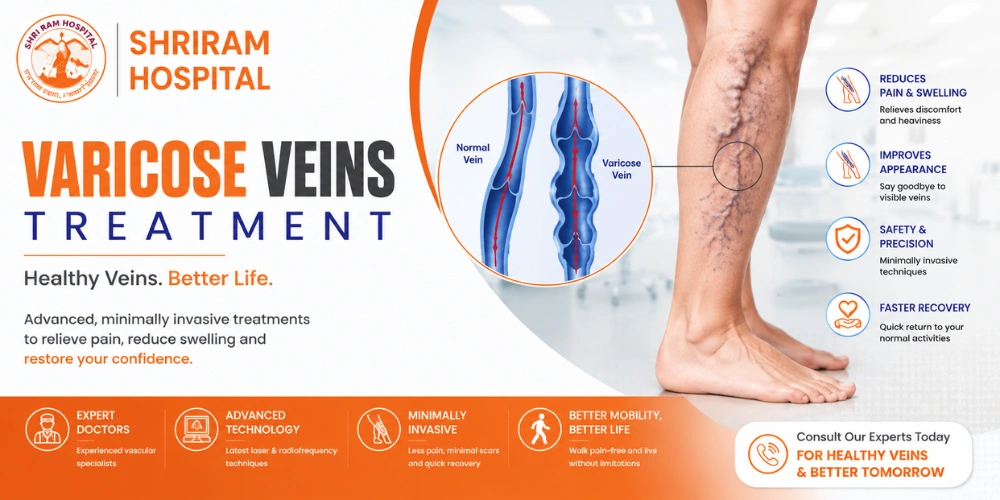
Varicose veins are enlarged, twisted and swollen veins. They develop when the tiny valves inside the veins become weak or damaged. These valves normally keep blood flowing upward towards the heart. When they fail, blood collects in the vein, which then enlarges and becomes visible under the skin.
Varicose veins most commonly affect the legs. Without treatment they can gradually cause persistent pain, swelling, skin changes and other complications. Early diagnosis by a qualified doctor helps stop the disease from progressing.
Common Symptoms of Varicose Veins
Symptoms range from a mild cosmetic concern to discomfort that affects daily life. If you notice any of the following, consult a varicose veins specialist for proper evaluation.
Common Warning Signs
- Bulging blue or purple veins: Enlarged, twisted veins clearly visible under the skin, especially on the legs.
- Leg pain or aching: Discomfort that often gets worse after long periods of standing or sitting.
- Heavy legs: A feeling of heaviness or tiredness that builds up through the day.
- Swelling around the ankles: Fluid collecting in the ankles and lower legs because of poor vein circulation.
- Burning or throbbing: Burning, throbbing or pulsating discomfort along the affected veins.
- Night cramps: Painful muscle cramps, especially at night, are common in advanced vein disease.
- Itching: Skin irritation around the affected veins caused by poor circulation.
- Skin discolouration: Brownish patches or thickened skin near the ankles may point to chronic venous insufficiency.
- Non-healing leg ulcers: Long-standing vein disease can cause chronic ulcers around the ankle or lower leg.
- Bleeding from a vein: Fragile veins may bleed after a minor injury and need urgent medical attention.
Causes and Risk Factors
Several factors can weaken vein valves and raise the chance of varicose veins. Knowing them helps with early diagnosis and prevention.
Common Risk Factors
- Family history: A close relative with varicose veins raises your risk.
- Ageing: Vein walls and valves weaken naturally with age.
- Pregnancy: Hormonal changes and extra pressure on the leg veins can enlarge them.
- Obesity: Extra body weight puts more pressure on the veins of the legs.
- Long hours of standing or sitting: Jobs that keep you in one position reduce blood flow in the legs.
- Lack of physical activity: Weak calf muscles pump blood back towards the heart less effectively.
- Hormonal changes: Hormonal shifts may affect vein wall strength and valve function.
- Previous leg injury: Trauma that affects the veins can lead to chronic vein disease.
When Should You Seek Treatment?
Mild varicose veins may look like a cosmetic issue at first, but persistent symptoms should not be ignored. Early evaluation lets your doctor recommend the right treatment before complications develop.
When Medical Evaluation Is Recommended
- Leg pain affects daily life: Discomfort limits walking, standing or routine work.
- Swelling does not go away: Ankle or lower leg swelling continues despite rest.
- Skin changes appear: Discolouration, thickening or eczema around the veins needs medical attention.
- Leg ulcers develop: A wound that does not heal may mean advanced vein disease.
- A vein bleeds: Bleeding should be checked by a doctor immediately.
- Self-care is not enough: Symptoms continue despite compression stockings, exercise and lifestyle changes.
- Symptoms keep worsening: More pain, swelling, heaviness or visible veins call for a specialist consultation.
Ignoring varicose veins can lead to chronic venous insufficiency, skin ulcers, bleeding and other long-term complications.
Varicose Veins Treatment Options
The right treatment depends on the severity of the vein disease, Duplex Doppler ultrasound findings, your symptoms and your overall health. Your surgeon recommends an individual plan after evaluation.
Conservative Management
Patients with mild or early-stage vein disease may benefit from non-surgical measures before a procedure is considered.
- Compression stockings: Support the leg veins, improve circulation and reduce swelling.
- Regular walking: Strengthens the calf muscles and keeps blood moving towards the heart.
- Weight management: A healthy weight lowers pressure on the leg veins.
- Leg elevation: Raising the legs above heart level reduces swelling.
- Exercise: Regular activity supports vein function and muscle strength.
- Lifestyle changes: Avoiding long periods of standing or sitting can slow progression.
If symptoms continue or the disease progresses despite these measures, a minimally invasive procedure may be recommended.
Laser Treatment for Varicose Veins (EVLT)
Endovenous Laser Treatment (EVLT) is one of the most effective minimally invasive procedures for varicose veins. Under ultrasound guidance, a thin laser fibre is placed in the affected vein. Laser energy seals the damaged vein, and blood is naturally redirected through healthy veins. Circulation improves and symptoms ease.
Many patients prefer EVLT because it causes little discomfort and allows faster recovery than conventional surgery.
Benefits of Laser Treatment
- No large surgical cuts: Tiny puncture sites replace traditional incisions.
- Minimal pain: Most patients have much less discomfort than with conventional surgery.
- Faster recovery: Routine activities are usually resumed sooner.
- Less bleeding: Minimally invasive technique reduces blood loss.
- Minimal scarring: Small entry points give good cosmetic results.
- Short hospital stay: Many patients go home the same day.
- Early return to work: Recovery is generally quick, so work can resume earlier.
- Good long-term results: Treated veins generally stay closed, and regular follow-up helps lower the chance of recurrence.
Other Varicose Vein Treatment Options
Depending on vein anatomy, severity and ultrasound findings, your surgeon may recommend another option or a combination of treatments.
Radiofrequency Ablation (RFA)
Uses controlled heat from radiofrequency energy to safely close diseased veins while preserving healthy circulation.
Foam Sclerotherapy
A specially prepared medicine is injected into smaller varicose veins. The veins collapse, seal and gradually fade over time.
Ambulatory Phlebectomy
Small surface varicose veins are removed through tiny skin punctures, giving good cosmetic and functional results.
Conventional Varicose Vein Surgery
Open surgery may still be advised for selected patients with complex or extensive vein disease where a minimally invasive procedure is not the best option.
Varicose Veins Surgery: What to Expect
Knowing each stage helps you feel prepared. Every patient receives a plan based on a detailed evaluation, Duplex Doppler findings and overall health. Minimally invasive techniques are used whenever appropriate.
Step 1: Consultation
The surgeon reviews your symptoms and history to choose the most suitable treatment.
- Medical history: Previous illnesses, medicines, lifestyle and general health are reviewed.
- Symptoms: Pain, swelling, heaviness, visible veins and skin changes are carefully assessed.
- Family history: A family history of varicose veins or chronic vein disease is noted.
- Previous treatments: Earlier surgery or conservative therapy helps decide the next step.
Step 2: Diagnostic Tests
Investigations identify the affected veins, check blood flow and measure the severity of reflux.
| Diagnostic Test | Purpose |
|---|---|
| Duplex Doppler ultrasound | Evaluates blood flow, finds damaged valves and maps the affected veins for accurate planning. |
| Physical examination | Checks visible veins, swelling, skin changes, ulcers and overall leg health. |
| Blood tests | Assess general health and fitness for a procedure. |
| Pre-anaesthesia evaluation | Confirms you are fit for anaesthesia when a procedure is planned. |
Step 3: Treatment Planning
Your surgeon builds a plan that fits your clinical condition and lifestyle.
- Vein anatomy: Size, location and pattern of the affected veins guide the procedure.
- Severity of reflux: The extent of valve damage and backward flow influences the choice.
- Skin changes: Discolouration, eczema or ulcers are assessed before treatment.
- Overall health: Conditions such as diabetes, obesity or heart disease are taken into account.
- Lifestyle: Your work, daily activity and mobility goals shape the plan.
Step 4: Procedure
Depending on the plan, a minimally invasive procedure such as EVLT, RFA or foam sclerotherapy is performed.
Most procedures are done under local or regional anaesthesia, so eligible patients can go home the same day or after a short stay. These techniques aim to reduce pain, limit tissue damage and give better cosmetic results than conventional surgery.
Recovery After Varicose Vein Treatment
Recovery after minimally invasive treatment is usually quick and comfortable. Following your surgeon's instructions improves healing and long-term results.
Timelines differ with the procedure performed and your general health.
First 24 Hours
You are encouraged to stay active while following a few simple precautions.
- Walk regularly: Gentle walking improves circulation and lowers the risk of blood clots.
- Wear compression stockings: Help reduce swelling and support healing.
- Stay hydrated: Adequate fluids support circulation and recovery.
- Take prescribed medicines: Take them exactly as directed to control discomfort.
First Week
Activity is increased gradually while the treated veins heal.
- Light walking: Improves circulation without straining the treated veins.
- Avoid prolonged standing: Do not stand continuously for long periods early in recovery.
- Keep the area clean: Good wound care lowers the risk of infection.
- Attend follow-up visits: Your surgeon checks healing and treatment success.
Weeks 2 to 4
Most patients return to their normal routine while continuing your surgeon's advice.
- Office work: Many patients resume desk-based work within days, depending on recovery.
- Daily activities: Routine household and personal tasks are usually comfortable.
- Light exercise: Low-impact activity supports circulation and healthy veins.
- Driving: Resume only after your surgeon confirms it is safe.
Most patients notice clear improvement in leg pain, swelling and heaviness after successful minimally invasive treatment.
Varicose Veins Treatment Cost in Delhi
A common question is: what is the cost of varicose veins treatment in Delhi? The cost depends on the severity of the disease, the treatment method and your individual condition.
At Shri Ram Hospital, every patient has a consultation and Duplex Doppler ultrasound first. Based on the findings, our surgeons give a clear treatment plan with a personalised cost estimate.
Factors Affecting Varicose Veins Treatment Cost
| Factor | How It Affects the Cost |
|---|---|
| Number of veins treated | Cost differs depending on whether one vein or several need treatment. |
| Treatment method | EVLT, RFA, foam sclerotherapy and conventional surgery have different requirements. |
| Severity of vein disease | Advanced disease with skin changes, ulcers or venous insufficiency may need more comprehensive treatment. |
| Hospital stay | Most procedures are day-care or short-stay, while selected complex cases may need longer admission. |
| Diagnostic investigations | Duplex Doppler ultrasound, blood tests and pre-procedure checks support safe planning. |
| Complexity of the case | The complexity of the procedure may influence the overall treatment package. |
| Insurance or cashless cover | Eligible insurers and government-approved schemes may reduce your expenses. |
Why Early Treatment Is Important
Varicose veins are progressive and can worsen over time. Early diagnosis and treatment relieve symptoms and help prevent permanent skin damage and chronic vein disease.
Complications of Delaying Treatment
- Chronic leg pain: Aching and heaviness may gradually interfere with walking and daily activity.
- Venous ulcers: Untreated disease can cause painful, slow-healing ulcers around the ankles.
- Skin pigmentation: Long-standing venous insufficiency may cause brownish discolouration and thickened skin.
- Bleeding veins: Enlarged surface veins may bleed even after a minor injury.
- Superficial thrombophlebitis: Clot formation and inflammation in surface veins cause pain, redness and swelling.
- Chronic venous insufficiency: Progressive valve failure leads to long-term swelling, skin damage and reduced quality of life.
Timely treatment relieves symptoms, restores healthy circulation, improves how the legs look and lowers the risk of future complications.
This page gives general information and is not a substitute for medical advice. Treatment depends on a doctor's examination. In an emergency call +91 62623 04050.