Cardiology Hospital Near You: Trusted Heart Care in Vikaspuri
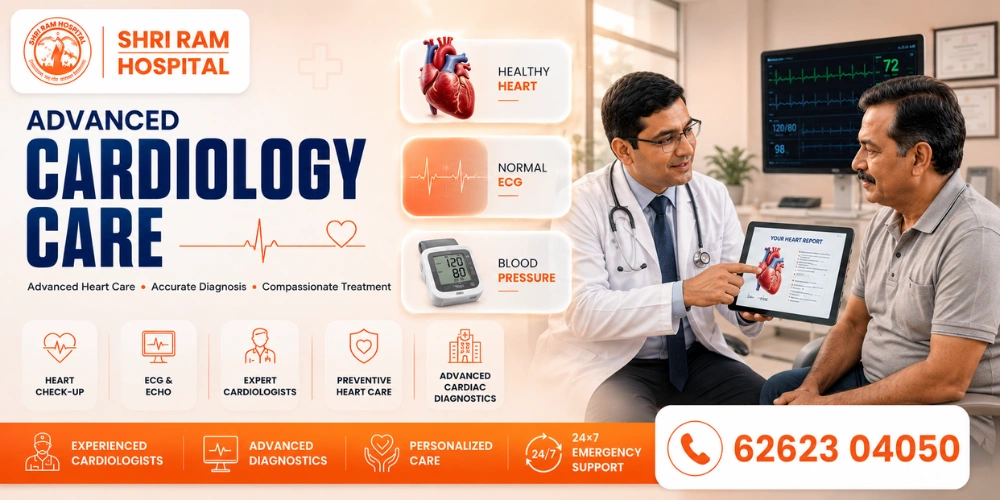
If you are looking for a cardiology hospital near me, Shri Ram Hospital in Vikaspuri offers patient-focused heart care with an experienced cardiologist, diagnostic facilities and 24x7 emergency support under one roof.
We care for patients from preventive heart screening to the diagnosis and long-term management of cardiovascular disease. Whether you need a routine check-up or an urgent evaluation for chest pain, our team aims for timely diagnosis and appropriate treatment.
Heart disease is a leading cause of illness in urban India. Diabetes, high blood pressure, obesity, smoking and chronic stress all raise the risk, so early diagnosis and regular follow-up matter.
We are in Vikaspuri, West Delhi, and serve patients from Janakpuri, Uttam Nagar, Dwarka, Paschim Vihar, Tilak Nagar, Rajouri Garden and across Delhi NCR.
What Is Cardiology?
Cardiology is the branch of medicine that deals with the diagnosis, treatment and prevention of diseases of the heart and blood vessels. Cardiologists manage conditions from high blood pressure and cholesterol problems to heart attacks, heart failure and rhythm disorders.
Our cardiologist follows evidence-based guidelines and a careful clinical evaluation to give each patient an accurate diagnosis and a personalised plan.
Why Early Cardiac Evaluation Matters
- Detects heart disease early: Check-ups can find problems before obvious symptoms appear.
- Lowers heart attack risk: Managing risk factors early reduces the chance of serious cardiac events.
- Protects long-term heart health: Timely treatment and lifestyle changes help preserve heart function.
- Supports preventive care: Regular monitoring of blood pressure, cholesterol and diabetes lowers cardiovascular risk.
Common Heart Conditions We Treat
Every patient gets a plan based on symptoms, medical history, lifestyle and overall heart health.
Conditions Managed by Our Cardiology Team
| Heart Condition | Description |
|---|---|
| Coronary artery disease (CAD) | Narrowing or blockage of the heart arteries that reduces blood flow to the heart muscle and raises the risk of a heart attack. |
| Heart attack (myocardial infarction) | A medical emergency in which blood supply to part of the heart is suddenly blocked and needs immediate treatment. |
| High blood pressure (hypertension) | Persistently raised blood pressure that increases the risk of heart disease, stroke and kidney problems. |
| Heart failure | A condition in which the heart cannot pump blood well enough to meet the body's needs. |
| Arrhythmias (irregular heartbeat) | Abnormal heart rhythms that may cause palpitations, dizziness or fainting. |
| Angina (chest pain) | Chest discomfort caused by reduced blood flow to the heart, often linked to coronary artery disease. |
| Valvular heart disease | Problems with one or more heart valves that affect blood flow through the heart. |
| Congenital heart disorders | Structural heart conditions present from birth that need ongoing evaluation. |
| High cholesterol and lipid disorders | Abnormal cholesterol levels that increase the risk of blocked arteries. |
| Peripheral vascular disease | Narrowing of blood vessels outside the heart, commonly affecting circulation in the legs. |
Treatment may include lifestyle changes, medicines, diagnostic tests and regular follow-up care.
Warning Signs You Should Not Ignore
Heart disease often develops slowly and early signs are easy to overlook. Seeing a cardiologist early improves outcomes and lowers the risk of serious complications.
Common Warning Signs of Heart Disease
- Chest pain or pressure: Persistent discomfort, heaviness or tightness in the chest should never be ignored.
- Shortness of breath: Trouble breathing during routine activity or at rest may point to heart disease or heart failure.
- Rapid, irregular or skipped heartbeats: Palpitations may indicate a rhythm problem that needs evaluation.
- Dizziness or fainting: May be linked to abnormal heart rhythm or poor circulation.
- Unexplained tiredness: Ongoing fatigue without a clear cause can be an early sign of reduced heart function.
- Swelling in the legs or ankles: Fluid build-up may occur when the heart cannot pump effectively.
- Pain spreading to the arm, neck, jaw or back: Can be a sign of a heart attack and needs emergency care.
- Sweating with chest discomfort: Sudden sweating with chest pain, breathlessness or nausea is a medical emergency.
If you have chest pain with sweating, breathlessness, dizziness or pain spreading to the arm or jaw, get emergency medical help immediately instead of waiting for an appointment. Call +91 62623 04050.
Cardiology Services at Shri Ram Hospital
Our department provides services to diagnose, treat and prevent a wide range of heart conditions, from routine check-ups to emergency care.
Our Cardiology Services
| Service | Description |
|---|---|
| Heart health screening | Check-ups to find cardiovascular risk factors and detect heart disease early. |
| ECG (electrocardiogram) | A quick, painless test that records the heart's electrical activity to detect rhythm problems and signs of earlier heart attacks. |
| Echocardiography (2D Echo) | Ultrasound imaging of the heart to check the chambers, valves and pumping function. |
| Treadmill test (TMT) | A stress test done while walking on a treadmill to see how the heart performs during activity and to detect hidden coronary artery disease. |
| Hypertension management | Individual plans to control blood pressure and lower the long-term risk of heart attack, stroke and kidney disease. |
| Cholesterol management | Evaluation and treatment of lipid disorders with medicines, diet advice and lifestyle changes. |
| Emergency cardiac care | Rapid evaluation and stabilisation for severe chest pain, suspected heart attack and rhythm emergencies. |
| Preventive cardiology | Long-term programmes covering risk assessment, weight, diabetes control and quitting smoking. |
Other tests may be advised by your cardiologist depending on your symptoms and findings.
Why Choose Shri Ram Hospital as Your Heart Hospital?
The right hospital makes a real difference to diagnosis, treatment and long-term heart health. Here is what patients can expect from us.
Why Patients Trust Shri Ram Hospital
| Our Strength | Patient Benefit |
|---|---|
| Experienced cardiologist | A qualified heart specialist who manages a wide range of cardiovascular conditions. |
| Diagnostic facilities | ECG, Echo, TMT and other tests available in the same hospital for accurate diagnosis. |
| Critical care infrastructure | Emergency and ICU support for patients who need immediate attention. |
| Preventive heart health care | Screening and follow-up focused on long-term risk reduction. |
| Individual treatment planning | Plans based on your symptoms, history, test results and overall health. |
| Clear communication | Open discussion of the diagnosis, treatment options, medicines and follow-up plan. |
| Emergency cardiac response | Rapid evaluation and treatment for chest pain and other cardiac emergencies. |
| NABH and ISO accredited hospital | Recognised standards of quality and patient safety. |
| Cashless treatment for eligible patients | Cashless care through approved insurance providers and government health schemes. |
| Convenient location | Easy access from Vikaspuri, Janakpuri, Uttam Nagar, Dwarka and Paschim Vihar. |
When Should You See a Cardiologist?
Many heart diseases develop silently. Seeing a cardiologist in Vikaspuri at the right time allows early detection and better outcomes. Regular check-ups are also advised if you have risk factors or a family history of heart disease, even without symptoms.
Consult a Cardiologist If You Have
- Persistent or recurring chest pain: Ongoing chest discomfort or pressure should be checked to rule out heart disease.
- High or borderline blood pressure: Uncontrolled hypertension raises the risk of heart attack, stroke and heart failure.
- Family history of heart disease: Close relatives with early heart disease are a reason for regular screening.
- Diabetes: Diabetes raises the risk of coronary artery disease and other heart complications.
- High cholesterol: Raised cholesterol leads to plaque build-up in the arteries.
- A history of smoking: Smoking damages blood vessels and raises the risk of heart and vascular disease.
- Obesity or excess weight: Extra weight is linked with high blood pressure, diabetes and other heart risk factors.
- Breathlessness during daily activity: Trouble breathing while walking or climbing stairs may point to a heart condition.
Adults above 40 years, and anyone with two or more risk factors, should have periodic heart screening even without symptoms.
Benefits of Choosing a Specialised Heart Care Team
A dedicated cardiology team gives you coordinated care from screening to long-term follow-up.
How It Helps Patients
- Access to an experienced cardiologist: Expert evaluation and treatment focused on heart and blood vessel disease.
- Accurate diagnosis: Tests such as ECG, Echo and TMT allow early and accurate diagnosis.
- Faster diagnosis and treatment: Diagnostic facilities in the same hospital reduce delays.
- Comprehensive heart care: Evaluation, diagnosis, treatment, prevention and follow-up at a single centre.
- Emergency support: Rapid response improves outcomes during a heart attack or other emergency.
- Preventive programmes: Screening, lifestyle advice, cholesterol and blood pressure control lower future risk.
- Long-term monitoring: Regular follow-up tracks recovery, adjusts medicines and helps prevent complications.
Your Partner in Long-Term Heart Health
Staying heart-healthy takes more than treating symptoms. It takes regular check-ups, early diagnosis, control of risk factors and steady medical guidance. Whether you need screening, evaluation for chest pain, help with blood pressure or cholesterol, or care for a heart condition, our team gives personalised, evidence-based care.
Our Commitment to Every Heart Patient
- Early detection: We aim to find heart disease early to lower the risk of serious complications.
- Evidence-based treatment: Our cardiologist follows established clinical guidelines for safe, effective care.
- Patient-centred care: Each plan reflects your symptoms, lifestyle, history and health goals.
- Diagnostic support: Modern tests help ensure accurate diagnosis and timely treatment.
- Long-term prevention: Follow-up, lifestyle changes and risk factor control support lifelong heart health.
If you have symptoms or risk factors such as diabetes, high blood pressure, obesity, high cholesterol or a family history of heart disease, an early consultation can make a real difference.
This page gives general information and is not a substitute for medical advice. Treatment depends on a doctor's examination. In an emergency call +91 62623 04050.