Anal Fissure Treatment at Shri Ram Hospital, Vikaspuri
At Shri Ram Hospital, patients with severe or chronic anal fissures receive expert surgical care designed to relieve pain and help the tear heal. Our surgeons are experienced in laser fissure surgery and lateral internal sphincterotomy, and prefer minimally invasive techniques for shorter recovery and less discomfort after surgery.
The patient experience comes first. From the first consultation, you are guided through diagnosis, treatment options and the procedure with empathy and clarity. We focus on patient education so you can decide with confidence and feel less anxious.
Located in Vikaspuri, West Delhi, we treat patients from Janakpuri, Uttam Nagar, Dwarka, Tilak Nagar, Paschim Vihar, Rajouri Garden, Punjabi Bagh, Kirti Nagar, Naraina, Peeragarhi, Nangloi and across Delhi NCR.
What Is an Anal Fissure?
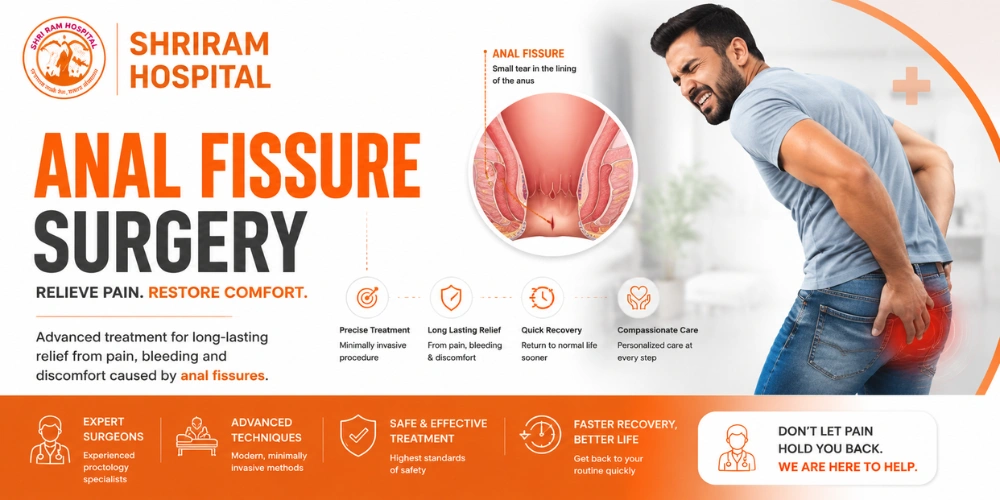
An anal fissure is a small tear or crack in the delicate lining of the anus. It can cause severe pain, discomfort and bleeding during bowel movements. It is one of the most common anorectal conditions and can affect people of all ages.
Fissures usually develop when the anal tissue is stretched beyond its normal capacity, most often because of constipation or passing hard stools. Acute fissures may heal with conservative treatment, but chronic fissures often need specialised care, including advanced laser treatment.
Early diagnosis and proper treatment help prevent chronic pain, recurring symptoms and long-term complications.
Common Symptoms of Anal Fissure
Anal fissure symptoms are usually easy to notice. If they last more than a few weeks, medical evaluation is recommended.
Warning Signs of an Anal Fissure
- Sharp pain during bowel movements: Intense cutting or tearing pain while passing stool.
- Bright red bleeding: Fresh blood on toilet paper or in the stool after a bowel movement.
- Burning sensation: A persistent burning feeling around the anus.
- Itching or irritation: Continuous irritation around the anal area due to inflammation.
- Visible tear: A small crack or tear near the anal opening.
- Prolonged pain: Pain that continues for several hours after a bowel movement.
- Anal muscle spasms: Spasms of the sphincter muscle can worsen pain and delay healing.
- Difficulty sitting comfortably: Discomfort while sitting for long periods.
Causes of Anal Fissure
Fissures occur when the lining of the anus is damaged or stretched too much. Constipation and hard stools remain the leading causes.
Common Causes and Risk Factors
- Chronic constipation: Repeated constipation increases pressure on the anal canal and can cause tears.
- Hard or large stools: One of the most common causes of fissure formation.
- Frequent diarrhoea: Repeated irritation can damage the anal lining.
- Excessive straining: Straining puts extra stress on the anal tissue.
- Low-fibre diet: Too little fibre often leads to constipation.
- Inadequate hydration: Low water intake can result in hard stools.
- Pregnancy and childbirth: Increased pressure during pregnancy and delivery can contribute.
- Inflammatory bowel disease: Certain digestive disorders raise the risk of fissures.
- Repeated anal trauma: Recurrent injury to the anal canal can lead to tears.
Types of Anal Fissure
Acute and Chronic Fissures
| Type | What It Means |
|---|---|
| Acute anal fissure | A recent tear that usually heals within a few weeks with medication and lifestyle changes. |
| Chronic anal fissure | A fissure that lasts more than six weeks. It may develop scar tissue or a skin tag and often needs advanced treatment. |
How Is an Anal Fissure Diagnosed?
Accurate diagnosis helps choose the most effective treatment approach.
Diagnosis at Shri Ram Hospital
- Medical history: The doctor reviews your symptoms, bowel habits and overall health.
- Physical examination: A visual inspection of the anal area identifies the fissure and its severity.
- Proctoscopy: In selected cases, an additional examination rules out other anorectal conditions.
Anal Fissure Treatment Options
The right treatment depends on the severity and duration of the fissure. After a detailed evaluation, your surgeon recommends an individual plan.
Medication and Lifestyle Changes
Many acute fissures improve significantly with conservative treatment.
- High-fibre diet: Fibre softens stools and reduces pressure during bowel movements.
- Increased water intake: Good hydration supports regular, healthy bowel function.
- Stool softeners: Help prevent further injury to the anal lining.
- Medicated ointments: Prescription creams improve blood flow and relax anal muscles to promote healing.
- Sitz baths: Warm water baths relieve pain, reduce muscle spasm and support recovery.
Laser Treatment for Anal Fissure
When conservative treatment fails or the fissure becomes chronic, laser treatment for anal fissure may be recommended. It is an advanced, minimally invasive procedure that uses focused laser energy to treat unhealthy tissue while protecting the surrounding healthy structures.
Laser surgery is widely preferred because it offers faster healing and less discomfort after surgery compared with traditional methods. The final choice always depends on your individual evaluation and your specialist's recommendation.
Benefits of Laser Treatment for Anal Fissure
Why Laser Surgery Is an Advanced Option
- Minimally invasive: Very little tissue disruption.
- Reduced pain: Patients usually have less discomfort after surgery.
- Minimal bleeding: Laser energy seals blood vessels during treatment.
- Faster healing: Recovery is generally quicker than with conventional procedures.
- Lower infection risk: Less tissue damage lowers the chance of infection.
- Short hospital stay: Most patients are discharged on the same day.
- Quick return to routine: You can resume daily activities sooner.
- Precise treatment: Laser technology limits damage to healthy tissue.
Recovery After Anal Fissure Surgery
Recovery after laser fissure surgery is generally comfortable and straightforward. Most patients resume normal daily activities within 1 to 2 weeks, although complete healing may take several weeks.
Aftercare Tips for Faster Healing
- Take medicines as prescribed: Supports healing and pain control.
- Eat a high-fibre diet: Helps prevent constipation and protects the healing tissue.
- Drink enough water: Supports regular bowel movements.
- Avoid constipation: Preventing hard stools reduces stress on the healing area.
- Take sitz baths: Warm water baths relieve discomfort and promote recovery.
- Follow post-operative instructions: Following medical advice improves treatment results.
Complications of Untreated Anal Fissure
Timely treatment helps prevent these problems and promotes faster recovery.
Risks of Delaying Treatment
- Chronic fissure: Untreated fissures can become long-standing and hard to heal.
- Persistent pain: Ongoing discomfort can affect daily life.
- Recurrent bleeding: Bleeding may continue during bowel movements.
- Anal muscle spasms: Chronic spasms worsen symptoms and delay healing.
- Difficulty passing stool: Fear of pain can worsen constipation.
- Reduced quality of life: Persistent symptoms affect physical and emotional well-being.
Why Choose Shri Ram Hospital for Anal Fissure Treatment?
Our goal is safe, effective and minimally invasive treatment with faster recovery and better outcomes.
Why Patients Trust Shri Ram Hospital
| Our Expertise | Patient Benefits |
|---|---|
| Experienced fissure specialists | Skilled surgeons provide expert anorectal care. |
| Advanced laser technology | Modern equipment supports precise, minimally invasive treatment. |
| Modern diagnostic facilities | Accurate diagnosis helps build an effective treatment plan. |
| Dedicated proctology care | Specialised treatment for anorectal conditions. |
| Patient-focused approach | Individual care improves treatment results. |
| Personalised recovery plans | Structured follow-up supports faster healing. |
| Modern operation theatres | Advanced infrastructure for safe surgical care. |
| Cashless treatment for eligible patients | Cashless care through approved insurance providers and government health schemes. |
| Convenient location | Easy access from West Delhi and across Delhi NCR. |
When Should You Consult a Fissure Specialist?
Early consultation can prevent a chronic fissure and reduce the need for extensive treatment.
See a Doctor If You Have
- Persistent pain during bowel movements: Ongoing pain should be evaluated.
- Recurrent rectal bleeding: Repeated bleeding may point to a chronic fissure.
- Anal itching or burning: Persistent irritation needs professional assessment.
- Symptoms lasting more than two weeks: Long-term symptoms should not be ignored.
- Difficulty passing stool: Painful bowel movements can worsen the condition.
- Recurring fissures: Repeated episodes often need specialist treatment.
This page gives general information and is not a substitute for medical advice. Treatment depends on a doctor's examination. In an emergency call +91 62623 04050.