Tympanoplasty Surgery at Shri Ram Hospital, Vikaspuri
A healthy eardrum is essential for clear hearing and for protecting the middle ear from infection. When the eardrum develops a hole or tear because of infection, injury or trauma, it can cause hearing loss, repeated ear discharge, pain and a poorer quality of life.
At Shri Ram Hospital, we provide advanced tympanoplasty surgery in Delhi using modern microscopic and endoscopic techniques to repair damaged eardrums and restore hearing. Our experienced ENT surgeons offer complete diagnosis, personalised treatment plans and advanced surgical care for both adults and children.
Located in Vikaspuri, West Delhi, we serve patients from Janakpuri, Uttam Nagar, Dwarka, Tilak Nagar, Paschim Vihar, Rajouri Garden, Punjabi Bagh, Kirti Nagar, Naraina, Nangloi, Peeragarhi and across Delhi NCR.
What Is Tympanoplasty?
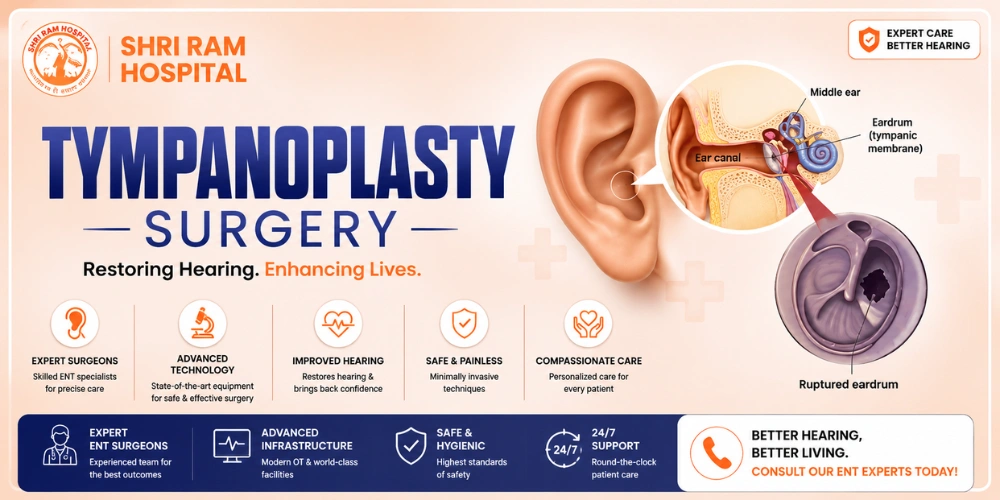
Tympanoplasty is a surgical procedure to repair a perforated (ruptured) eardrum and, when necessary, to reconstruct the tiny hearing bones (ossicles) in the middle ear. The surgery helps restore the normal structure and function of the ear, improves hearing and helps prevent repeated infections.
It is commonly recommended for patients who have a persistent hole in the eardrum that has not healed naturally, or who have repeated ear discharge and hearing problems due to chronic middle ear disease.
Tympanoplasty Meaning
The word comes from two medical terms. Tympano refers to the eardrum (tympanic membrane), the thin membrane that passes sound vibrations to the middle ear. Plasty means surgical repair or reconstruction. So tympanoplasty literally means the surgical repair of the eardrum.
Tympanoplasty Is Also Commonly Known As
- Eardrum repair surgery: Surgery to close a hole in the eardrum and restore normal ear function.
- Eardrum operation: A common term for surgery to repair a damaged eardrum.
- Ear hole surgery: Surgery to close a perforation or hole in the eardrum.
- Ear membrane surgery: Repair of the thin membrane that separates the outer and middle ear.
- Perforated eardrum surgery: Treatment when the eardrum has ruptured because of infection, injury or trauma.
- Eardrum reconstruction surgery: Repair of the eardrum and, when required, reconstruction of damaged hearing bones.
When Is Tympanoplasty Needed?
An ENT specialist may recommend tympanoplasty when a perforated eardrum does not heal naturally or continues to cause hearing loss, recurrent infections or persistent discharge. The decision is based on a detailed ENT examination and hearing assessment. Early surgical treatment helps preserve hearing and prevents further damage to the middle ear.
You May Need Tympanoplasty If You Have
- Persistent hole in the eardrum: A perforation that stays open despite adequate time for natural healing.
- Recurrent ear infections: Frequent middle ear infections caused by the persistent opening.
- Chronic ear discharge: Continuous or repeated discharge due to long-standing infection.
- Hearing loss: Reduced hearing caused by damage to the eardrum or middle ear structures.
- Ruptured eardrum after trauma: Injury from accidents, sports or a direct blow to the ear.
- Ear injury from loud noise or blast: Sudden loud sounds or blast waves that damage the eardrum.
- Failed natural healing after several weeks: The eardrum does not close on its own despite appropriate treatment and observation.
When Doctors Recommend Tympanoplasty Surgery
- The eardrum has not healed naturally: The perforation remains open despite adequate healing time and medical treatment.
- Hearing continues to worsen: Progressive hearing loss caused by the damaged eardrum or middle ear.
- Ear discharge persists: Ongoing or repeated discharge despite appropriate medicines.
- Recurrent infections occur: Frequent infections that affect daily life and hearing.
- Daily activities are affected: Hearing difficulty interferes with communication, work or routine activities.
- Water repeatedly enters the middle ear: Water passing through the perforation increases the chance of repeated infection.
Symptoms of a Perforated Eardrum
A perforated eardrum can affect hearing, raise the risk of infection and interfere with daily activities. If you notice any of the symptoms below, consult an experienced ENT specialist for proper evaluation.
Common Symptoms
- Hearing loss: Reduced ability to hear sounds clearly because of the damaged eardrum.
- Ear discharge: Persistent or recurrent fluid, pus or foul-smelling discharge from the affected ear.
- Ear pain: Mild to severe pain, especially during infection or right after injury.
- Ringing in the ears (tinnitus): Continuous or intermittent ringing, buzzing or humming sounds.
- Recurrent ear infections: Frequent infections as bacteria enter through the perforation.
- Dizziness: Some patients feel imbalance or vertigo if the middle ear is affected.
- Water entering the ear easily while bathing: Water may pass through the hole into the middle ear and raise infection risk.
Causes of Eardrum Perforation
An eardrum perforation may occur because of infection, trauma, sudden pressure changes or accidental injury. Finding the cause helps the ENT specialist recommend the right treatment and prevent future problems.
Common Causes
- Chronic middle ear infection: Long-standing infection can gradually weaken and rupture the eardrum.
- Ear injury: Direct trauma to the ear from accidents or physical injury.
- Cotton bud injury: Inserting cotton buds or other objects into the ear canal may puncture the eardrum.
- Loud blast injury: Sudden explosions or blast waves can rupture the delicate eardrum.
- Road traffic accidents: Head injuries in accidents may damage ear structures.
- Sudden pressure changes (barotrauma): Pressure changes during flying, scuba diving or explosions may rupture the eardrum.
- Previous ear surgery: Rarely, earlier surgery may leave a persistent perforation.
- Foreign body injury: Sharp or inappropriate objects in the ear canal may tear the eardrum.
Types of Tympanoplasty Surgery
The type of tympanoplasty depends on the size of the perforation, the condition of the middle ear and whether the hearing bones need reconstruction. Your ENT surgeon recommends the most suitable technique after a detailed evaluation.
Type I Tympanoplasty (Myringoplasty)
Type I tympanoplasty, also called myringoplasty, repairs only the eardrum while preserving healthy hearing bones. It suits small to medium perforations with intact, normally functioning middle ear bones.
Type II Tympanoplasty
Type II tympanoplasty repairs the perforated eardrum along with partial reconstruction of damaged hearing bones (ossicles) to improve sound transmission.
Type III Tympanoplasty
Type III tympanoplasty is recommended when more extensive reconstruction of the middle ear hearing bones is needed because of significant damage or chronic disease.
Endoscopic Tympanoplasty
Endoscopic tympanoplasty is a minimally invasive technique using a high-definition endoscope, giving an excellent view of the middle ear with minimal tissue disruption.
- Smaller incision: Minimally invasive surgery with little or no external incision.
- Better visualisation: High-definition endoscopic images allow precise repair.
- Faster recovery: Less tissue trauma supports quicker healing.
- Less post-operative discomfort: Patients generally have less pain and return to normal activities sooner.
Microscopic Tympanoplasty
Microscopic tympanoplasty uses an advanced operating microscope that gives high magnification for precise reconstruction of the eardrum and middle ear structures, especially in complex cases that need delicate repair.
Tympanoplasty Procedure: Step by Step
Tympanoplasty is a carefully planned procedure to repair a perforated eardrum and restore hearing. Our ENT surgeons use advanced microscopic and endoscopic techniques to achieve precise repair with minimal tissue damage and faster recovery. Before surgery, every patient has a detailed ENT evaluation and hearing assessment to choose the best technique.
Step 1: Evaluation
A complete pre-operative evaluation shows the extent of the perforation, the hearing loss and the overall health of the ear.
- Ear examination: A detailed look at the ear canal and eardrum to assess the size and location of the perforation.
- Hearing test (audiometry): Measures hearing ability and the degree of hearing loss before surgery.
- Tympanometry: Evaluates middle ear function and movement of the eardrum.
- Ear microscopy or endoscopy: High-definition magnification gives a detailed view of the perforation and middle ear.
- CT scan (selected cases): Advised when extensive middle ear disease, cholesteatoma or hearing bone damage is suspected.
Step 2: Anaesthesia
Tympanoplasty is performed under suitable anaesthesia for your comfort. The choice depends on your age, medical condition and the complexity of surgery.
- General anaesthesia: Commonly used for children and many adults.
- Local anaesthesia (selected adults): May be considered for carefully selected adults depending on the complexity of the procedure.
Step 3: Repair of the Eardrum
The ENT surgeon carefully removes unhealthy or infected tissue and repairs the perforated eardrum using a tissue graft.
- Tissue graft placement: The graft is commonly taken from your own temporalis fascia or cartilage, which is well accepted by the body and heals well.
- Eardrum reconstruction: The graft is positioned precisely to close the perforation and restore the normal structure of the eardrum.
- Hearing bone repair (if required): Damaged ossicles may be reconstructed in the same procedure to improve hearing.
Step 4: Packing the Ear
After the repair, the surgeon places a soft absorbable dressing in the ear canal to support the graft, protect the surgical site and promote healing in the early recovery period.
Step 5: Recovery
After surgery you are monitored in the recovery area before discharge. Most patients go home on the same day or within 24 hours, depending on the procedure and overall condition.
Tympanoplasty Surgery Time
Most tympanoplasty procedures take about 60-120 minutes, although complex surgeries may take longer. Surgery time depends on:
- Size of the perforation: Larger perforations generally need more detailed reconstruction.
- Middle ear condition: Chronic infection or extensive disease may increase complexity.
- Need for ossicular reconstruction: Repairing damaged hearing bones needs extra time.
- Surgical technique: Endoscopic and microscopic techniques may differ slightly in duration.
Recovery After Tympanoplasty
Recovery is generally smooth when you follow your ENT surgeon's instructions carefully. Proper care during healing protects the repaired eardrum and improves the chance of successful hearing restoration.
First Week After Surgery
Take special care to protect the operated ear and avoid anything that may interfere with healing.
- Keep the ear dry: Prevent water from entering the ear while bathing or washing your hair.
- Take prescribed medicines: Complete all medicines exactly as directed by your ENT specialist.
- Avoid nose blowing: Forceful nose blowing increases pressure in the middle ear and may disturb the graft.
- Avoid heavy lifting: Avoid strenuous activity until your doctor advises otherwise.
- Sleep with the operated ear facing upward (if advised): This reduces pressure on the operated ear in the early healing period.
Recovery During the First Month
Regular follow-up lets your ENT specialist monitor recovery and hearing improvement.
- Follow-up ENT visits: Scheduled visits let your surgeon assess graft healing and overall recovery.
- Gradual improvement in hearing: Hearing usually improves progressively as swelling settles and healing continues.
- Removal of packing (if required): Packing is removed by your ENT surgeon during follow-up when appropriate.
- Avoid swimming and air travel unless cleared: Resume them only after medical clearance to protect the healing eardrum.
Tympanoplasty Healing Time
Healing varies with the size of the perforation, the technique used and your own healing response. The repaired eardrum usually heals completely within 6-12 weeks. Hearing often keeps improving over the following months as the graft integrates and middle ear function returns.
Removing Packing After Ear Surgery
The soft ear packing supports the graft and promotes healing. It is removed only during scheduled follow-up visits, and your ENT surgeon decides the right time based on your progress.
- Packing is removed during follow-up: Your surgeon chooses the appropriate time based on healing.
- Do not remove packing at home: Trying to remove it yourself may damage the graft, cause bleeding or increase infection risk.
Tympanoplasty Complications and Warning Signs
Tympanoplasty is generally considered a safe procedure when performed by experienced ENT surgeons. As with any surgery, some complications can occur, although they are uncommon. Choosing an experienced ENT surgeon and following post-operative instructions lowers the likelihood of problems.
Possible Complications
- Infection: Rare post-operative infections are usually managed effectively with medicines.
- Bleeding: Mild bleeding may occur after surgery and is generally temporary.
- Temporary dizziness: Some patients feel short-term dizziness that improves during recovery.
- Persistent hearing loss: Hearing improvement may be limited in some complex cases.
- Graft failure: In some cases the repaired eardrum may not heal completely and may need further treatment.
- Tinnitus: Ringing in the ears may persist or temporarily worsen during healing.
- Facial nerve injury (very rare): Extremely uncommon.
- Taste disturbance (usually temporary): Some patients notice a temporary change in taste that usually improves with time.
Tympanoplasty Failure Symptoms: Warning Signs After Surgery
Contact your ENT specialist promptly if any unusual symptom develops after surgery. Early evaluation allows timely diagnosis and management.
- Persistent ear discharge: Continuous or recurrent discharge may indicate infection or incomplete healing.
- No improvement in hearing: Hearing that does not improve as expected should be evaluated.
- Increasing pain: Worsening ear pain after the initial recovery period needs medical attention.
- Fever: Fever may indicate infection and should not be ignored.
- Persistent dizziness: Ongoing balance problems or vertigo should be assessed promptly.
- Recurrent perforation: If the repaired eardrum develops another perforation, further evaluation and treatment may be needed.
Tympanoplasty Cost in Delhi
A common question is: what is the cost of tympanoplasty surgery in Delhi? The cost varies from patient to patient because every eardrum perforation is different and needs an individual approach.
At Shri Ram Hospital, every patient has a detailed ENT examination and hearing evaluation before surgery. Based on the condition of the eardrum, middle ear, hearing bones and overall ear health, our ENT specialists give a personalised treatment plan with a transparent cost estimate.
Factors Affecting Tympanoplasty Cost
| Factor | How It Affects the Cost |
|---|---|
| Size of the eardrum perforation | Larger or more complex perforations may need advanced techniques and longer operating time. |
| Type of surgery | Cost varies with simple tympanoplasty versus more complex reconstruction. |
| Endoscopic or microscopic approach | The technique chosen by the ENT surgeon may influence the package. |
| Hospital stay | Duration depends on your recovery and the complexity of surgery. |
| Hearing bone reconstruction (if needed) | Repair of the middle ear ossicles increases the complexity of the procedure. |
| Surgeon's expertise | Experienced ENT surgeons provide greater precision and better long-term hearing outcomes. |
| Insurance or cashless coverage | Eligible policies and government-approved schemes may reduce your expenses. |
Why Early Eardrum Repair Is Important
Delaying treatment for a perforated eardrum can increase the risk of repeated infections, progressive hearing loss and permanent damage to the middle ear. Early diagnosis and timely tympanoplasty help restore hearing, protect the middle ear and prevent long-term complications.
Complications of Delaying Tympanoplasty
- Permanent hearing loss: Ongoing damage to the eardrum or hearing bones may lead to progressive and sometimes irreversible hearing impairment.
- Chronic ear infections: A persistent perforation increases the risk of repeated bacterial infections in the middle ear.
- Cholesteatoma: Long-standing perforations may lead to an abnormal skin growth in the middle ear that can damage surrounding structures.
- Middle ear damage: Untreated infections may gradually damage the delicate hearing bones.
- Repeated ear discharge: Chronic discharge can become persistent and interfere with everyday life.
- Reduced quality of life: Hearing difficulty, recurrent infections and activity restrictions affect communication and daily living.
Early diagnosis and timely tympanoplasty help preserve hearing, prevent complications and support long-term ear health.
Why Choose Shri Ram Hospital for Ear Surgery?
Patients across Vikaspuri, Janakpuri, Dwarka, Uttam Nagar, Tilak Nagar, Rajouri Garden, Paschim Vihar, Punjabi Bagh, Kirti Nagar, Naraina, Peeragarhi, Nangloi and throughout Delhi NCR choose us for ear surgery because of our experienced ENT specialists, modern surgical technology, complete hearing evaluation and patient-centred approach.
Why Patients Trust Shri Ram Hospital
| Our Expertise | Patient Benefits |
|---|---|
| Experienced ENT surgeons | Qualified specialists experienced in tympanoplasty and other ear surgeries. |
| Advanced endoscopic ear surgery | Minimally invasive techniques that support precise repair and faster recovery. |
| Microscopic tympanoplasty | Ear surgery performed with advanced operating microscopes for precise results. |
| High-definition visualisation | Accurate reconstruction of the eardrum and middle ear structures. |
| Audiology services | Complete hearing assessment for accurate treatment planning. |
| Digital hearing evaluation | Audiometry and hearing tests assess hearing loss before and after surgery. |
| NABH and ISO accredited hospital | Recognised standards of patient safety and clinical care. |
| Transparent treatment packages | Individualised plans and clear estimates based on each patient's clinical needs. |
| Personalised follow-up care | Post-operative monitoring, hearing assessment and long-term support for healing and hearing recovery. |
Our ENT team is dedicated to helping every patient achieve a healthy eardrum, improved hearing, fewer infections and a better quality of life.
This page gives general information and is not a substitute for medical advice. Treatment depends on a doctor's examination. In an emergency call +91 62623 04050.