In the Beginning
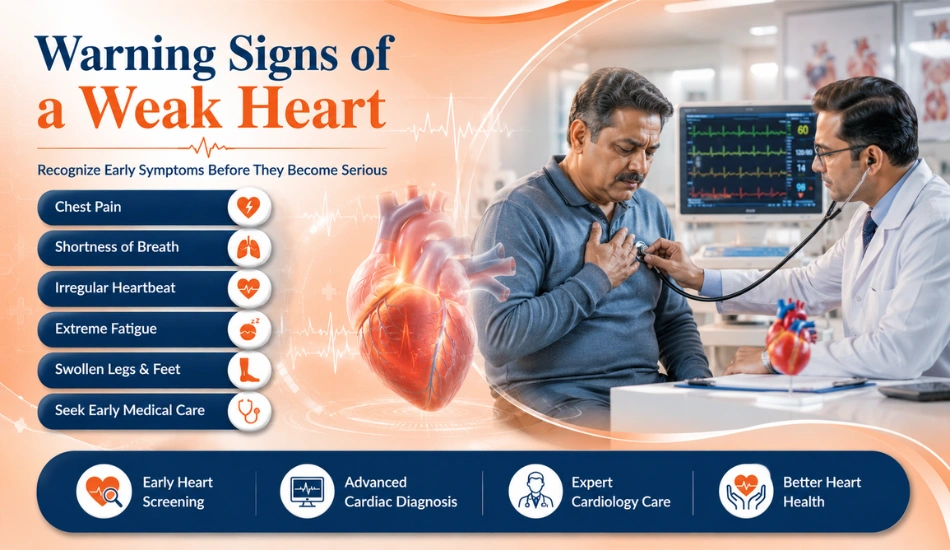
A weak heart usually refers to a heart that is not pumping blood efficiently, a condition often associated with heart failure or other cardiovascular diseases. Early symptoms can be subtle and easy to ignore, but recognizing them promptly allows earlier diagnosis and treatment, helping prevent serious complications.
If you're experiencing persistent fatigue, breathlessness, chest discomfort, or swelling in your legs, consult the Best Heart Hospital in Delhi for a comprehensive cardiac evaluation and personalized treatment.
Quick Answer
The earliest signs of a weak heart often include unusual fatigue, shortness of breath, reduced exercise tolerance, swelling of the legs, and irregular heartbeat. Early diagnosis and treatment can improve heart function, prevent complications, and enhance long-term quality of life.
Table of Contents
1. What Is a Weak Heart?
2. Early Signs of a Weak Heart
3. Who Is at Higher Risk?
4. When Should You See a Cardiologist?
5. How Is a Weak Heart Diagnosed?
6. Treatment Options
7. Tips to Keep Your Heart Healthy
8. Why Choose Shri Ram Hospital?
9. Frequently Asked Questions
What Is a Weak Heart?
A weak heart usually means the heart muscle cannot pump enough blood to meet the body's needs. This condition is commonly associated with heart failure, cardiomyopathy, coronary artery disease, or damaged heart valves.
Early diagnosis and treatment help reduce symptoms and prevent further deterioration of heart function.
Early Signs of a Weak Heart
1. Unusual Fatigue
You may notice:
- Difficulty completing daily activities.
- Persistent tiredness.
- Reduced exercise capacity.
2. Shortness of Breath
- Breathlessness while walking.
- Difficulty climbing stairs.
- Waking up breathless at night.
- Needing multiple pillows to sleep comfortably.
3. Chest Pain or Pressure
Symptoms may include:
- Tightness.
- Pressure.
- Burning sensation.
- Pain radiating to the arm, jaw, neck, or back.
Seek emergency medical care immediately if chest pain is severe or persistent.
4. Swelling in the Legs, Ankles or Feet
- Swollen ankles.
- Puffy feet.
- Leg swelling.
- Tight shoes by evening.
5. Rapid or Irregular Heartbeat
Frequent palpitations, especially when associated with dizziness or fainting, require prompt evaluation.
6. Persistent Cough
A chronic cough producing white or pink frothy sputum may indicate fluid accumulation in the lungs.
7. Dizziness or Fainting
- Lightheadedness.
- Loss of balance.
- Fainting episodes.
8. Reduced Exercise Tolerance
If simple activities become difficult, declining heart function could be the reason.
9. Sudden Weight Gain
Rapid weight gain over a few days may indicate fluid retention rather than fat accumulation.
10. Difficulty Concentrating
- Poor concentration.
- Memory problems.
- Confusion.
Who Is at Higher Risk?
- High blood pressure.
- Diabetes.
- High cholesterol.
- Obesity.
- Smoking.
- Family history of heart disease.
- Kidney disease.
- Sedentary lifestyle.
- Age above 50 years.
When Should You See a Cardiologist?
Consult a cardiologist if you experience:
- Persistent fatigue.
- Chest discomfort.
- Shortness of breath.
- Swollen legs.
- Irregular heartbeat.
- Dizziness.
- Sudden weight gain.
- Symptoms that continue worsening.
Early evaluation improves treatment outcomes.
How Is a Weak Heart Diagnosed?
Your cardiologist may recommend:
- Physical examination.
- Electrocardiogram (ECG).
- 2D Echocardiography.
- Chest X-ray.
- Blood investigations.
- TMT (Stress Test).
- Holter Monitoring.
- CT Coronary Angiography.
- Coronary Angiography when indicated.
Treatment Options
Lifestyle Changes
- Heart-healthy diet.
- Regular exercise (as advised).
- Weight management.
- Quit smoking.
- Stress reduction.
- Limit salt intake.
Medications
Your doctor may prescribe medicines to:
- Control blood pressure.
- Improve heart pumping function.
- Remove excess body fluid.
- Lower cholesterol.
- Prevent blood clots.
- Control abnormal heart rhythm.
Advanced Treatments
- Coronary Angioplasty.
- Coronary Artery Bypass Surgery (CABG).
- Pacemaker Implantation.
- Implantable Cardioverter Defibrillator (ICD).
- Heart Valve Repair or Replacement.
Tips to Keep Your Heart Healthy
- Exercise regularly.
- Eat more fruits and vegetables.
- Reduce processed foods.
- Limit salt and sugar.
- Control blood pressure.
- Manage diabetes.
- Maintain a healthy weight.
- Sleep 7–8 hours daily.
- Avoid tobacco.
- Schedule routine heart check-ups.
Why Choose Shri Ram Hospital?
Patients searching for the Best Heart Hospital in Delhi trust Shri Ram Hospital because of:
- Experienced cardiologists.
- Advanced ECG and 2D Echocardiography.
- Modern Cath Lab facilities.
- Angiography and Angioplasty services.
- 24×7 Emergency Cardiac Care.
- Dedicated Cardiac ICU.
- Preventive Heart Health Check-ups.
- Personalized treatment plans.
- Cashless insurance assistance.
Frequently Asked Questions (FAQs)
1. What is the earliest sign of a weak heart?
Fatigue and shortness of breath during routine activities are among the earliest symptoms.
2. Can a weak heart become strong again?
Depending on the cause, medications, healthy lifestyle changes, and advanced cardiac procedures may improve heart function.
3. Is fatigue always caused by heart disease?
No. Fatigue has many causes, but persistent fatigue combined with breathlessness, swelling, or chest pain requires medical evaluation.
4. What are the warning signs of a heart attack?
Chest pain, pain radiating to the arm or jaw, sweating, nausea, breathlessness, and dizziness require immediate emergency medical care.
5. Can young adults develop a weak heart?
Yes. Inherited heart conditions, infections, obesity, diabetes, hypertension, and unhealthy lifestyle habits can affect younger adults.