


In the Beginning
Kidney stones are a common urinary system problem, but one of the most important questions patients ask after a scan is: At what size is kidney stone surgery needed? The answer is not based on size alone. A stone’s location, whether it is blocking urine flow, the severity of symptoms, kidney function, presence of infection, and the likelihood of passing the stone naturally all influence the treatment decision.
A very small stone may pass through the urinary tract without a procedure, while a larger stone may require active treatment. In some cases, even a relatively small stone can become an urgent problem if it causes obstruction along with infection or affects kidney function.
This guide explains how doctors evaluate kidney stone size, when observation may be appropriate, when surgery or another procedure may be recommended, and which treatment options are commonly considered for different stone sizes.
Table of Contents
1. Why Does Kidney Stone Size Matter?
2. What Size Kidney Stone Can Pass Naturally?
3. Kidney Stone Size and Treatment Options
4. Does the Location of the Stone Matter?
5. When Is Kidney Stone Surgery Usually Considered?
6. Symptoms That May Mean a Stone Needs Medical Attention
7. How Doctors Determine the Right Treatment
8. When Should You See a Urologist?
Why Does Kidney Stone Size Matter?
Kidney stones form when certain minerals and salts in urine become concentrated and crystallise. Their size can range from tiny particles that may pass unnoticed to large stones that occupy a significant part of the kidney.
Size matters because the larger a stone becomes, the more difficult it generally is for it to travel through the urinary tract and pass naturally. However, size should always be interpreted together with the stone’s location and the patient’s symptoms.
For example, a small stone located in the ureter may cause severe pain if it blocks urine flow, whereas a larger stone sitting quietly inside the kidney may sometimes be monitored if it is not causing obstruction, infection, or other complications.
What Size Kidney Stone Can Pass Naturally?
There is no guaranteed size at which a kidney stone will or will not pass. In general, smaller ureteral stones have a better chance of passing naturally than larger stones. The anatomy of the urinary tract also plays an important role.
| Approximate Stone Size | General Possibility of Natural Passage | Typical Medical Approach |
|---|---|---|
| Less than 5 mm | Often has a reasonable chance of passing naturally, particularly when located in the ureter | Observation, pain management and follow-up may be appropriate when there are no complications |
| 5–10 mm | Passage becomes less predictable | Urologist evaluation is often important; observation or a procedure may be considered depending on location and symptoms |
| More than 10 mm | Natural passage becomes increasingly unlikely | Active treatment is commonly considered, depending on the stone’s location and clinical situation |
| 15–20 mm or larger | Usually unlikely to pass naturally | A procedure is frequently considered, with the choice depending on stone burden, location and anatomy |
These size ranges are general medical guidance rather than fixed rules. A urologist may recommend different management for two patients with stones of exactly the same size because their symptoms, stone location, anatomy, kidney function, or imaging findings may be different.
Can a 4 mm Kidney Stone Pass Without Surgery?
A stone around 4 mm may pass naturally, particularly if it has entered the ureter and is progressing toward the bladder. However, “small” does not automatically mean “safe to ignore.” A stone can still cause pain, obstruction, bleeding, infection, or other complications.
If the patient is stable and there is no infection, significant obstruction, worsening kidney function, or uncontrolled pain, a doctor may recommend observation for a period of time. During this period, follow-up may be needed to confirm that the stone has passed or is no longer causing a problem.
Patients should not assume that they can simply wait indefinitely. If symptoms continue or the stone does not progress, the treatment plan may need to change.
What About a 5 mm Kidney Stone?
A 5 mm stone sits around an important transition point where spontaneous passage is possible but cannot be guaranteed. The location becomes particularly important.
A 5 mm stone in the kidney may sometimes be monitored when it is not causing symptoms or complications. A 5 mm stone in the ureter may cause significant renal colic and may be managed conservatively in selected patients, while others may benefit from medication or a procedure.
The decision should therefore be based on the complete clinical picture rather than the measurement alone.
Is a 6 mm Kidney Stone Too Big to Pass?
A 6 mm stone can sometimes pass naturally, but the chance becomes less predictable compared with a smaller stone. The exact location of the stone within the ureter is important because some parts of the ureter are narrower than others.
If the stone is causing repeated severe pain, persistent obstruction, infection, significant swelling of the kidney, or is not progressing, a urologist may recommend active treatment instead of continued observation.
What Happens With an 8 mm or 10 mm Kidney Stone?
As stone size approaches 8–10 mm, natural passage becomes more difficult and less predictable. For this reason, urologic assessment becomes particularly important.
An 8 mm or 10 mm stone does not automatically mean that surgery is mandatory. However, if the stone is in the ureter and causing obstruction or persistent symptoms, a procedure may be recommended rather than waiting for spontaneous passage.
For stones located within the kidney, the treatment decision may depend on whether the stone is growing, causing symptoms, producing recurrent infections, blocking urine drainage, or likely to create future complications.
What Happens With a 15 mm or 20 mm Kidney Stone?
Stones measuring 15 mm or 20 mm are generally too large to expect reliable natural passage through the urinary tract. Active treatment is commonly considered, particularly when the stone is symptomatic, obstructing urine flow, increasing in size, or associated with recurrent infection.
For larger kidney stones, procedures such as shock wave lithotripsy, ureteroscopy, or percutaneous nephrolithotomy may be considered depending on the stone’s location, size, composition, density, kidney anatomy, and overall patient factors.
Very large or complex kidney stone burdens may require a more specialised treatment approach rather than a simple single procedure.
Does the Location of the Stone Matter?
Yes. Stone location can be just as important as stone size when deciding whether treatment is needed.
| Stone Location | Why It Matters |
|---|---|
| Inside the kidney | A non-obstructing stone may sometimes be monitored, while growing, symptomatic or complicated stones may require treatment. |
| Upper ureter | A stone can obstruct urine drainage and cause pain or kidney swelling. |
| Middle ureter | Passage depends on stone size, anatomy and progression. |
| Lower ureter | Some stones may have a better chance of reaching the bladder, but size and symptoms remain important. |
This is why a CT scan or other appropriate imaging report should be reviewed carefully. The report may provide information about the stone’s exact size, location, degree of obstruction and whether the kidney is swollen.
When Is Kidney Stone Surgery Usually Considered?
There is no single universal stone-size cutoff that means every patient needs surgery. Doctors commonly consider active treatment when a stone is unlikely to pass, causes ongoing or severe symptoms, produces significant obstruction, grows over time, contributes to recurrent urinary infections, or threatens kidney function.
Procedural treatment may also be considered when a stone remains in the urinary tract despite an appropriate period of observation or when the patient’s personal circumstances make waiting impractical.
Common treatment options include:
| Treatment | General Use |
|---|---|
| Observation | Selected small stones without serious complications may be monitored with appropriate follow-up. |
| Medical treatment | Pain medicines and, in selected ureteral stones, medicines that may assist passage can be considered by a doctor. |
| Shock Wave Lithotripsy (SWL/ESWL) | Uses focused shock waves to break suitable stones into smaller fragments. |
| Ureteroscopy (URS) | A small scope is passed through the urinary tract to reach and treat the stone, often using laser fragmentation. |
| Percutaneous Nephrolithotomy (PCNL) | A minimally invasive procedure through a small opening in the back, commonly used for larger or complex kidney stones. |
The final procedure should be selected by a qualified urologist after reviewing imaging and the patient's overall condition. The aim is not simply to remove a stone, but to choose the safest and most effective treatment for the individual patient.
When Should You Seek Urgent Medical Attention?
Kidney stone pain can be extremely intense, but certain symptoms require more urgent medical assessment because they may indicate infection or significant obstruction.
Seek urgent medical care if kidney stone symptoms are accompanied by fever or chills, difficulty or inability to pass urine, persistent vomiting, severe uncontrolled pain, marked weakness, confusion, or other signs of serious illness.
Particular caution is required when an obstructed urinary system is associated with infection. Such a situation can become dangerous and may require urgent drainage of the urinary tract before definitive stone treatment.
How Doctors Determine Whether Surgery Is Needed
A urologist usually considers several factors rather than relying on the stone measurement alone. These may include the stone size, exact location, number of stones, degree of obstruction, kidney function, symptoms, previous stone history, urinary infection, stone composition or density, and findings on imaging.
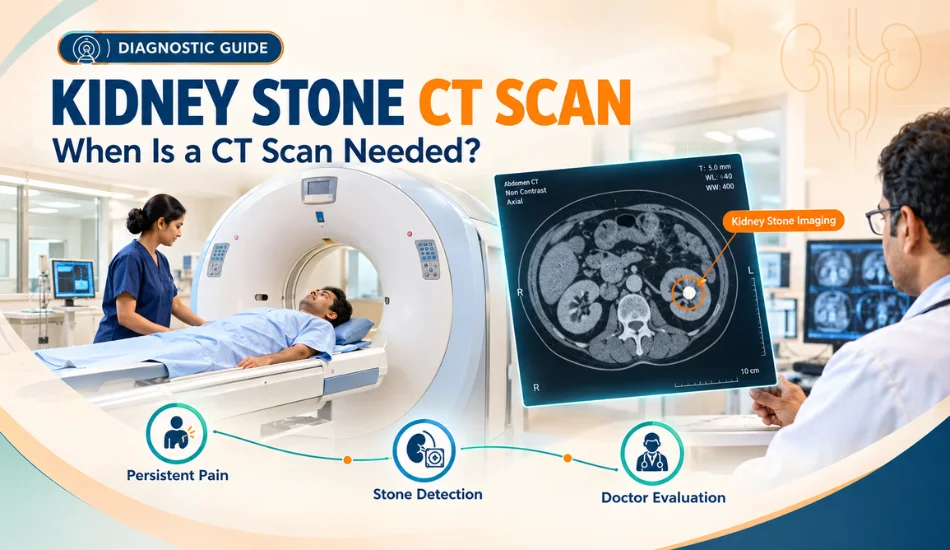
A non-contrast CT scan of the urinary tract is commonly used when detailed assessment of stone size and location is required. Ultrasound may also be used, particularly for assessing the kidneys and urinary obstruction, while blood and urine tests can help identify infection, kidney function problems, or factors that may contribute to stone formation.
If you have recently received a scan showing a kidney or ureter stone, Book Your Kidney Stone Consultation Today so a urology specialist can review the stone size, location and related findings and explain whether observation or active treatment is appropriate.
When Should You See a Urologist?
You should consider a urology consultation if your scan has identified a kidney stone, especially when the stone is increasing in size, causing repeated pain, associated with urinary symptoms, causing obstruction, or has not passed as expected.
Do not wait for the stone to become very large before seeking medical advice. Early assessment can help determine whether monitoring is reasonable or whether treatment should be planned before complications develop.
Kidney Stone Treatment: Which Procedure Is Used for Different Stone Sizes?
When a kidney stone is unlikely to pass naturally or is causing symptoms and complications, active treatment may be recommended. The choice of procedure is not determined by stone size alone. Urologists also consider whether the stone is in the kidney or ureter, its exact position, its density and composition, the anatomy of the urinary tract, kidney function, previous treatment, and the patient’s overall health.
Modern kidney stone treatment is usually minimally invasive. The objective is to remove or break the stone while protecting kidney function and reducing the possibility of future complications.
What Are the Main Kidney Stone Surgery Options?
The most commonly discussed procedures for kidney and ureteral stones are Shock Wave Lithotripsy (SWL/ESWL), Ureteroscopy (URS) and Percutaneous Nephrolithotomy (PCNL). Each has a different role.
| Procedure | How It Works | Commonly Considered For |
|---|---|---|
| SWL / ESWL | Focused shock waves break the stone into smaller fragments that can subsequently pass through the urinary tract. | Selected kidney or ureteral stones where the stone’s size, location and density make shock-wave treatment suitable. |
| Ureteroscopy (URS) | A thin scope is passed through the urinary tract to reach the stone. The stone may be removed or fragmented, commonly with laser energy. | Many ureteral stones and selected kidney stones, particularly when direct treatment is preferred. |
| PCNL | A small access tract is created through the skin into the kidney so the stone can be fragmented and removed. | Larger kidney stones, complex stones and significant stone burden where other approaches may be less suitable. |
Shock Wave Lithotripsy (ESWL): Is It Suitable for Kidney Stones?
Shock Wave Lithotripsy, commonly called ESWL or SWL, uses externally generated shock waves to break a kidney stone into smaller pieces. These fragments may then pass naturally through the urinary tract.
Because there is no need to make an incision into the kidney, ESWL can be an attractive option for selected patients. However, it is not suitable for every stone.
The effectiveness of ESWL can be influenced by stone size, location, hardness or density, body anatomy and the distance between the skin and stone. Some stones may require more than one treatment session.
Advantages of ESWL
For appropriately selected stones, potential advantages include a non-invasive approach, no surgical incision into the kidney and generally less recovery time compared with more invasive procedures.
However, the fragments produced by ESWL still need to leave the body. A larger stone burden may therefore be more difficult to clear completely with shock waves alone.
When May ESWL Not Be the Best Choice?
ESWL may be less suitable when the stone is very large, particularly hard or located in a position where fragments are unlikely to clear effectively. Significant obstruction, certain anatomical factors, pregnancy and some medical conditions may also influence whether shock-wave treatment is appropriate.
The decision should therefore be made after reviewing the imaging rather than simply selecting ESWL based on the stone measurement.
What Is Ureteroscopy With Laser Treatment?
Ureteroscopy is a minimally invasive procedure in which a small camera is guided through the natural urinary passage to reach the ureter or kidney. Once the stone is located, the urologist can fragment it using a laser and remove suitable pieces with specialised instruments.
Because the doctor can directly see the stone, ureteroscopy provides precise treatment and can be useful for stones that are unlikely to pass naturally or have not responded to conservative management.
Depending on the situation, a temporary ureteral stent may be placed after the procedure to help urine drain while the urinary tract heals.
When Is Ureteroscopy Commonly Considered?
Ureteroscopy may be considered for symptomatic ureteral stones, stones causing persistent obstruction, stones that are unlikely to pass naturally, or selected kidney stones where direct endoscopic treatment is appropriate.
It can also be considered when rapid or more predictable stone clearance is preferred, or when ESWL is unlikely to provide satisfactory results.
What Is PCNL Kidney Stone Surgery?
Percutaneous Nephrolithotomy, commonly known as PCNL, is a minimally invasive procedure primarily used for larger or more complex kidney stones. Instead of reaching the stone through the natural urinary passage, the surgeon creates a small access tract through the back directly into the kidney.
Through this tract, specialised instruments can break and remove the stone. PCNL is particularly important for patients with a substantial stone burden where smaller procedures may require multiple sessions or may not provide adequate clearance.
At What Size Is PCNL Considered?
There is no absolute size at which PCNL becomes mandatory for every patient. However, larger kidney stones, particularly stones around or above 20 mm, are commonly evaluated for PCNL because spontaneous passage is not expected and a high stone burden may be difficult to treat effectively with less invasive approaches.
PCNL may also be considered for complex or branching stones, including certain staghorn stones, depending on the patient's imaging and clinical condition.
For stones between approximately 10 and 20 mm, several treatment options may be available. The best approach depends heavily on the stone's location, density, anatomy and the patient's individual circumstances.
Kidney Stone Size vs Treatment: General Guide
| Stone Size | Possible Approach | Important Considerations |
|---|---|---|
| Under 5 mm | Observation may be possible if there are no complications | Symptoms, stone location and obstruction must still be monitored |
| 5–10 mm | Observation, medical treatment or a procedure may be considered | Natural passage becomes less predictable as size increases |
| 10–20 mm | Active treatment is frequently considered when clinically appropriate | ESWL, ureteroscopy or other treatment may be selected according to location and stone characteristics |
| 20 mm or larger | Active stone removal is commonly recommended | PCNL is often an important treatment option for substantial kidney stone burden |
This table is intended for general education. It should not be used as a personal treatment plan because the same-sized stone can require different management in different patients.
Why Can Two Stones of the Same Size Need Different Treatments?
Imagine two patients who both have a 10 mm stone. One stone may be located in a favourable position inside the kidney without causing symptoms or obstruction. The other may be lodged in the ureter and blocking urine flow while causing repeated severe pain.
Although the measured size is identical, the treatment decision can be completely different.
Doctors may consider:
• Stone location: Kidney and ureteral stones behave differently.
• Stone density: Some hard stones are more resistant to shock-wave fragmentation.
• Obstruction: Blocked urine flow can change the urgency of treatment.
• Infection: Infection behind an obstruction can become a medical emergency.
• Symptoms: Recurrent severe pain may favour active treatment.
• Kidney function: Reduced or threatened kidney function requires careful management.
• Anatomy: The shape and drainage pattern of the kidney can influence treatment success.
• Previous treatment: Previous procedures and remaining stone fragments may affect the next step.
Can Kidney Stones Be Treated Without Surgery?
Yes, some kidney and ureteral stones can be managed without a procedure. Small stones that are likely to pass may be observed under medical supervision, particularly when the patient is stable and there is no infection, significant obstruction or deterioration in kidney function.
Depending on the stone and the patient's condition, treatment may include adequate fluid intake, appropriate pain management and, for selected ureteral stones, medication that may help facilitate stone passage.
However, drinking excessive amounts of water does not guarantee that a large stone will pass. Forced fluid intake can also be inappropriate in some situations. Patients should follow the hydration and medication advice provided by their doctor.
What If the Stone Is Not Causing Pain?
A kidney stone does not necessarily need immediate surgery simply because it is visible on a scan. Some non-obstructing kidney stones can remain without symptoms and may be monitored with periodic imaging.
However, an asymptomatic stone should not automatically be ignored. A stone can increase in size, move into the ureter, cause obstruction or become associated with infection. Follow-up allows the doctor to identify changes and determine whether treatment is becoming necessary.
When Does a Kidney Stone Become an Emergency?
One of the most important points about kidney stones is that an emergency can occur regardless of the stone's exact size.
A blocked urinary system combined with infection can become a serious medical emergency. Symptoms such as fever, chills, severe weakness, confusion or feeling seriously unwell along with urinary obstruction require urgent medical assessment.
Similarly, urgent evaluation may be required when there is inability to pass urine, persistent vomiting causing dehydration, severe uncontrolled pain, or concern about kidney function—particularly in someone with a single functioning kidney.
Why Imaging Is Important Before Kidney Stone Surgery
Before selecting a procedure, the urologist needs accurate information about the stone. A non-contrast CT scan is commonly used when detailed assessment is required because it can show stone size, location, number of stones and urinary tract obstruction.
Ultrasound is also widely used and can help identify kidney stones and swelling of the urinary system. Depending on the clinical situation, additional imaging may be recommended.
Blood and urine investigations are also important. They may help identify infection, assess kidney function and provide information relevant to future stone prevention.
What Happens Before Kidney Stone Surgery?
Before a procedure, the medical team generally reviews the patient's symptoms, imaging reports, medical history and current medicines. Blood and urine tests may be performed, particularly when infection or kidney function needs to be assessed.
The urologist will explain the recommended procedure, expected benefits, possible risks, alternatives and follow-up requirements. Patients should also tell the medical team about blood-thinning medicines, allergies, previous surgeries and other important medical conditions.
What Happens After Kidney Stone Treatment?
Recovery depends on the procedure used and the size and complexity of the stone. After ESWL, patients may need to pass stone fragments naturally. After ureteroscopy, temporary urinary symptoms may occur, particularly when a stent has been placed.
After PCNL, recovery can take longer because the procedure involves direct access to the kidney, although it is still considered a minimally invasive approach compared with traditional open surgery.
Follow-up imaging may be recommended to determine whether stone fragments remain. The doctor may also recommend testing a retrieved stone or evaluating urine and blood factors to help reduce the risk of future stones.
Can Kidney Stones Come Back After Surgery?
Yes. Removing a kidney stone treats the existing stone but does not necessarily remove the underlying tendency to form stones.
Kidney stone recurrence can be influenced by hydration, diet, metabolic factors, urinary chemistry, family history, certain medical conditions and the type of stone. For patients with recurrent stones, preventive evaluation can be an important part of long-term care.
How Can You Reduce the Risk of Future Kidney Stones?
Prevention should be personalised according to the stone type and the patient's medical evaluation. In general, maintaining appropriate fluid intake is an important part of kidney stone prevention.
Doctors may also recommend dietary changes depending on the type of stone. These may involve reviewing sodium intake, animal protein, calcium intake and specific foods that contribute to certain types of stones. Patients should avoid making extreme dietary changes without medical guidance because the appropriate diet differs between stone types.
Kidney Stone Surgery Recovery: What Should You Expect?
Recovery after kidney stone treatment depends on the procedure performed, the size and location of the stone, the number of stones treated and the patient's overall health. Minimally invasive procedures generally allow patients to return to routine activities sooner than traditional open surgery.
After a procedure, mild discomfort, urinary frequency or a small amount of blood in the urine may occur for a short period. However, symptoms that are severe, persistent or associated with fever should not be ignored.
The treating urologist will provide specific instructions about medicines, hydration, physical activity, follow-up appointments and any temporary urinary stent that may have been placed.
Recovery After ESWL
After Shock Wave Lithotripsy, the stone is broken into smaller fragments rather than necessarily being removed immediately. These fragments may pass through the urine over the following days or weeks.
Some patients may notice blood in the urine or experience temporary discomfort as fragments move through the urinary tract. Follow-up may be recommended to determine whether the stone has been adequately cleared.
Recovery After Ureteroscopy
Ureteroscopy is usually performed through the natural urinary passage, so there is no external incision on the kidney. Depending on the complexity of the treatment, patients may return home the same day or remain under observation according to the treating team's advice.
A temporary ureteral stent may be used after the procedure. While a stent is in place, some patients experience urinary frequency, urgency, discomfort during urination or pain in the lower abdomen or side. These symptoms generally improve after the stent is removed.
Recovery After PCNL
PCNL involves creating a small access route through the back into the kidney. Because it is generally used for larger or more complex stones, recovery may take longer than after some ureteroscopy or ESWL procedures.
The medical team will monitor the patient and provide instructions regarding wound care, activity, medicines and follow-up. The exact recovery period varies from person to person and depends on the complexity of the procedure.
What Are the Possible Risks of Kidney Stone Procedures?
Kidney stone procedures are commonly performed, but like any medical procedure, they can have potential risks. The risks vary according to the treatment used and the patient's individual health condition.
Possible complications may include bleeding, infection, urinary tract injury, residual stone fragments, temporary urinary symptoms, need for additional treatment or recurrence of stones.
Serious complications are uncommon, but patients should discuss the individual risks and benefits with their urologist before treatment.
Can a Kidney Stone Be Removed in One Procedure?
Sometimes a stone can be completely treated during a single procedure, but this cannot be guaranteed. Larger stones, multiple stones, complex stone burdens or difficult anatomical locations may require staged treatment.
For example, a large stone may need more than one procedure to achieve satisfactory clearance. The treating urologist will decide whether a single-stage or staged approach is safer and more effective.
What Happens If Some Stone Fragments Remain?
Small residual fragments may sometimes be monitored depending on their size, location and symptoms. However, larger residual fragments can potentially grow or cause future obstruction.
Follow-up imaging helps the doctor determine whether the urinary system is clear or whether additional treatment is necessary. Patients should attend recommended follow-up appointments even if their pain has disappeared.
Signs You Should Not Ignore After Kidney Stone Treatment
Contact your medical team or seek urgent medical attention if you develop high fever, chills, severe or worsening pain, persistent vomiting, difficulty passing urine, significant bleeding, severe weakness or other symptoms suggesting infection or urinary obstruction.
Patients with a urinary stent should also follow the planned removal or replacement schedule. A stent should not be left in place longer than advised by the treating doctor.
Kidney Stone Prevention After Treatment
Preventing another stone is an important part of long-term kidney health. A person who has developed one kidney stone may be at risk of developing another, particularly when the underlying causes are not addressed.
Prevention should be based on the type of stone and the patient's individual risk factors. A doctor may recommend urine testing, blood investigations or analysis of a retrieved stone to understand why the stone developed.
Stay Adequately Hydrated
Maintaining adequate fluid intake helps dilute urine and can reduce the concentration of substances that contribute to stone formation. However, the ideal fluid requirement can vary depending on body size, climate, activity level, kidney function and other medical conditions.
People who work outdoors or spend significant time in hot weather may need to pay particular attention to hydration because excessive fluid loss through sweating can make urine more concentrated.
Be Careful With Excess Salt
High sodium intake can increase the amount of calcium excreted in urine in some people, potentially contributing to calcium-based kidney stone formation. Reducing excessive salt intake is therefore commonly included in kidney stone prevention advice.
Instead of focusing only on individual foods, patients should look at their overall dietary pattern and follow personalised advice when they have recurrent stones.
Do Not Eliminate Dietary Calcium Without Medical Advice
Patients sometimes assume that all calcium-containing foods should be avoided after developing a kidney stone. This is not necessarily correct. The appropriate amount of dietary calcium depends on the individual and the type of stone.
Unnecessary restriction of dietary calcium can have other nutritional consequences. Patients should therefore discuss major dietary changes with their doctor or a qualified diet professional.
When Should You Consult a Urologist for a Kidney Stone?
A urology consultation is particularly important when a scan has identified a stone that is large, growing, causing repeated symptoms or associated with urinary obstruction.
You should also seek medical assessment when pain repeatedly returns, there is blood in the urine, urinary symptoms develop, previous stones have not passed as expected, or you have a history of recurrent kidney stones.
People with a single functioning kidney, known kidney disease or other significant urinary tract problems should not delay professional evaluation when a stone is detected.
Frequently Asked Questions About Kidney Stone Size and Surgery
1. At what size does a kidney stone require surgery?
There is no single size that automatically means surgery is required. Stones smaller than 5 mm may often pass naturally, while stones above 10 mm are increasingly less likely to pass without intervention. Larger stones, particularly those around 20 mm or more, commonly require active treatment. The decision also depends on location, obstruction, symptoms, infection and kidney function.
2. Can a 5 mm kidney stone pass naturally?
Yes, a 5 mm stone may pass naturally, particularly when it is located in the ureter. However, passage is not guaranteed. The stone's location, shape, anatomy and whether it is progressing all influence the likelihood of spontaneous passage.
3. Can a 10 mm kidney stone pass without surgery?
A 10 mm stone is considerably less likely to pass naturally than a smaller stone. Depending on its location and clinical situation, a urologist may recommend observation in selected cases or active treatment such as ESWL or ureteroscopy. A ureteral stone of this size causing obstruction or persistent symptoms may require more active management.
4. Is a 15 mm kidney stone dangerous?
A 15 mm stone should be evaluated by a urologist because spontaneous passage is unlikely. Whether it is immediately dangerous depends on factors such as obstruction, infection, kidney function and symptoms. A large stone can remain without symptoms in some patients, but it may still require planned treatment or monitoring.
5. Is a 20 mm kidney stone considered large?
Yes. A 20 mm kidney stone represents a substantial stone burden and is generally not expected to pass naturally. Active treatment is commonly considered, and PCNL may be an important option for suitable larger kidney stones. The final procedure depends on imaging and the patient's individual circumstances.
6. Which is better for kidney stones: ESWL or laser treatment?
Neither treatment is universally better. ESWL may be suitable for selected stones that can be effectively targeted and fragmented with shock waves. Laser treatment through ureteroscopy allows direct access to the stone and may provide more predictable treatment in certain situations. Stone size, location, density and patient factors determine which option is more appropriate.
7. When is PCNL recommended for kidney stones?
PCNL is commonly considered for larger kidney stones, particularly substantial stone burdens around or above 20 mm, as well as certain complex or branching stones. It may also be selected in other situations where a different treatment is unlikely to provide adequate stone clearance.
8. Can kidney stones be treated without surgery?
Yes. Selected small stones may pass naturally with medical observation and appropriate symptom management. Some ureteral stones may also be treated with medicines that facilitate passage when appropriate. However, a large stone, persistent obstruction, infection, worsening kidney function or uncontrolled symptoms may require active intervention.
9. Does a kidney stone always cause pain?
No. Some kidney stones cause no symptoms and are discovered incidentally during an ultrasound or CT scan. Pain often occurs when a stone moves into the ureter and obstructs urine flow. An asymptomatic stone can still require monitoring because it may grow, move or cause complications later.
10. Can a kidney stone damage the kidney?
A stone can potentially affect kidney function when it causes significant or prolonged obstruction, particularly when complications such as infection are present. The risk depends on the severity and duration of obstruction and whether one or both kidneys are affected. Prompt medical evaluation is important when obstruction is suspected.
11. Is kidney stone surgery painful?
Kidney stone procedures are generally performed with appropriate anaesthesia or sedation, so patients should not experience the procedure itself in the same way as untreated stone pain. Some discomfort may occur during recovery, particularly with stone fragments passing or when a temporary ureteral stent is present. Pain management is provided according to the procedure and individual needs.
12. Can kidney stones come back after surgery?
Yes. Stone removal does not necessarily eliminate the factors that caused the stone to form. Adequate hydration, appropriate dietary measures and evaluation for recurrent stone risk can help reduce the likelihood of future stones.
13. Is fever with a kidney stone an emergency?
Fever or chills in a person with suspected urinary obstruction can indicate an infected obstructed urinary system, which can become a serious emergency. Such symptoms require urgent medical assessment rather than simply waiting for the stone to pass.
14. Should I wait for a kidney stone to pass on its own?
Waiting may be appropriate for selected small stones when the patient is stable and there is no infection, significant obstruction, uncontrolled pain or deterioration in kidney function. However, observation should be medically guided and followed up when recommended. Do not continue waiting indefinitely if symptoms persist or worsen.
Conclusion: When Is Kidney Stone Surgery Needed?
The question “At what size is kidney stone surgery needed?” does not have one answer that applies to every patient. Stone size is an important factor, but it is only one part of the treatment decision.
Very small stones, particularly those below 5 mm, may often pass naturally when they are located appropriately and there are no complications. Stones between 5 and 10 mm have a less predictable chance of spontaneous passage, while stones above 10 mm are increasingly likely to require active treatment. Stones around 15–20 mm or larger generally need specialist evaluation because natural passage is unlikely and a procedure may be recommended.
For larger kidney stones, treatments such as ESWL, ureteroscopy with laser fragmentation and PCNL may be considered. The most appropriate option depends on the stone's size, location, density, kidney anatomy, symptoms and the patient's overall health.
Most importantly, a stone associated with fever, infection, significant obstruction, inability to pass urine, severe uncontrolled pain or worsening kidney function should receive prompt medical attention regardless of its size.
If your ultrasound or CT scan has shown a kidney or ureter stone and you are unsure whether it requires observation or a procedure, Book Your Kidney Stone Consultation Today and get the stone size, location and treatment options reviewed by a qualified urology specialist.
Early evaluation can help prevent avoidable complications and ensure that treatment is planned according to your individual condition rather than based on stone size alone.