In the beginning
Gallstones are one of the most common digestive health problems affecting millions of people worldwide. These hardened deposits form inside the gallbladder and can range in size from tiny grains to large stones. While some gallstones remain silent and cause no symptoms, others can lead to severe abdominal pain, nausea, vomiting, indigestion, infection, and serious complications if left untreated.
If you are searching for the best Gallstone Treatment in Delhi, it is important to understand the available treatment options, symptoms, causes, recovery process, dietary recommendations, and preventive measures. Modern hospitals in Delhi now offer advanced diagnostic facilities and minimally invasive surgical procedures that provide safe and effective treatment with faster recovery.
Early diagnosis and timely treatment can prevent complications such as gallbladder infection, bile duct obstruction, pancreatitis, and recurrent gallstone attacks. Understanding your treatment options helps you make informed healthcare decisions and achieve long-term relief from gallstone-related problems.
Establishing An Understanding Of Gallstones :
The gallbladder is a small organ located beneath the liver that stores bile, a digestive fluid that helps break down fats. Gallstones develop when substances in bile, such as cholesterol or bilirubin, become imbalanced and form solid particles.
Gallstones can be classified into:
- Cholesterol Gallstones – The most common type, formed due to excess cholesterol in bile.
- Pigment Gallstones – Formed due to excess bilirubin in the digestive system.
- Mixed Gallstones – Contain a combination of cholesterol and pigment deposits.
Many people may have gallstones for years without symptoms. However, once a stone blocks the bile duct, immediate medical attention may become necessary.
Just Why Early Treatment Important ?
Gallstones do not always require immediate surgery. However, symptomatic gallstones can become dangerous if ignored. Delayed treatment increases the risk of:
- Gallbladder inflammation (Cholecystitis)
- Bile duct blockage
- Jaundice
- Pancreatitis
- Severe infections
- Repeated gallstone attacks
- Emergency surgery
Early diagnosis allows doctors to recommend the most appropriate treatment option before complications develop.
Table of Contents
1. Understanding Gallstones
2. Early Signs and Symptoms of Gallstones
3. Gallstone Symptoms in Women
4. Common Causes of Gallstones
5. Risk Factors for Gallbladder Stones
6. How Gallstones Are Diagnosed
7. Available Gallstone Treatment Options
8. Can Gallstones Be Treated Without Surgery?
9. Laparoscopic Gallbladder Surgery
10. Recovery After Gallbladder Surgery
11. Life After Gallbladder Removal
12. Foods to Eat with Gallstones
13. Foods to Avoid with Gallstones
14. Gallstones vs Kidney Stones
15. Gallstones vs Gastric Pain
16. Gallstones vs Appendicitis
17. Prevention Tips for Gallstones
18. Frequently Asked Questions
Early Signs and Symptoms of Gallstones
The symptoms of gallstones vary depending on their size and location. Common symptoms include:
| Symptom | Description |
|---|---|
| Upper Abdominal Pain | Sudden pain in the upper right side of the abdomen. |
| Back Pain | Pain may radiate to the shoulder blades or back. |
| Nausea & Vomiting | Common during gallstone attacks. |
| Indigestion | Difficulty digesting fatty foods. |
| Bloating | Feeling of fullness after meals. |
| Jaundice | Yellowing of eyes and skin due to bile duct blockage. |
| Fever | May indicate infection of the gallbladder. |
Gallstone Symptoms in Women
Women are more likely to develop gallstones than men due to hormonal influences. Common symptoms include:
- Pain after eating fatty meals
- Bloating and indigestion
- Nausea during pregnancy
- Upper abdominal discomfort
- Recurring digestive issues
Pregnancy, obesity, and hormonal medications can increase the risk of gallstone formation in women.
What Causes Gallstones?
Several factors contribute to gallstone development:
- Excess cholesterol in bile
- Poor gallbladder emptying
- Obesity
- Rapid weight loss
- High-fat diet
- Diabetes
- Liver disorders
- Family history of gallstones
- Pregnancy
- Age-related changes
Risk Factors for Gallstones
| Risk Factor | Impact |
|---|---|
| Obesity | Increases cholesterol production. |
| Female Gender | Hormonal changes increase risk. |
| Age Above 40 | Gallstone prevalence increases with age. |
| Diabetes | Associated with higher gallstone risk. |
| Sedentary Lifestyle | Contributes to poor gallbladder function. |
| High Cholesterol Diet | Promotes stone formation. |
Patient Preparation :
Doctors usually recommend diagnostic tests before treatment, including:
- Abdominal Ultrasound
- Liver Function Tests
- Blood Investigations
- CT Scan
- MRI Scan
- Endoscopic Imaging
These tests help determine the size, number, and location of gallstones and guide treatment planning.
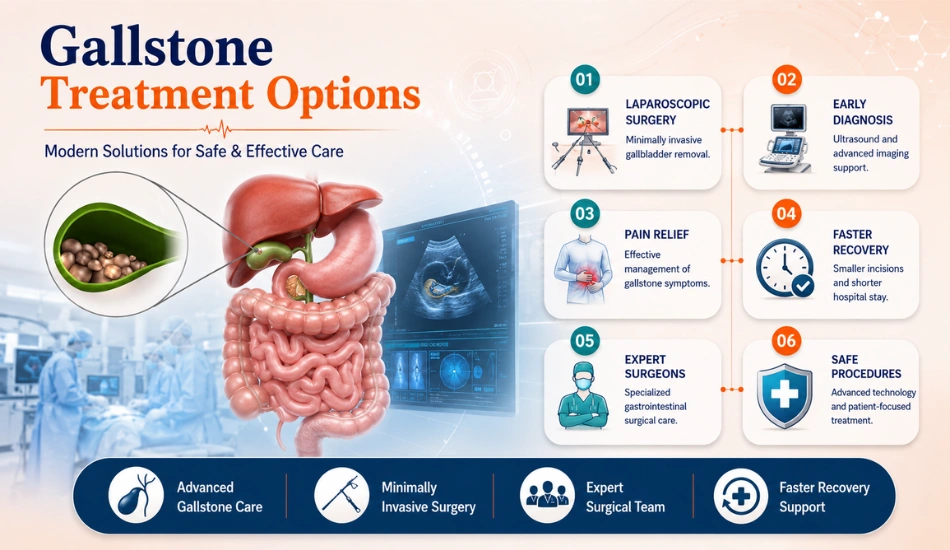
Available Gallstone Treatment Options
| Treatment | Suitable For | Benefits |
|---|---|---|
| Observation | Asymptomatic Gallstones | No immediate intervention needed. |
| Medications | Small Cholesterol Stones | May help dissolve certain stones. |
| Lifestyle Changes | Mild Symptoms | Reduces future risk. |
| Laparoscopic Surgery | Symptomatic Gallstones | Most effective permanent treatment. |
| Emergency Surgery | Complicated Cases | Treats severe infection or blockage. |
Can Gallstones Be Treated Without Surgery?
In some cases, doctors may recommend medications and dietary modifications. However, non-surgical treatment is usually effective only for selected patients with small cholesterol stones.
Most symptomatic gallstones eventually require gallbladder removal because stones often recur even after temporary relief.
The day of the magical operation :
Laparoscopic Gallbladder Surgery (Laparoscopic Cholecystectomy) is considered the gold standard treatment for symptomatic gallstones.
During the procedure:
- Small incisions are made in the abdomen.
- A camera guides the surgeon.
- The gallbladder is removed safely.
- Patients experience minimal pain.
- Hospital stay is usually short.
- Recovery is faster than open surgery.
The Superhero Tools :
Modern hospitals in Delhi use:
- High-definition laparoscopic systems
- Digital imaging technology
- Advanced anesthesia techniques
- Minimally invasive surgical instruments
- Enhanced recovery protocols
These technologies improve safety, precision, and patient outcomes.
Recovery After Gallbladder Surgery
| Recovery Stage | Expected Progress |
|---|---|
| Day 1 | Walking and light activity encouraged. |
| Week 1 | Most patients return to daily activities. |
| Week 2–3 | Improved digestion and energy levels. |
| Week 4–6 | Complete recovery for most patients. |
Foods to Eat with Gallstones
- Fresh fruits
- Green vegetables
- Whole grains
- Oatmeal
- Lean proteins
- Low-fat dairy products
- Plenty of water
Foods to Avoid with Gallstones
- Fried foods
- Fast food
- High-fat dairy products
- Processed snacks
- Sugary beverages
- Red meat in excess
- Heavy oily meals
Gallstones vs Kidney Stones
| Gallstones | Kidney Stones |
|---|---|
| Develop in gallbladder | Develop in kidneys |
| Affect digestion | Affect urinary system |
| Cause upper abdominal pain | Cause flank pain |
| Usually treated by general surgeons | Usually treated by urologists |
Gallstones vs Gastric Pain
Gallstone pain often occurs after meals and is concentrated in the upper right abdomen, whereas gastric pain is usually associated with acidity, indigestion, or stomach disorders.
Gallstones vs Appendicitis
Gallstone pain occurs in the upper abdomen, while appendicitis typically causes pain in the lower right side of the abdomen. Accurate diagnosis is essential because both conditions may require surgery.
Taking Care of Yourself :
Preventing gallstones involves maintaining a healthy lifestyle. Important prevention tips include:
- Maintain healthy body weight.
- Exercise regularly.
- Eat a balanced diet.
- Avoid rapid weight loss.
- Drink adequate water.
- Control diabetes and cholesterol levels.
- Attend regular health checkups.
A Guide to Feeling Better :
Modern Gallstone Treatment in Delhi offers highly effective solutions for patients suffering from gallbladder stones. Whether treatment involves lifestyle modifications, medications, or advanced laparoscopic gallbladder surgery, early diagnosis remains the key to preventing serious complications. With experienced surgeons, modern technology, and comprehensive post-operative care, patients can achieve long-term relief, faster recovery, and a healthier quality of life.
FAQs
1. Can gallstones dissolve naturally?
Most gallstones do not dissolve naturally. Some small cholesterol stones may respond to medications, but surgery is often the most effective treatment.
2. Is gallbladder removal safe?
Yes. Laparoscopic gallbladder removal is a safe and commonly performed procedure with high success rates.
3. Can gallstones come back after surgery?
No. Once the gallbladder is removed, gallstones cannot form inside it again.
4. What is the best treatment for symptomatic gallstones?
Laparoscopic gallbladder surgery is considered the most effective and permanent treatment for symptomatic gallstones.
5. How long is recovery after gallbladder surgery?
Most patients return to normal activities within one to two weeks and achieve complete recovery within four to six weeks.