In the beginning
Dental braces are one of the most effective orthodontic treatments for correcting crooked teeth, bite problems, and alignment issues. While braces help create a healthier and more attractive smile, they also require special care and dietary adjustments. Choosing the right foods can protect your braces, reduce discomfort, and support faster treatment progress. Understanding proper Braces Care is essential for maintaining oral health and avoiding unnecessary damage to brackets and wires during orthodontic treatment.
Establishing An Understanding Of Braces Care :
Braces work by applying gentle pressure to gradually move teeth into their correct positions. Since brackets and wires are attached to the teeth, certain foods can damage orthodontic appliances or make cleaning more difficult. Proper braces care includes maintaining good oral hygiene, attending regular orthodontic appointments, and following dietary recommendations provided by your dentist or orthodontist.
Just Why Food Choices Important ?
The foods you eat can directly impact the success of your orthodontic treatment. Hard, sticky, or chewy foods can break brackets, bend wires, and prolong treatment duration. On the other hand, soft and nutritious foods help reduce discomfort, protect braces, and promote healthy teeth and gums throughout the treatment period.
Table of Contents
Understanding Braces Care
Why Diet Matters During Orthodontic Treatment
Foods to Eat with Braces
Foods to Avoid While Wearing Braces
Oral Hygiene Tips for Braces Patients
Managing Discomfort After Adjustments
Long-Term Benefits of Proper Braces Care
Maintaining a Healthy Smile During Treatment
Patient Preparation :
When braces are first placed or adjusted, teeth and gums may feel sensitive for a few days. During this period, patients should choose soft foods that are easy to chew and avoid foods that can damage orthodontic appliances. Following the orthodontist's instructions can help make the adjustment period more comfortable.
The day of the magical operation :
After braces placement, patients may experience mild pressure as teeth begin to move. Eating soft and nutritious foods helps minimize discomfort and prevents unnecessary stress on brackets and wires. Regular dental checkups and orthodontic visits ensure that treatment progresses smoothly.
The Superhero Tools :
Modern orthodontic treatment uses advanced braces systems, digital imaging, and customized treatment planning to improve comfort and efficiency. However, patient cooperation and proper braces care remain equally important for achieving the best possible results and avoiding treatment delays.
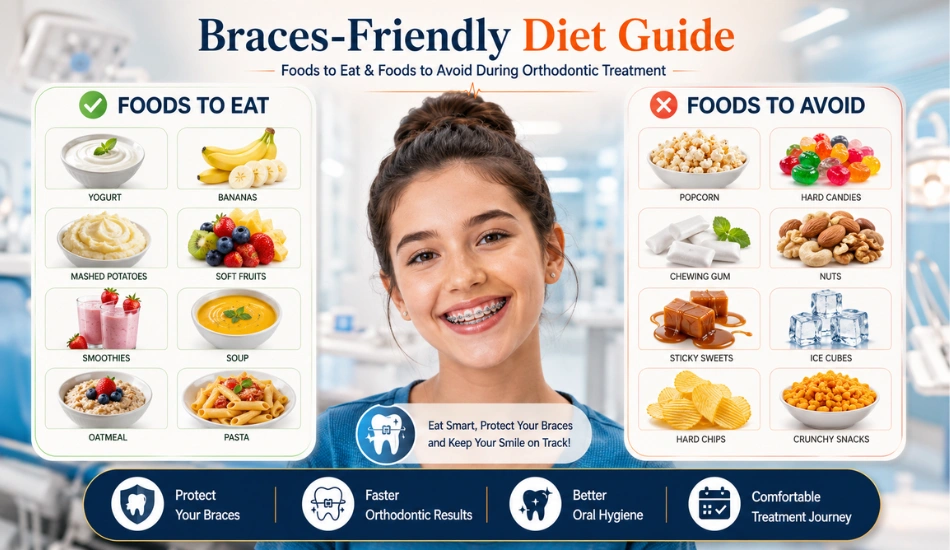
Foods to Eat While Wearing Dental Braces
| Recommended Foods | Benefits for Braces Patients |
|---|---|
| Yogurt | Soft, nutritious, and easy to eat without putting pressure on braces. |
| Mashed Potatoes | Comfortable to chew and ideal after braces adjustments. |
| Soft Fruits | Bananas, papaya, mangoes, and ripe pears provide vitamins without damaging braces. |
| Cooked Vegetables | Easy to chew and rich in essential nutrients for oral health. |
| Soups | Provide hydration and nutrition while being gentle on teeth and gums. |
| Soft Rice & Pasta | Comfortable to eat and suitable during the initial stages of treatment. |
| Eggs | Excellent source of protein and easy to consume. |
| Smoothies | Nutritious and convenient when teeth feel sensitive after adjustments. |
Foods to Avoid While Wearing Dental Braces
| Foods to Avoid | Reason to Avoid |
|---|---|
| Hard Candies | Can crack brackets and damage orthodontic wires. |
| Popcorn | Kernels can become trapped in braces and cause damage. |
| Chewing Gum | Can stick to brackets and make cleaning difficult. |
| Sticky Toffees | May pull brackets loose and interfere with treatment. |
| Nuts | Hard texture can break braces components. |
| Ice Cubes | Chewing ice can damage brackets and wires. |
| Crunchy Chips | Can bend orthodontic wires and cause discomfort. |
| Whole Apples & Corn on the Cob | May place excessive pressure on braces if bitten directly. |
Recovery Time :
Patients usually experience mild soreness after braces placement or adjustments, which typically improves within a few days. Eating soft foods, staying hydrated, and following orthodontic advice can help manage discomfort effectively. Consistent braces care supports smoother treatment progress and better results.
Taking Care of Yourself :
Proper braces care includes brushing after meals, flossing regularly, using orthodontic cleaning tools, and attending scheduled dental appointments. Patients should avoid sugary foods and beverages that can increase the risk of cavities around brackets. Good oral hygiene is essential for maintaining healthy teeth and gums during orthodontic treatment.
A Guide to Feeling Better :
Following the right diet and maintaining excellent Braces Care can help protect orthodontic appliances, reduce treatment complications, and achieve a straighter smile more efficiently. Eating braces-friendly foods, avoiding hard and sticky snacks, and maintaining proper oral hygiene are key to successful orthodontic treatment. With the right care and guidance, patients can enjoy healthier teeth and a confident smile after braces treatment.
FAQs
1. What foods are best to eat with braces?
Soft foods such as yogurt, soups, mashed potatoes, eggs, smoothies, and cooked vegetables are ideal for braces patients.
2. Can I eat chips while wearing braces?
Crunchy chips should be limited because they can damage brackets and orthodontic wires.
3. Why should sticky foods be avoided with braces?
Sticky foods can pull brackets loose, get trapped around braces, and make cleaning difficult.
4. How can I reduce discomfort after braces adjustments?
Eating soft foods, staying hydrated, and following your orthodontist's recommendations can help reduce discomfort.
5. How important is oral hygiene during braces treatment?
Proper brushing, flossing, and regular dental visits are essential to prevent cavities, gum disease, and treatment delays.