

In the beginning
Laser circumcision has become one of the most commonly performed procedures for treating conditions such as phimosis, recurrent infections, foreskin tightness, and hygiene-related concerns. Modern circumcision techniques offer less pain, minimal bleeding, quicker healing, and faster recovery compared to traditional methods.
However, the success of the procedure does not depend only on the surgery itself. Proper post-operative care plays a crucial role in ensuring smooth healing and preventing complications. Many patients unintentionally delay recovery by making avoidable mistakes during the healing period.
If you have recently undergone circumcision or are planning the procedure, understanding the common mistakes to avoid during circumcision recovery can help reduce discomfort, minimize infection risk, and support faster healing.
Establishing An Understanding Of Circumcision Recovery :
Circumcision is a surgical procedure that removes the foreskin covering the head of the penis. Following the procedure, the body naturally begins the healing process. Most patients recover within a few weeks, but proper care is essential during this period.
Mild swelling, sensitivity, slight discomfort, and temporary redness are generally normal parts of recovery. However, improper care can increase the risk of infection, delayed healing, excessive swelling, and unnecessary complications.
Just Why Recovery Care Important ?
The recovery period is when the surgical site is most vulnerable. Following the surgeon's instructions carefully helps protect the wound, reduce discomfort, and ensure the best cosmetic and functional outcome.
Many recovery problems occur because patients resume normal activities too soon or neglect important post-operative precautions.
Table of Contents
1. Understanding Circumcision Recovery
2. Normal Healing After Circumcision
3. Common Mistakes to Avoid During Recovery
4. Signs of Healthy Healing
5. Warning Signs of Complications
6. Personal Hygiene Guidelines
7. Activity Restrictions After Circumcision
8. Diet and Hydration Tips
9. Recovery Timeline
10. When to Contact Your Doctor
11. Frequently Asked Questions
What Is Normal During Circumcision Recovery?
Many patients become concerned about symptoms that are actually part of the normal healing process.
| Normal Recovery Sign | Explanation |
|---|---|
| Mild Swelling | Usually improves gradually within days. |
| Redness | Common during the early healing phase. |
| Slight Discomfort | Typically manageable with medications. |
| Mild Yellowish Layer | Often part of normal wound healing. |
| Sensitivity | Temporary as tissues heal. |
Understanding what is normal helps reduce unnecessary anxiety during recovery.
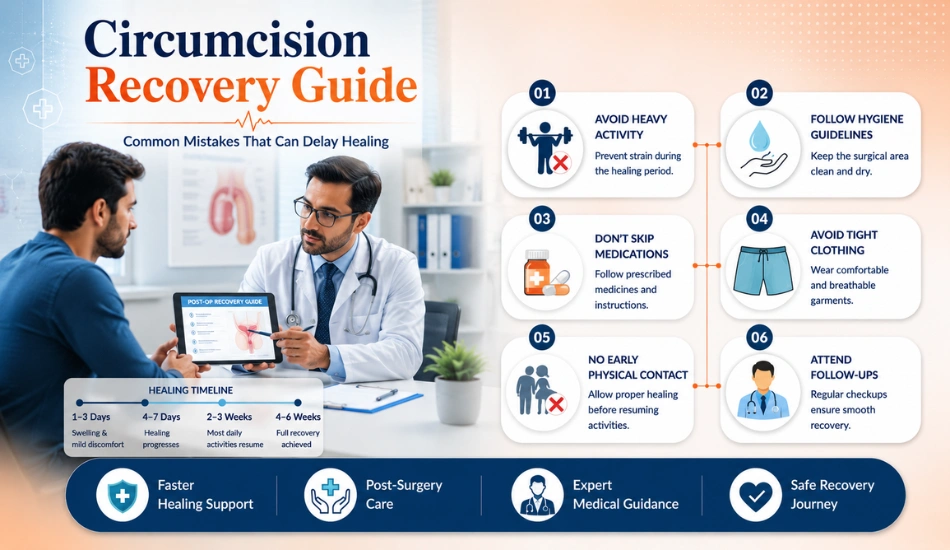
Mistake #1: Ignoring Doctor's Instructions
One of the most common mistakes is failing to follow post-operative instructions provided by the surgeon.
Doctors provide personalized guidance regarding:
- Medication schedules.
- Wound care.
- Bathing instructions.
- Physical activity restrictions.
- Follow-up appointments.
Ignoring these recommendations can significantly affect healing.
Mistake #2: Returning to Physical Activities Too Early
Many patients feel better within a few days and assume they can resume normal activities immediately. However, excessive physical strain may increase swelling and disrupt healing.
Avoid:
- Heavy lifting.
- Gym workouts.
- Running.
- Cycling.
- Sports activities.
- Strenuous exercise.
Your surgeon will advise when these activities can be resumed safely.
Mistake #3: Poor Personal Hygiene
Keeping the surgical area clean is extremely important during recovery.
| Poor Hygiene Practice | Potential Problem |
|---|---|
| Skipping Cleaning Instructions | Increased infection risk. |
| Dirty Clothing | Bacterial contamination. |
| Ignoring Dressing Changes | Delayed wound healing. |
| Touching Wound Frequently | Risk of irritation and infection. |
Follow all wound care instructions carefully to support healthy recovery.
Patient Preparation :
Recovery begins immediately after surgery. Patients should prepare by arranging:
- Comfortable loose clothing.
- Prescribed medications.
- Clean dressings if advised.
- Adequate rest time.
- Hydration and nutritious meals.
Proper preparation often makes recovery easier and more comfortable.
Mistake #4: Wearing Tight Clothing
Tight underwear or clothing may create unnecessary friction around the healing area.
During recovery, choose:
- Loose-fitting underwear.
- Soft cotton fabrics.
- Comfortable trousers.
- Clothing that minimizes pressure on the surgical site.
This helps reduce irritation and improves comfort.
Mistake #5: Missing Prescribed Medications
Some patients stop taking medications as soon as discomfort decreases.
Medications prescribed after circumcision may include:
- Pain relievers.
- Antibiotics.
- Anti-inflammatory medications.
- Topical ointments.
Completing the prescribed course helps reduce complications and supports healing.
Mistake #6: Resuming Sexual Activity Too Soon
This is one of the most important recovery precautions.
Sexual activity before complete healing may:
- Reopen the wound.
- Cause bleeding.
- Delay recovery.
- Increase infection risk.
- Create discomfort and swelling.
Patients should only resume sexual activity after receiving approval from their surgeon.
Mistake #7: Ignoring Warning Signs
While mild symptoms are normal, some signs may indicate complications.
| Warning Sign | Action Required |
|---|---|
| Persistent Bleeding | Contact doctor immediately. |
| High Fever | Medical evaluation required. |
| Severe Swelling | Seek medical advice. |
| Pus Discharge | Possible infection. |
| Increasing Pain | Prompt assessment recommended. |
The day of the magical operation :
Modern laser circumcision procedures are designed to minimize tissue trauma and promote faster healing. Most patients return home the same day and begin recovery immediately after surgery.
Following discharge instructions carefully during the first few days is essential for optimal healing.
The Superhero Tools :
Modern circumcision procedures often utilize advanced surgical technologies that support faster recovery and improved patient comfort.
- Laser-assisted circumcision systems.
- Minimally invasive surgical techniques.
- Precision surgical instruments.
- Advanced infection control protocols.
- Modern anesthesia methods.
These advancements contribute to safer procedures and smoother recovery experiences.
Diet and Hydration During Recovery
A healthy diet supports wound healing and overall recovery.
| Recommended Foods | Benefit |
|---|---|
| Fresh Fruits | Rich in vitamins and antioxidants. |
| Vegetables | Support tissue repair. |
| Protein-Rich Foods | Promote healing. |
| Whole Grains | Provide sustained energy. |
| Water | Supports overall recovery. |
Adequate hydration is particularly important during the recovery period.
Recovery Time :
Although recovery varies among individuals, most patients follow a similar healing timeline.
| Recovery Period | Expected Progress |
|---|---|
| First 2–3 Days | Mild swelling and discomfort. |
| 1 Week | Noticeable improvement. |
| 2–3 Weeks | Most daily activities resumed. |
| 4–6 Weeks | Complete healing for many patients. |
Taking Care of Yourself :
Successful circumcision recovery depends on consistent self-care and adherence to medical advice.
- Keep the area clean.
- Take medications as prescribed.
- Wear loose clothing.
- Rest adequately.
- Avoid strenuous activities.
- Attend follow-up appointments.
- Monitor healing progress.
These simple measures can significantly improve recovery outcomes.
A Guide to Feeling Better :
Most patients recover smoothly after circumcision when proper post-operative care is followed. Understanding the common mistakes to avoid during circumcision recovery can help prevent complications, reduce discomfort, and support faster healing. Following your surgeon's instructions, maintaining good hygiene, avoiding strenuous activities, and recognizing warning signs early are key steps toward a successful recovery. With proper care and patience, most individuals can return to their normal routine comfortably and confidently.
FAQs
1. How long does circumcision recovery take?
Most patients recover within 4–6 weeks, although healing time can vary depending on the individual and surgical technique used.
2. Is swelling normal after circumcision?
Yes. Mild swelling is common during the first few days and generally improves gradually as healing progresses.
3. When can I return to work after circumcision?
Many patients return to light work within a few days, but strenuous activities may require additional recovery time.
4. When can sexual activity be resumed after circumcision?
Sexual activity should only be resumed after complete healing and approval from your surgeon, usually after several weeks.
5. What signs indicate a possible infection?
Persistent fever, increasing pain, pus discharge, severe swelling, or unusual redness should be evaluated by a healthcare professional.