Introduction
Angioplasty is a minimally invasive heart procedure used to open narrowed or blocked coronary arteries. During the procedure, a cardiologist uses a balloon and usually a stent to improve blood flow to the heart. It is not open-heart surgery and is generally performed through a small puncture in the wrist or groin.
If you are searching for angioplasty in Vikaspuri, Delhi, understanding the procedure, cost, recovery, risks and difference between CT coronary angiography and angioplasty can help you make an informed decision with your cardiologist.
In Delhi, angioplasty costs can vary significantly, from approximately ₹75,000 in some government hospitals to ₹2 lakh to ₹6 lakh or more in private hospitals, depending on the number of blockages, stents, hospital facilities and the complexity of the procedure. These are indicative market ranges and not a confirmed hospital quotation.
NABH and ISO Accredited | CGHS | ECHS | DGEHS | Ayushman Bharat | Cashless for eligible patients, subject to scheme rules and approval.
What Is Angioplasty? Is It Surgery? What Is CT Angioplasty?
Angioplasty, medically known as Percutaneous Coronary Intervention (PCI), is a procedure used to open narrowed or blocked arteries supplying blood to the heart.
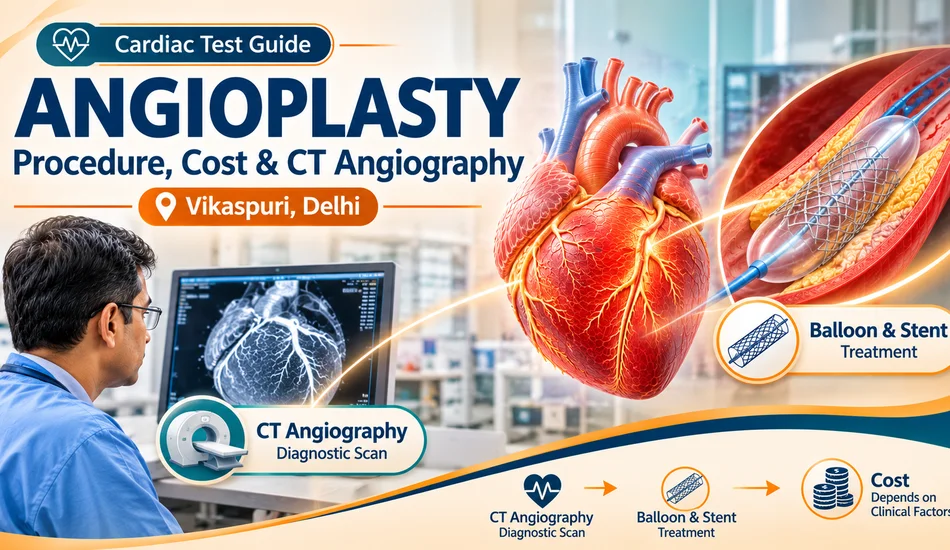
During angioplasty, a cardiologist inserts a thin tube called a catheter through an artery in the wrist or groin. The catheter is guided to the narrowed artery under X-ray guidance. A small balloon is inflated to widen the narrowed area, and in most cases, a stent is placed to help keep the artery open.
Is Angioplasty Surgery?
Many people search for terms such as angioplasty surgery, angioplasty operation or surgical angioplasty. However, angioplasty is a minimally invasive catheter-based procedure and is not open-heart surgery.
There is no chest incision involved in a standard angioplasty procedure. It is usually performed under local anaesthesia, sometimes with mild sedation, through a small puncture in the wrist or groin. Depending on the patient's condition, many patients stay in the hospital for approximately 1 to 2 days, although the duration may vary.
Bypass surgery, also called CABG (Coronary Artery Bypass Grafting), is a different surgical treatment used for certain patients with coronary artery disease.
What Is CT Angioplasty?
The term CT angioplasty is often used incorrectly. There is no treatment that opens a blocked artery through a CT scanner. People usually mean CT coronary angiography, also called CT coronary angiogram.
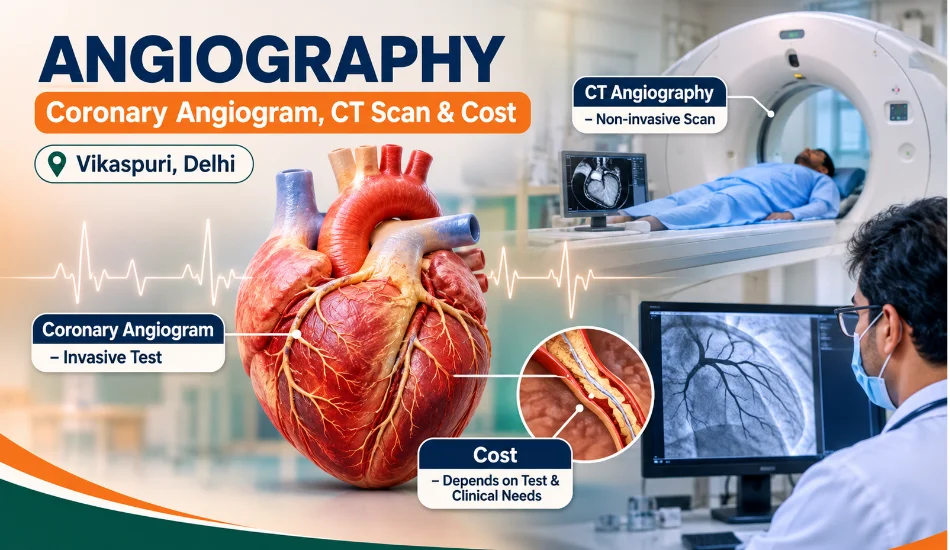
A CT coronary angiogram is a diagnostic imaging test that uses a CT scanner and contrast dye to visualise the heart's coronary arteries and look for narrowing or blockages. It does not open the artery or place a stent.
| Feature | CT Coronary Angiogram | Conventional Coronary Angiography | Angioplasty |
|---|---|---|---|
| Purpose | Detect or evaluate coronary artery narrowing | Detailed evaluation of coronary arteries | Treat a significant blockage |
| How it is performed | Contrast dye and CT scanner | Catheter and contrast dye injected into coronary arteries | Catheter, balloon and usually a stent |
| Opens the artery? | No | No, unless angioplasty is subsequently performed | Yes, when appropriate |
| Common use | Selected patients to assess coronary artery disease | Patients requiring detailed invasive evaluation | Patients requiring treatment for a suitable coronary blockage |
If a CT coronary angiogram shows a significant narrowing, your cardiologist may recommend conventional coronary angiography. If treatment is required and appropriate, angioplasty may sometimes be performed during the same procedure.
Before a CT coronary angiogram or conventional angiography, inform your doctor if you have kidney disease, a previous contrast-dye reaction or any other relevant medical condition.
When Is Angioplasty Needed?
Angioplasty may be recommended when a coronary artery is significantly narrowed or blocked and the patient may benefit from improving blood flow to the heart.
Some situations in which angioplasty may be considered include:
- Chest pain or angina that continues despite appropriate medical treatment.
- A heart attack caused by an acute blockage in a coronary artery, where emergency angioplasty may be required.
- Significant narrowing identified during coronary angiography.
- Symptoms that affect daily activities and are associated with a suitable coronary artery blockage.
- Selected patients with coronary artery disease after evaluation of their symptoms, heart function and overall medical condition.
Angioplasty is not necessary for every patient with a heart blockage. The treatment decision depends on the location and severity of the blockage, symptoms, heart function, other medical conditions and whether medical treatment, angioplasty or bypass surgery is more appropriate.
How Is the Angioplasty Procedure Done?
Angioplasty is performed in a cardiac catheterisation laboratory by a trained cardiologist. The procedure involves several steps.
1. Pre-Procedure Evaluation
Before the procedure, the doctor may review your ECG, blood tests, medical history, kidney function, medicines and coronary angiography findings. You will be informed about fasting instructions, medicines and the procedure's risks and benefits.
2. Catheter Access
The wrist or groin area is cleaned and numbed with local anaesthesia. A small puncture is made in the artery to introduce the catheter.
3. Balloon Angioplasty
A guidewire and catheter are guided to the narrowed coronary artery under X-ray guidance. A small balloon is used to widen the narrowed portion of the artery, helping improve blood flow.
4. Stent Placement
In most cases, a stent is placed in the treated artery to help maintain blood flow and reduce the risk of the artery narrowing again. Drug-eluting stents are commonly used in contemporary coronary interventions.
5. Completion and Monitoring
After the procedure, the catheter is removed and the puncture site is managed to control bleeding. The patient is monitored for heart rhythm, blood pressure, symptoms and possible complications.
The procedure may take approximately 30 minutes to several hours, depending on the complexity of the coronary artery disease, the number of vessels involved and the patient's condition.
Angioplasty vs Bypass Surgery
Angioplasty and bypass surgery are two different treatments for coronary artery disease. The choice depends on the patient's coronary anatomy, symptoms, heart function, diabetes, other medical conditions and overall risk.
| Feature | Angioplasty (PCI) | Bypass Surgery (CABG) |
|---|---|---|
| Type of treatment | Minimally invasive catheter-based procedure | Open-heart surgery |
| Approach | Small puncture in wrist or groin | Surgical chest incision |
| May be considered for | Selected coronary blockages and certain acute heart attacks | Multiple or complex blockages and selected patients who may benefit more from surgery |
| Hospital stay | Often approximately 1 to 2 days, depending on condition | Often several days, depending on recovery |
| Recovery | Generally shorter, with activity restrictions as advised | Generally longer, with surgical recovery and rehabilitation |
Your cardiologist may discuss both treatment options and, in complex cases, the decision may be made after consultation between cardiologists and cardiac surgeons.
Angioplasty Cost in Delhi: Angioplasty Surgery Price and Charges
Angioplasty cost in Delhi depends on the hospital, the number of coronary arteries treated, the number and type of stents, the complexity of the procedure, ICU requirements and the duration of hospital stay.
Indicative angioplasty cost ranges reported in the Delhi healthcare market can vary considerably. Some government hospitals may have lower treatment costs, while private hospitals may charge more depending on facilities and clinical requirements.
| Type of Procedure | Indicative Private-Hospital Range |
|---|---|
| Single-vessel angioplasty with one stent | ₹2,00,000 to ₹3,50,000 |
| Two-vessel angioplasty with two stents | ₹3,00,000 to ₹4,50,000 |
| Multi-vessel or complex angioplasty | ₹4,00,000 to ₹6,00,000 |
| Emergency angioplasty for a heart attack | ₹2,50,000 to ₹4,50,000 |
These figures are illustrative market ranges, not fixed rates or a guaranteed hospital package. Actual charges may be lower or higher depending on the hospital, treatment requirements and applicable package terms.
What Factors Affect Angioplasty Cost?
- Number of blockages: Treating more than one coronary artery may increase the overall cost.
- Number of stents: The number of stents used affects the procedure cost.
- Stent type: The type of stent used and applicable regulatory pricing may influence the bill.
- Complexity of the blockage: Calcified, complex or difficult-to-treat blockages may require additional equipment or procedure time.
- ICU and hospital stay: Additional monitoring or a longer stay can increase charges.
- Emergency treatment: Emergency treatment requirements may affect the overall package and hospital bill.
- Room category: Room selection may affect the hospital charges and package calculation.
What Expenses May Be Required After Angioplasty?
After angioplasty, patients may need antiplatelet medicines, cholesterol-lowering medicines, blood pressure treatment, diabetes management and follow-up consultations.
Antiplatelet medicines are particularly important after stent placement. Do not stop these medicines without your cardiologist's advice, as stopping them prematurely can increase the risk of blood clots in the stent.
How Can You Plan Angioplasty Cost?
- Request a written package estimate before planned admission, when possible.
- Ask what the package includes and excludes.
- Check insurance or government-scheme pre-authorisation requirements.
- Ask about room-category charges and additional hospital-stay costs.
- Discuss the medicines and follow-up expenses required after discharge.
For a hospital-specific estimate, the actual treatment plan and angiography findings should be reviewed first.
Angioplasty in Vikaspuri at Shri Ram Hospital
Shri Ram Hospital, Vikaspuri, is a multispeciality hospital providing cardiac consultation, heart-related evaluation and emergency medical services. Patients from Vikaspuri, Janakpuri, Uttam Nagar, Tilak Nagar, Dwarka, Rajouri Garden and Paschim Vihar may seek cardiology consultation and evaluation of symptoms such as chest pain, breathlessness, palpitations and other heart-related concerns.
Dr. Sanjay Sharma (MBBS, MD, DM Cardiology) evaluates patients with heart-related symptoms and helps determine the appropriate next step based on their clinical condition, diagnostic findings and treatment requirements.
At Shri Ram Hospital, patients can seek information about cardiology consultation, ECG, 2D Echo, TMT, heart check-ups and cardiac evaluation.
When angioplasty is required, the treatment arrangement and location of the procedure should be confirmed directly with the hospital.
Cashless care and panels: Shri Ram Hospital is empanelled with CGHS, ECHS, DGEHS and Ayushman Bharat. Cashless treatment for eligible patients depends on the applicable scheme, eligibility, referral requirements, approved treatment package and pre-authorisation.
Patients should confirm the availability of the required procedure, the cath-lab arrangement, the treatment estimate and cashless eligibility before admission, whenever the clinical situation allows.
Explore Cardiology Care at Shri Ram Hospital, Vikaspuri
Book a Cardiology Consultation at Shri Ram Hospital
For appointments and hospital enquiries: +91 62623 04050.
If you have severe or persistent chest pain, sweating, breathlessness, fainting or pain spreading to your arm, shoulder or jaw, seek emergency medical help immediately. Do not drive yourself to the hospital.
Recovery After Angioplasty
Recovery after angioplasty depends on the patient's condition, whether the procedure was planned or performed during a heart attack, the access site used and any complications.
| Recovery Stage | Typical Timeline |
|---|---|
| Monitoring after the procedure | Several hours or overnight, depending on the condition |
| Hospital stay | Often approximately 1 to 2 days for uncomplicated cases |
| Light activity and walking | Gradually resumed as advised |
| Return to desk work | Often within about a week in uncomplicated cases, subject to medical advice |
| Heavy lifting and strenuous exercise | Avoided temporarily, as advised by the cardiologist |
| Follow-up consultations | Scheduled according to the patient's condition and treatment plan |
What Should You Do After Angioplasty?
- Take all medicines exactly as prescribed.
- Do not stop antiplatelet medicines without consulting your cardiologist.
- Follow the instructions for care of the wrist or groin puncture site.
- Gradually resume walking and physical activities as advised.
- Follow a heart-healthy diet with appropriate salt and fat intake.
- Avoid smoking and tobacco products.
- Attend follow-up appointments.
- Ask your doctor about cardiac rehabilitation where appropriate.
- Seek urgent medical attention if you develop new chest pain, severe breathlessness, fainting or significant bleeding.
Risks of Angioplasty
Angioplasty is commonly performed, but like every medical procedure, it has potential risks. The risks depend on the patient's condition, the complexity of the blockage, the urgency of treatment and other medical conditions.
Potential complications include:
- Bleeding or bruising at the puncture site.
- Damage to the blood vessel.
- Allergic reaction to contrast dye.
- Kidney injury related to contrast exposure in susceptible patients.
- Heart rhythm disturbances.
- Blood clot formation in the stent.
- Heart attack or stroke.
- Rarely, life-threatening complications or death.
The risk of complications may be higher in certain emergency situations and in patients with diabetes, kidney disease, reduced heart function or complex coronary artery disease.
Your cardiologist will discuss the expected benefits, possible risks, alternatives and necessary precautions before the procedure.
Frequently Asked Questions About Angioplasty
Where Can I Get Angioplasty in Vikaspuri?
Shri Ram Hospital, Vikaspuri, provides cardiology consultation and heart-related evaluation. Patients can contact the hospital to confirm the availability and arrangements for coronary angiography and angioplasty. Call +91 62623 04050 for hospital enquiries.
What Is Angioplasty Surgery?
Angioplasty is a minimally invasive procedure used to open a narrowed or blocked coronary artery with a balloon and usually a stent. It is not open-heart surgery, although people commonly refer to it as angioplasty surgery.
Is Angioplasty an Operation?
Angioplasty is a catheter-based procedure rather than open-heart surgery. It is usually performed through a small puncture in the wrist or groin, under local anaesthesia and sometimes mild sedation.
What Is Surgical Angioplasty?
The term surgical angioplasty is often used incorrectly. Standard coronary angioplasty is a catheter-based treatment. Coronary bypass surgery, or CABG, is a different surgical procedure used to treat selected patients with coronary artery disease.
What Is CT Angioplasty?
CT angioplasty usually refers to CT coronary angiography. It is a diagnostic scan used to visualise coronary arteries and look for narrowing or blockages. It does not open the artery or place a stent.
What Is CT Angioplasty of the Heart Used For?
CT coronary angiography helps doctors evaluate coronary artery disease in selected patients. It may be used to assess whether coronary arteries have narrowing, depending on the patient's symptoms, risk factors and clinical situation.
What Is the Angioplasty Cost in Delhi?
Angioplasty cost in Delhi can vary from hospital to hospital. Indicative market ranges may be approximately ₹75,000 in some government hospitals and ₹2 lakh to ₹6 lakh or more in private hospitals. The actual cost depends on the procedure, number of stents, hospital stay and treatment complexity.
What Are Angioplasty Charges and What Does the Package Include?
Hospital packages may include the procedure, cath-lab charges, stent, hospital stay and some medicines or investigations during admission. Additional tests, extra hospital days, room-category charges and medicines after discharge may be separate. Always request a written estimate and confirm what the package includes.
Is Angioplasty Covered by Ayushman Bharat, CGHS, ECHS or Insurance?
Cashless treatment may be available for eligible patients under applicable government schemes, insurance or TPA arrangements, subject to hospital empanelment, scheme rules, eligibility and pre-authorisation. Confirm the applicable package and approval before admission, when possible.
How Long Does Recovery Take After Angioplasty?
Many patients with uncomplicated angioplasty are discharged within approximately 1 to 2 days. Light activities may be resumed gradually, while work, exercise and heavy lifting should be resumed according to the cardiologist's advice.
Is Angioplasty Painful?
The procedure is generally performed after numbing the access site with local anaesthesia. Some patients may feel pressure or mild discomfort during the procedure, and soreness or bruising at the puncture site may occur afterwards.
Can a Blockage Come Back After Angioplasty?
Yes. Coronary artery disease can progress, and a treated artery may develop narrowing again in some patients. Taking prescribed medicines, controlling cholesterol, diabetes and blood pressure, avoiding tobacco and attending follow-up appointments are important.
When Should I Consult a Cardiologist?
Consult a cardiologist if you experience chest discomfort, breathlessness during exertion, unexplained fatigue, palpitations or abnormal cardiac test results. If you have severe or persistent chest pain, sweating, breathlessness or fainting, seek emergency medical help immediately.
Disclaimer
This article is for general informational purposes only and does not replace medical advice, diagnosis or treatment. Angioplasty may or may not be appropriate for an individual patient. Treatment decisions should be made by a qualified cardiologist after evaluating the patient's symptoms, medical history, investigations and overall health. Angioplasty cost figures are indicative and may vary depending on the hospital and treatment requirements.