Introduction
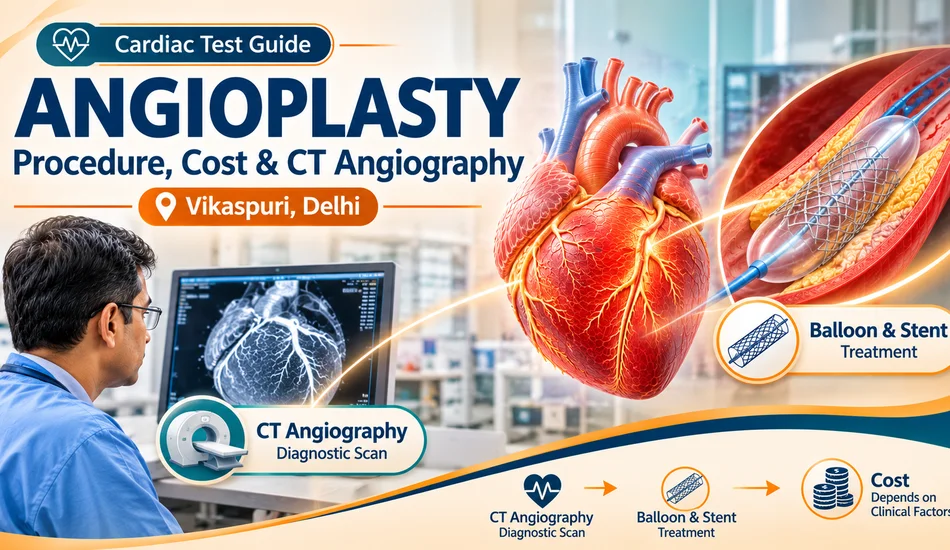
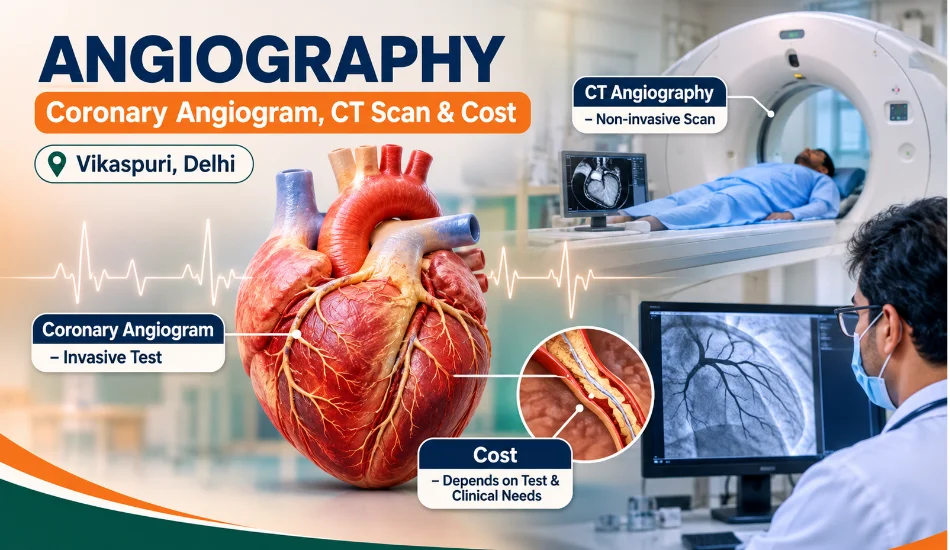
Angiography is a diagnostic test that helps doctors examine the blood vessels supplying the heart and identify whether coronary arteries are narrowed or blocked. There are two commonly used types: CT coronary angiography, which uses a CT scanner and contrast dye injected through a vein, and conventional coronary angiography, which uses a catheter inserted through an artery in the wrist or groin.
Both tests help cardiologists evaluate coronary artery disease, but they serve different purposes. CT coronary angiography is a non-invasive imaging test, whereas conventional coronary angiography provides detailed images of the coronary arteries and may allow angioplasty to be performed when required and appropriate.
In Delhi, CT coronary angiography is commonly quoted at approximately ₹10,000 to ₹17,000, while conventional coronary angiography may cost approximately ₹15,000 to ₹35,000. Actual charges depend on the hospital, diagnostic facilities, clinical requirements and whether the procedure is performed as day-care or inpatient care.
NABH and ISO Accredited | CGHS | ECHS | DGEHS | Ayushman Bharat | Cashless for eligible patients, subject to scheme rules and approval.
What Is Angiography? CT Coronary Angiography vs Coronary Angiogram vs Angioplasty
Angiography is a diagnostic procedure that uses contrast dye and imaging techniques such as X-rays or CT scanning to visualise blood vessels. Coronary angiography specifically examines the arteries that supply blood to the heart muscle.
People searching for angiography test, heart angiography, coronary angiogram or cardiac angiography are often referring to one of the following procedures.
| Feature | CT Coronary Angiography | Conventional Coronary Angiogram | Angioplasty |
|---|---|---|---|
| What it is | CT scan of the heart arteries | Catheter-based examination of the coronary arteries | Treatment for a suitable coronary artery blockage |
| How it is performed | Contrast dye injected through a vein and CT scanner images | Catheter inserted through the wrist or groin, contrast dye and X-ray imaging | Catheter, balloon and usually a stent |
| Anaesthesia | Usually no anaesthesia; medicines may be used to control heart rate | Local anaesthesia, sometimes with mild sedation | Local anaesthesia, sometimes with mild sedation |
| Can it open a blockage? | No | No, unless angioplasty is subsequently performed | Yes, when appropriate |
| Typical use | Evaluate coronary arteries in selected patients | Detailed evaluation of coronary artery disease | Treat a significant coronary artery blockage |
| Hospital stay | Usually same-day procedure | Same day or overnight, depending on condition | Often approximately 1 to 2 days in uncomplicated cases |
Which Angiography Test Do You Need?
The cardiologist decides which test is appropriate after evaluating your symptoms, medical history, ECG, other investigations and overall risk.
CT coronary angiography may help evaluate coronary artery disease in selected patients and may avoid the need for an invasive catheter test when the results are reassuring and clinically appropriate. If CT findings show significant disease or are inconclusive, conventional coronary angiography may be recommended.
CT coronary angiography requires suitable image quality, which may depend on heart rate and rhythm. Contrast dye also requires additional consideration in people with kidney disease or a previous contrast reaction. CT imaging involves radiation exposure, which is considered as part of the test's benefits and risks.
Angiography is a diagnostic test, whereas angioplasty is a treatment that opens a suitable blocked or narrowed artery using a balloon and usually a stent.
Who Needs an Angiogram?
A cardiologist may recommend coronary angiography when symptoms, examination findings or other tests suggest possible coronary artery disease.
You may require angiography if you have:
- Chest pain or pressure, particularly during physical activity.
- Breathlessness during exertion or unexplained shortness of breath.
- Unusual fatigue or symptoms suspected to be related to the heart.
- Abnormal ECG, Echo or stress test results.
- Suspected coronary artery blockage or a heart attack.
- Symptoms and cardiovascular risk factors such as diabetes, high blood pressure, high cholesterol, smoking or a family history of heart disease.
- A need to evaluate previously placed stents or bypass grafts in selected cases.
A doctor generally recommends angiography when the findings are likely to help determine the appropriate treatment. Not every patient with chest pain or heart disease risk factors requires angiography.
Angiography Test Preparation
Preparation depends on whether you are undergoing CT coronary angiography or conventional coronary angiography. Your hospital or cardiologist will provide specific instructions.
1. Inform Your Doctor About Your Medical History
Before the test, tell your doctor if you have:
- Kidney disease or reduced kidney function.
- Diabetes and diabetes medicines, including metformin.
- Allergies or previous reactions to contrast dye.
- Blood-thinning medicines or other regular medications.
- Possible pregnancy.
- Previous heart procedures, stents or bypass surgery.
2. Follow Fasting Instructions
You may be asked to avoid food and drink for a specified period before the test. Fasting requirements differ depending on the procedure and hospital protocol, so follow the instructions provided by your medical team.
3. Medicines
Continue or modify medicines only according to your doctor's instructions. Do not independently stop blood pressure medicines, heart medicines, blood thinners or diabetes medicines before angiography.
4. Wear Comfortable Clothing
Wear comfortable clothing and avoid jewellery or accessories that may interfere with the examination. Carry your previous ECG, Echo, blood tests, medical records and prescriptions.
5. Arrange Assistance When Needed
If you undergo conventional coronary angiography with sedation or have other medical concerns, your hospital may advise you to arrange someone to accompany you and take you home.
How Is CT Coronary Angiography Done?
CT coronary angiography is a diagnostic imaging test that examines the coronary arteries using a CT scanner and contrast dye.
The procedure generally involves the following steps:
- A small intravenous line is placed in your arm or hand.
- Medicines may be administered to help control your heart rate, if required.
- Contrast dye is injected through the intravenous line.
- You lie on the CT scanner table while the images are taken.
- You may be asked to hold your breath briefly during imaging.
- The images are reviewed by the radiologist or appropriate medical specialist.
CT coronary angiography is generally completed within an hour, including preparation, although the actual scanning time may be much shorter.
How Is a Conventional Coronary Angiogram Done?
Conventional coronary angiography is an invasive diagnostic procedure performed in a cardiac catheterisation laboratory.
The procedure generally involves the following steps:
- The wrist or groin area is cleaned and numbed with local anaesthesia.
- A catheter is introduced through an artery.
- The catheter is guided to the coronary arteries under X-ray guidance.
- Contrast dye is injected into the coronary arteries.
- X-ray images are captured to evaluate the coronary artery anatomy and narrowing.
- The catheter is removed, and the access site is managed to control bleeding.
The procedure may take approximately 30 minutes to an hour, although the duration depends on the patient's condition and complexity of the examination. You may need to rest for several hours after the procedure and remain in the hospital for monitoring.
How Is the Angiography Report Interpreted?
The angiography report helps the cardiologist understand:
- Whether coronary arteries are narrowed or blocked.
- The location of the narrowing.
- The extent and severity of coronary artery disease.
- Whether one or more coronary arteries are involved.
- Whether additional tests or treatment are required.
Depending on the findings, the cardiologist may recommend medicines, lifestyle changes, angioplasty with a stent or coronary bypass surgery.
Do not make treatment decisions based on the scan or angiography report alone. The findings need to be interpreted along with your symptoms, heart function, medical history and overall clinical condition.
Angiography Cost in Delhi: CT Coronary Angiography Price in Vikaspuri
Angiography costs vary between hospitals depending on the type of test, diagnostic facilities, scanner, catheterisation laboratory, hospital admission requirements and additional investigations.
Indicative market ranges commonly quoted in Delhi include:
| Test | Indicative Cost in Delhi |
|---|---|
| CT Coronary Angiography | Approximately ₹10,000 to ₹17,000 |
| Conventional Coronary Angiography | Approximately ₹15,000 to ₹35,000 |
These are indicative market ranges and not confirmed hospital charges. Actual prices may vary depending on the hospital, patient condition, diagnostic requirements and treatment plan.
What Factors Affect Angiography Cost?
- Type of test: CT coronary angiography and conventional coronary angiography have different procedure and equipment requirements.
- Equipment and technology: Scanner technology and diagnostic facilities may affect pricing.
- Hospital admission: Day-care or inpatient requirements can influence the overall bill.
- Additional investigations: ECG, Echo, blood tests and kidney function tests may be charged separately or included in the package.
- Consultation and reporting: Specialist consultation and report interpretation may affect the charges.
- Additional treatment: If angioplasty is required, the treatment will have additional charges.
How Can You Confirm the Angiography Price?
Before booking a test, ask the hospital to confirm:
- The exact test recommended by the cardiologist.
- Whether the quoted price includes contrast dye and reporting.
- Whether ECG, blood tests or kidney function tests are included.
- Whether day-care or inpatient charges apply.
- Whether insurance or government-scheme approval is required.
CT coronary angiography may cost less than conventional catheter-based angiography in many settings, but the appropriate test depends on your clinical condition rather than cost alone.
Is Angiography Covered by Insurance?
Diagnostic angiography may be covered by health insurance when it is medically indicated and meets the policy requirements. Coverage may depend on whether the test is performed during hospital admission, under day-care benefits or under applicable outpatient coverage.
Patients should confirm eligibility, coverage, documentation and pre-authorisation requirements with their insurer, TPA or healthcare scheme before the procedure, whenever possible.
Risks of Angiography
Angiography is generally considered safe when performed for appropriate patients by trained medical professionals. However, both CT coronary angiography and conventional coronary angiography have potential risks.
Potential Risks of CT Coronary Angiography
- Reaction to contrast dye.
- Kidney injury in susceptible patients.
- Radiation exposure.
- Temporary discomfort from the intravenous line.
- Rare complications related to medicines used during the test.
Potential Risks of Conventional Coronary Angiography
- Bleeding or bruising at the wrist or groin access site.
- Blood vessel injury.
- Reaction to contrast dye.
- Kidney injury in susceptible patients.
- Heart rhythm disturbances.
- Rarely, heart attack, stroke or other serious complications.
The risk may be higher in certain patients, including those with kidney disease, diabetes, advanced age, complex heart disease or emergency conditions.
Your cardiologist will explain the risks, benefits and alternatives before the procedure.
Recovery After Angiography
Recovery After CT Coronary Angiography
After CT coronary angiography, most patients can go home the same day. You may be advised to drink fluids, if appropriate for your medical condition, to help your body eliminate the contrast dye. Follow the instructions provided by your medical team.
Recovery After Conventional Coronary Angiography
After conventional coronary angiography, you may need to rest for several hours. The hospital will provide instructions regarding care of the wrist or groin access site, movement restrictions and when to resume daily activities.
For a short period, you may be advised to avoid heavy lifting, strenuous exercise or activities that place pressure on the puncture site.
When Should You Contact a Doctor?
Contact your medical team if you experience:
- Increasing swelling or bleeding at the access site.
- Severe pain or unusual discomfort.
- Numbness or weakness in the affected arm or leg.
- Fever or signs of infection.
If you experience severe chest pain, breathlessness, fainting or other emergency symptoms, seek emergency medical attention immediately.
Angiography at Shri Ram Hospital, Vikaspuri
Shri Ram Hospital, B-14 Shankar Garden, Vikaspuri, Main Najafgarh Road, New Delhi 110018, provides multispeciality healthcare services, cardiology consultation, heart-related evaluation and emergency medical care.
Dr. Sanjay Sharma (MBBS, MD, DM Cardiology) evaluates patients with heart-related symptoms, reviews cardiac reports and advises appropriate investigations and treatment according to the patient's clinical condition.
Patients may seek consultation for chest pain, breathlessness, abnormal cardiac investigations, suspected coronary artery disease and other heart-related concerns.
Cardiology consultation and heart-related evaluation may include ECG, 2D Echo, TMT and other investigations according to clinical requirements.
Patients from Vikaspuri, Janakpuri, Uttam Nagar, Tilak Nagar, Dwarka, Rajouri Garden and Paschim Vihar can contact the hospital for consultation and information about available cardiac services.
When CT coronary angiography or conventional coronary angiography is required, patients should confirm the test's availability and arrangement directly with the hospital.
Cashless care and panels: Shri Ram Hospital is empanelled with CGHS, ECHS, DGEHS and Ayushman Bharat. Cashless treatment for eligible patients depends on applicable scheme rules, eligibility, referral requirements, approved packages and pre-authorisation.
Patients should confirm the availability of the required diagnostic test, its cost, cashless eligibility and any referral or approval requirements before the test, when possible.
Explore Cardiology Care at Shri Ram Hospital, Vikaspuri
Book an Appointment at Shri Ram Hospital
For appointment and hospital enquiries: +91 62623 04050.
If you have chest pain lasting more than a few minutes, sweating, breathlessness, fainting or pain spreading to your arm or jaw, seek emergency medical help immediately. Do not drive yourself.
Frequently Asked Questions About Angiography
What Is Angiography?
Angiography is a diagnostic procedure that uses contrast dye and imaging techniques such as X-rays or CT scanning to visualise blood vessels. Coronary angiography examines the arteries supplying blood to the heart.
What Is the Difference Between CT Coronary Angiography and a Coronary Angiogram?
CT coronary angiography is a scan that uses contrast dye injected through a vein and a CT scanner to examine coronary arteries. Conventional coronary angiography uses a catheter inserted through an artery to obtain detailed images of the coronary arteries. The latter may allow angioplasty to be performed when appropriate.
What Is the CT Coronary Angiography Price in Vikaspuri?
CT coronary angiography is commonly quoted at approximately ₹10,000 to ₹17,000 in Delhi, although prices vary by hospital, diagnostic facilities and clinical requirements. Contact the hospital directly for current charges.
What Is the Angiography Cost in Delhi?
Conventional coronary angiography is commonly quoted at approximately ₹15,000 to ₹35,000 in Delhi. Actual charges may vary depending on the hospital, admission requirements, diagnostic facilities and patient condition.
Is CT Angiography Cheaper Than a Conventional Angiogram?
CT coronary angiography may cost less than conventional coronary angiography in many hospitals. However, the appropriate test depends on your symptoms, medical history and cardiologist's recommendation. Cost should not be the only factor when choosing a cardiac diagnostic test.
Is Heart Angiography Painful?
CT coronary angiography is generally painless apart from the intravenous needle. Conventional coronary angiography is performed after numbing the access site with local anaesthesia. Patients may feel pressure or mild discomfort, but significant pain is not usually expected.
Do I Need to Fast Before an Angiography Test?
You may need to fast for a specified period before angiography. The exact instructions depend on the type of test and hospital protocol. Follow your doctor's instructions regarding food, fluids and medicines.
How Long Does an Angiography Test Take?
CT coronary angiography is generally completed within an hour, including preparation. Conventional coronary angiography may take approximately 30 minutes to an hour, although additional recovery and monitoring time may be required.
Does Angiography Open a Blocked Artery?
No. Angiography is a diagnostic procedure used to identify coronary artery narrowing or blockages. Angioplasty is the treatment that opens a suitable blocked artery using a balloon and usually a stent.
Is Angiography Safe?
Angiography is generally safe when performed for appropriate patients. Possible risks include contrast-dye reactions, kidney injury in susceptible patients and bleeding or vessel-related complications during conventional coronary angiography. Your cardiologist will explain your personal risk.
Is Angiography Covered by Insurance, CGHS or Ayushman Bharat?
Coverage depends on the applicable policy or scheme, eligibility, referral requirements, hospital empanelment, treatment package and pre-authorisation. Eligible patients should confirm the applicable coverage with the hospital or insurer before the procedure, whenever possible.
Where Can I Get Angiography in Vikaspuri?
Patients can contact Shri Ram Hospital, B-14 Shankar Garden, Vikaspuri, for cardiology consultation and information about angiography arrangements and available cardiac diagnostic services. Call +91 62623 04050.
When Should I See a Cardiologist?
Consult a cardiologist if you experience chest pain, breathlessness during exertion, unexplained fatigue, palpitations or abnormal cardiac test results. If you experience severe or persistent chest pain, sweating, breathlessness or fainting, seek emergency medical help immediately.
Disclaimer
This article is for general informational purposes only and does not replace medical advice, diagnosis or treatment. Angiography is recommended only when clinically appropriate. The choice between CT coronary angiography, conventional coronary angiography, angioplasty or other treatment depends on your symptoms, medical history, investigations and cardiologist's evaluation. Angiography cost figures are indicative and may vary depending on the hospital and diagnostic requirements.