


Advanced Laparoscopic Hernia Surgery
Shri Ram Hospital offers expert hernia repair surgery, addressing various types of hernias with advanced surgical techniques that promote effective healing and minimize recurrence. The hospital's general surgeons specialize in both open and laparoscopic hernia repairs, allowing for tailored treatment approaches that consider the hernia's size, location, and patient health. These minimally invasive procedures ensure reduced pain, faster recovery, and smaller scars, enhancing patient comfort and outcomes.
The surgical team's approach to hernia repair emphasizes precision, safety, and personalized patient care. By utilizing mesh implants and the latest surgical innovations, the hospital achieves durable repairs and improved quality of life for patients. Preoperative assessment and planning are integral to the hospital's process, ensuring each patient is thoroughly evaluated and informed about their surgical options.
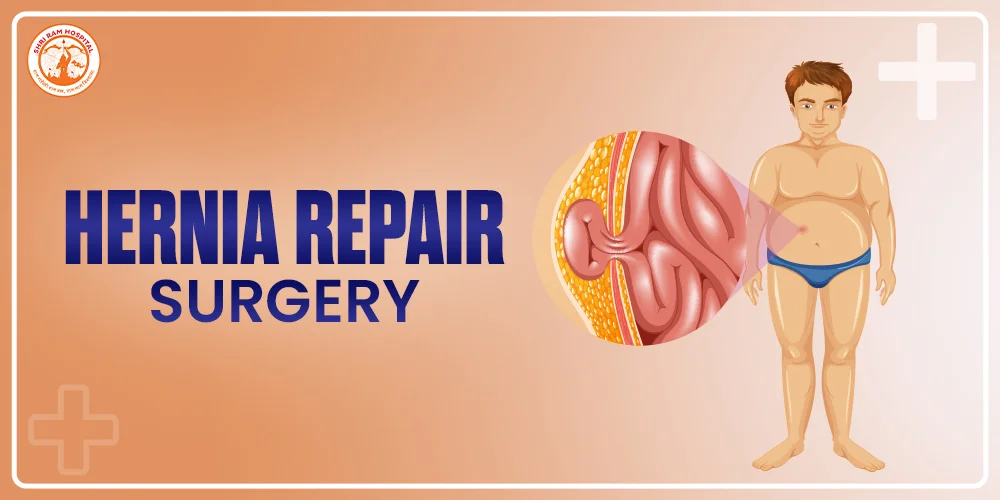
What is a Hernia?
Common abdominal condition: A hernia occurs when an internal organ or tissue pushes through a weak area in the surrounding muscle or connective tissue.
Frequently affects the abdomen and groin: Most hernias develop in the abdominal wall or groin region and may gradually increase in size over time.
Requires timely treatment: Hernias do not usually heal on their own and may lead to complications if left untreated.
Modern surgical solutions: Advanced laparoscopic hernia surgery offers effective treatment with smaller incisions and faster recovery.
Hernia Surgery Cost
Varies from patient to patient: The cost of hernia surgery depends on the type of hernia, severity of the condition, and treatment approach.
Surgical technique matters: Laparoscopic and open surgery procedures may have different treatment costs.
Additional factors: Surgeon expertise, diagnostic tests, hospital facilities, mesh quality, and post-operative care can influence the overall cost.
Personalized treatment planning: A detailed consultation helps determine the most suitable treatment option and expected expenses.
Types of Hernia
Inguinal hernia: Develops in the groin area and is one of the most common types of hernia.
Umbilical hernia: Appears near the belly button and may occur in both children and adults.
Incisional hernia: Forms at the site of a previous surgical incision due to weakening of the abdominal wall.
Femoral hernia: Occurs in the upper thigh or groin region and is more commonly seen in women.
Hiatal hernia: Develops when part of the stomach pushes through the diaphragm into the chest cavity.
Symptoms of Hernia
Visible bulge: A swelling or lump in the abdomen or groin is one of the most common signs of a hernia.
Pain during activity: Discomfort may increase while lifting, bending, coughing, or exercising.
Pressure sensation: Many patients experience heaviness or pressure in the affected area.
Burning or aching pain: Some hernias cause a persistent burning sensation or dull ache.
Digestive discomfort: Certain types of hernias may lead to bloating or digestive symptoms.
Causes and Risk Factors of Hernia
Weak abdominal muscles: Muscle weakness can make it easier for tissues to protrude through the abdominal wall.
Heavy lifting: Repeated lifting of heavy objects increases pressure inside the abdomen.
Chronic coughing: Persistent coughing can strain abdominal muscles and contribute to hernia formation.
Obesity and pregnancy: Increased abdominal pressure raises the risk of developing a hernia.
Previous surgery: Surgical incisions may weaken tissues and increase the likelihood of incisional hernias.
How is a Hernia Diagnosed?
Physical examination: Doctors assess symptoms and examine the affected area for swelling or bulging.
Ultrasound imaging: Ultrasound helps confirm the diagnosis and evaluate hernia size.
CT scan evaluation: CT scans provide detailed images for complex or recurrent hernias.
MRI assessment: MRI may be used in selected cases to examine soft tissues in greater detail.
Treatment Options for Hernia
Observation: Small hernias with minimal symptoms may be monitored under medical supervision.
Open hernia repair: Traditional surgery repairs the weakened area using sutures or surgical mesh.
Laparoscopic surgery: A minimally invasive procedure that repairs the hernia through small incisions.
Long-term solution: Surgery remains the most effective treatment for most hernia cases.
What is Laparoscopic Hernia Surgery?
Minimally invasive technique: Laparoscopic hernia surgery uses small incisions and specialized surgical instruments.
Camera-guided procedure: A laparoscope provides a clear view of the hernia during surgery.
Mesh reinforcement: Surgical mesh is placed to strengthen the abdominal wall and reduce recurrence risk.
Advanced recovery benefits: Patients generally experience less pain and quicker recovery compared to traditional surgery.
Benefits of Laparoscopic Hernia Surgery
Smaller incisions: Tiny surgical cuts result in less tissue damage.
Reduced pain: Most patients experience less postoperative discomfort.
Minimal scarring: Smaller wounds provide better cosmetic outcomes.
Faster recovery: Patients can often return to normal activities sooner.
Lower complication risk: Advanced techniques help reduce infection and blood loss.
Who is a Candidate for Laparoscopic Hernia Surgery?
Inguinal hernias: Many groin hernias can be effectively treated laparoscopically.
Bilateral hernias: Patients with hernias on both sides often benefit from minimally invasive surgery.
Recurrent hernias: Laparoscopic repair may be suitable for previously treated hernias.
Individual assessment: The final recommendation depends on overall health and surgical evaluation.
Recovery After Laparoscopic Hernia Surgery
Early walking: Patients are usually encouraged to walk within a few hours after surgery.
Short hospital stay: Many patients return home the same day or the following day.
Quick return to activities: Light daily activities can often be resumed within one to two weeks.
Follow-up care: Proper recovery instructions help ensure optimal healing and long-term results.
Complications of Untreated Hernia
Increasing size: Hernias often become larger when left untreated.
Persistent pain: Symptoms may worsen over time and affect daily activities.
Bowel obstruction: Intestinal blockage can occur in severe cases.
Strangulated hernia: Blood supply to trapped tissue may be cut off, creating a medical emergency.
Why Choose Shri Ram Hospital for Hernia Surgery?
Experienced surgeons: Skilled specialists provide advanced hernia treatment and surgical care.
Modern laparoscopic technology: Advanced equipment supports precise and minimally invasive procedures.
Comprehensive diagnostics: Accurate evaluation helps create personalized treatment plans.
Patient-focused recovery: Dedicated post-operative support promotes faster healing.
When Should You Consult a Hernia Specialist?
Visible abdominal bulge: Any persistent swelling in the abdomen or groin should be evaluated.
Pain during lifting: Discomfort while carrying heavy objects may indicate a hernia.
Persistent swelling: Enlarging lumps should not be ignored.
Emergency symptoms: Severe pain, nausea, or vomiting require immediate medical attention.
Book an Appointment