

Best Hospital for ACL Surgery in, Delhi | Advanced Arthroscopic ACL Reconstruction
Shri Ram Hospital's Orthopedics Department is a leader in ACL tear surgery, offering advanced arthroscopic techniques to repair or reconstruct the torn ligament and restore knee stability and function. Tailored to athletes and active individuals, the hospital's approach to ACL surgery prioritizes minimal invasiveness, effective rehabilitation, and a swift return to activity.
The orthopedic surgeons at Shri Ram Hospital are experienced in the latest ACL repair and reconstruction methods, using autografts or allografts to achieve strong, durable ligament repair. Preoperative planning and imaging ensure that each surgical procedure is precisely executed, focusing on optimal alignment and joint mechanics.
Best Hospital for ACL Surgery in Vikaspuri, Delhi
A knee ligament injury can affect every aspect of your daily life—from walking and climbing stairs to playing sports and maintaining an active lifestyle. Whether the injury occurs during sports, due to a sudden twisting movement, or following a road traffic accident, early diagnosis and expert orthopedic care are essential to restore knee stability and prevent long-term joint damage.
At Shri Ram Hospital, we are recognized as one of the trusted destinations for ACL surgery in Delhi, offering advanced arthroscopic ACL reconstruction, comprehensive ligament injury treatment, and personalized rehabilitation programs. Our experienced orthopedic surgeons use minimally invasive techniques to reduce pain, promote faster recovery, and help patients safely return to their normal activities.
Conveniently located in Vikaspuri, West Delhi, we provide specialized orthopedic care for patients from Janakpuri, Uttam Nagar, Dwarka, Tilak Nagar, Paschim Vihar, Rajouri Garden, Punjabi Bagh, Kirti Nagar, Naraina, Peeragarhi, Nangloi, and across the Delhi NCR region.
Why Choose Shri Ram Hospital for ACL Surgery?
Choosing the right orthopedic hospital is one of the most important factors in achieving successful ACL reconstruction and long-term knee stability. At Shri Ram Hospital, our orthopedic and sports injury specialists combine advanced arthroscopic technology with personalized rehabilitation to deliver excellent clinical outcomes.
Every patient receives a customized treatment plan based on the severity of the ligament injury, activity level, occupation, and future sports goals.
Why Patients Trust Shri Ram Hospital
| Our Expertise | Patient Benefits |
|---|---|
| Experienced Orthopedic & Sports Injury Surgeons | Highly experienced specialists in ACL reconstruction and advanced knee ligament surgery. |
| Advanced Arthroscopic ACL Reconstruction Surgery | Minimally invasive procedures that reduce pain, minimize tissue damage, and promote faster recovery. |
| Modern Operation Theatres | Equipped with high-definition arthroscopy systems for precise ligament reconstruction. |
| Comprehensive MRI & Digital Diagnostic Facilities | Accurate diagnosis through advanced imaging for proper surgical planning. |
| Personalized Physiotherapy & Rehabilitation | Structured rehabilitation programs designed to restore strength, balance, and knee function. |
| NABH & ISO Accredited Multispeciality Hospital | Committed to internationally recognized standards of quality healthcare and patient safety. |
| Cashless Treatment Through Major Insurance & Government Health Schemes | Eligible patients can benefit from cashless treatment under approved insurance providers and healthcare schemes. |
| Patient-Focused Evidence-Based Care | Individualized treatment plans following modern orthopedic guidelines for optimal recovery. |
Our goal is to restore knee stability, improve mobility, minimize recovery time, and help patients confidently return to work, sports, and everyday activities.
What Is an ACL Injury?
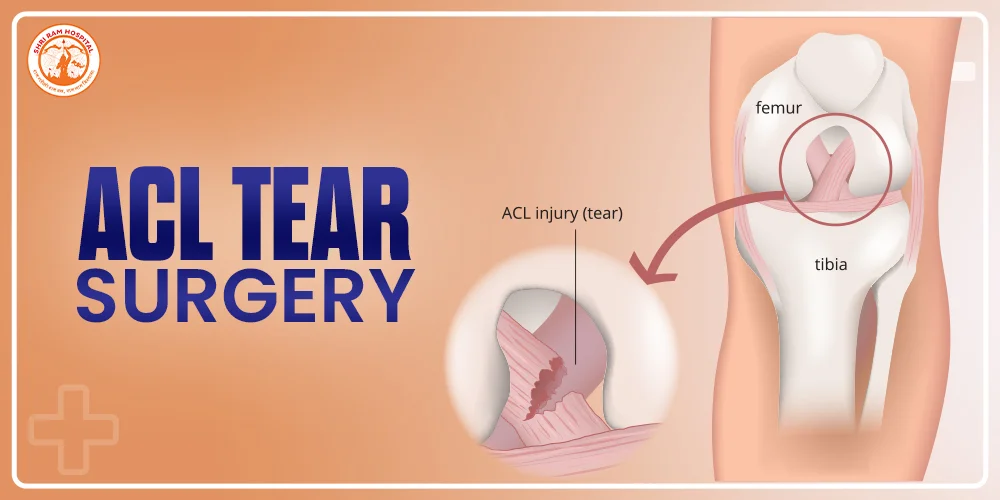
The Anterior Cruciate Ligament (ACL) is one of the strongest and most important ligaments of the knee joint. It connects the thigh bone (femur) to the shin bone (tibia) and plays a crucial role in maintaining knee stability during walking, running, jumping, and sudden directional changes.
An ACL tear occurs when the ligament is stretched beyond its normal capacity or completely ruptures. This commonly happens during sports activities involving sudden twisting, pivoting, awkward landings, or direct trauma to the knee.
People at Higher Risk of ACL Injuries
Football Players: Frequent pivoting, sudden acceleration, and tackling increase the risk of ACL tears.
Cricket Players: Sudden turning movements and fielding injuries may damage the ACL.
Basketball Players: Jumping and rapid changes in direction place significant stress on the ligament.
Badminton Players: Fast lateral movements and quick pivots increase the likelihood of knee ligament injuries.
Gym Enthusiasts: Incorrect lifting techniques or high-impact exercises may contribute to ACL injuries.
Dancers: Repetitive twisting and landing movements can place excessive strain on the knee ligaments.
Individuals Involved in Road Traffic Accidents: High-impact trauma may result in partial or complete ACL tears.
Without appropriate treatment, an ACL tear can lead to chronic knee instability, repeated injuries, meniscus damage, cartilage wear, and early osteoarthritis.
Common Symptoms of an ACL Tear
ACL injuries often produce immediate symptoms that should never be ignored. Early evaluation by an experienced ligament specialist doctor allows timely diagnosis and improves long-term treatment outcomes.
Warning Signs of an ACL Injury
A Popping Sound at the Time of Injury: Many patients report hearing or feeling a distinct "pop" when the ligament tears.
Sudden Severe Knee Pain: Immediate pain following twisting or direct trauma to the knee.
Rapid Swelling: Swelling often develops within a few hours because of bleeding inside the knee joint.
Knee Instability or Giving Way: The knee may feel unstable or buckle while walking or turning.
Difficulty Walking: Pain, swelling, and instability may make normal walking difficult.
Limited Knee Movement: Reduced ability to bend or straighten the knee comfortably.
Pain While Climbing Stairs: Stair climbing often becomes painful due to ligament instability.
Difficulty Running or Changing Direction: Sports activities involving cutting or pivoting become difficult and unsafe.
Early diagnosis with clinical examination and MRI significantly improves the chances of successful treatment and complete recovery.
ACL Injury Treatment
The most appropriate treatment for an ACL injury depends on several clinical factors. After a detailed orthopedic evaluation, your surgeon recommends an individualized treatment plan based on the severity of the injury and your lifestyle requirements.
Factors That Influence Treatment
Severity of the Ligament Tear: Partial and complete ACL tears require different treatment approaches.
Patient's Age: Age and expected activity level influence treatment planning.
Activity Level: Athletes and physically active individuals often require surgical reconstruction for optimal knee stability.
Occupation: Jobs involving heavy physical activity may require earlier surgical treatment.
Sports Participation: Patients wishing to return to competitive sports usually benefit from ACL reconstruction.
Associated Meniscus or Cartilage Injuries: Additional knee injuries may require simultaneous treatment during surgery.
Non-Surgical ACL Treatment
Patients with partial ACL tears, lower physical activity levels, or stable knees may benefit from conservative treatment without surgery.
Physiotherapy: Structured rehabilitation helps strengthen muscles around the knee and improve stability.
Knee Bracing: Functional braces may provide additional support during recovery and daily activities.
Pain Management: Medications and other conservative measures help reduce pain and inflammation.
Muscle Strengthening Exercises: Strengthening the quadriceps and hamstring muscles improves knee stability.
Activity Modification: Avoiding high-impact sports and sudden twisting movements reduces further injury risk.
However, patients with complete ACL tears and persistent knee instability generally achieve the best long-term results with surgical reconstruction.
Arthroscopic ACL Reconstruction Surgery
Arthroscopic ACL Reconstruction is considered the gold standard treatment for complete ACL tears. During this minimally invasive procedure, the damaged ligament is replaced with a tendon graft using advanced arthroscopic techniques performed through small incisions.
This modern surgical approach provides excellent knee stability while minimizing tissue damage and promoting faster rehabilitation.
Benefits of Arthroscopic ACL Reconstruction
Small Incisions: Minimal skin incisions result in less tissue damage and improved cosmetic appearance.
Minimal Blood Loss: Arthroscopic surgery significantly reduces surgical bleeding.
Less Postoperative Pain: Patients generally experience less discomfort compared with traditional open surgery.
Faster Recovery: Early rehabilitation allows patients to regain knee function more quickly.
Reduced Risk of Infection: Smaller incisions help lower the risk of postoperative infection.
Better Cosmetic Results: Tiny scars provide improved cosmetic outcomes.
Early Mobilization: Patients begin physiotherapy soon after surgery to restore movement.
Improved Knee Stability: Reconstruction restores normal ligament function and helps prevent recurrent instability.
Quicker Return to Sports and Daily Activities: Structured rehabilitation supports a safe return to physical activities.
Types of ACL Reconstruction Grafts
Selecting the appropriate graft is one of the most important aspects of successful ACL reconstruction. The choice depends on the patient's age, activity level, sports participation, and the surgeon's clinical assessment.
Hamstring Tendon Graft
Most Commonly Used: One of the preferred graft options for ACL reconstruction.
Excellent Strength: Provides reliable long-term knee stability.
Smaller Incision: Requires a relatively small surgical incision for graft harvesting.
Faster Recovery: Many patients recover comfortably with structured rehabilitation.
Patellar Tendon Graft
Recommended For:
Competitive Athletes: Often selected for individuals involved in high-demand sports.
High-Performance Sports: Suitable for athletes requiring maximum knee stability.
Patients Requiring Maximum Knee Stability: Provides excellent fixation and long-term performance.
Quadriceps Tendon Graft
Quadriceps Tendon Graft is suitable for selected patients who require a strong graft while minimizing donor-site discomfort and maintaining excellent knee function.
Allograft (Donor Tissue)
Allograft uses donor tissue and may be considered in selected clinical situations, particularly revision ACL reconstruction surgeries or cases where autograft tissue is not the preferred option.
Ligament Tear Operation: What to Expect
Undergoing a ligament tear operation can feel overwhelming, but understanding each stage of the treatment process helps patients feel more confident and prepared. At Shri Ram Hospital, every ACL reconstruction surgery is carefully planned using advanced arthroscopic techniques, personalized surgical planning, and structured rehabilitation programs to ensure the best possible outcome.
From diagnosis to complete recovery, our orthopedic specialists guide patients through every stage of treatment while focusing on restoring knee stability, improving mobility, and helping them safely return to daily activities and sports.
Step 1 – Diagnosis
A detailed clinical evaluation is performed to confirm the ACL injury and identify any associated damage to the meniscus, cartilage, or surrounding ligaments.
Physical Examination: The orthopedic surgeon assesses knee stability, swelling, pain, range of motion, and ligament integrity through specialized clinical tests.
MRI Scan: MRI provides highly detailed images of the ACL, meniscus, cartilage, and other soft tissue structures to accurately determine the severity of the injury.
X-rays: Digital X-rays help rule out fractures, bone injuries, or abnormal knee alignment that may influence treatment planning.
Knee Stability Assessment: Clinical stability tests evaluate the extent of ligament damage and determine whether surgical reconstruction is required.
Step 2 – Pre-operative Planning
Once the diagnosis is confirmed, your orthopedic surgeon prepares an individualized surgical plan based on your knee condition, activity level, and future functional goals.
ACL Tear Severity: The extent of ligament injury helps determine the surgical technique and graft selection.
Meniscus Injuries: Any associated meniscus tears are identified and planned for repair during the same procedure whenever appropriate.
Cartilage Damage: Cartilage injuries are carefully assessed because they can influence long-term knee function.
Knee Alignment: Proper knee alignment is evaluated to optimize surgical outcomes and implant positioning.
Patient Activity Level: Age, occupation, sports participation, and lifestyle are considered while selecting the most appropriate graft and rehabilitation plan.
Step 3 – Arthroscopic Surgery
ACL reconstruction is performed using a high-definition arthroscope, a tiny camera inserted through small skin incisions. The damaged ACL is carefully removed and replaced with a tendon graft that restores knee stability and normal joint mechanics.
This minimally invasive technique minimizes tissue damage, reduces postoperative pain, lowers infection risk, and supports faster rehabilitation compared to conventional open surgery.
Step 4 – Rehabilitation
Rehabilitation is one of the most important components of successful ACL reconstruction. Physiotherapy usually begins soon after surgery and progresses in a structured manner according to the patient's healing and functional recovery.
Knee Strength: Progressive strengthening exercises help rebuild muscle support around the knee.
Flexibility: Gentle stretching and mobility exercises restore normal knee movement.
Balance: Balance and proprioception training improve joint control and reduce the risk of future injuries.
Joint Stability: Functional rehabilitation helps restore confidence while walking, running, and participating in sports.
Functional Movement: Sport-specific and activity-based exercises prepare patients for a safe return to work and athletic activities.
Recovery After ACL Surgery
Recovery after ACL reconstruction surgery is a gradual process that combines biological healing with a structured rehabilitation program. Successful recovery depends on patient commitment, regular physiotherapy, and following the orthopedic surgeon's postoperative instructions.
Every patient's recovery timeline is unique and depends on the severity of the injury, graft type, associated meniscus repair, and overall physical condition.
First Week After Surgery
During the first week, the primary focus is on reducing pain and swelling while beginning gentle knee movement under professional supervision.
Pain Management: Prescribed medications help control discomfort and improve early mobility.
Ice Therapy: Cold therapy helps reduce swelling and inflammation around the operated knee.
Swelling Reduction: Elevating the leg and following physiotherapy advice supports faster recovery.
Assisted Walking: Patients usually begin walking with crutches or a walker as advised by the orthopedic team.
Gentle Exercises: Early rehabilitation exercises help maintain joint movement and prevent stiffness.
Recovery During Weeks 2–6
As healing progresses, physiotherapy becomes more intensive to improve strength, flexibility, and knee control.
Improved Knee Movement: Range-of-motion exercises gradually restore normal knee flexibility.
Muscle Strengthening: Progressive strengthening of the quadriceps, hamstrings, and surrounding muscles improves knee support.
Balance Training: Proprioception exercises enhance stability and reduce the risk of reinjury.
Physiotherapy Sessions: Supervised rehabilitation ensures safe progression through each recovery phase.
Recovery During Months 2–6
By this stage, patients usually begin more advanced rehabilitation aimed at restoring functional movement and preparing for higher levels of physical activity.
Cycling: Low-impact cycling helps improve knee mobility and muscle endurance.
Functional Exercises: Activity-specific exercises improve coordination, strength, and joint stability.
Light Jogging (After Medical Clearance): Patients may gradually begin jogging once sufficient healing and strength have been achieved.
Advanced Rehabilitation: Progressive sports-specific exercises prepare athletes and active individuals for safe return to activity.
Return to Sports
Returning to sports is based on functional recovery rather than time alone. Before resuming competitive activities, patients undergo clinical assessment to evaluate strength, balance, agility, and knee stability.
Typical Return to Sports: Most athletes safely return to competitive sports approximately 9–12 months after ACL reconstruction, depending on individual healing, rehabilitation progress, and medical clearance from their orthopedic surgeon.
ACL Surgery Cost in Delhi
One of the most common questions patients ask is, "What is the ACL surgery cost in Delhi?" The total treatment cost varies from patient to patient because every ligament injury is unique and requires an individualized treatment plan.
At Shri Ram Hospital, every patient undergoes a detailed orthopedic consultation, physical examination, and MRI evaluation before surgery. Based on the severity of the ACL tear, associated injuries, graft selection, and rehabilitation requirements, our orthopedic surgeons provide a transparent treatment plan along with a personalized cost estimate.
Factors Affecting ACL Surgery Cost
| Factor | How It Affects the Cost |
|---|---|
| Type of Graft Used | Hamstring, patellar tendon, quadriceps tendon, or allograft reconstruction involves different surgical planning and techniques. |
| Implant Quality | The type and quality of fixation implants used during ACL reconstruction influence the overall treatment package. |
| Complexity of Ligament Injury | Partial tears, complete ACL ruptures, revision surgeries, or multiple ligament injuries require different levels of surgical expertise. |
| Associated Meniscus Repair | If the meniscus is torn, additional repair or reconstruction may be performed during the same procedure. |
| Hospital Stay | The duration of hospitalization depends on the patient's recovery and overall medical condition. |
| Rehabilitation Program | Comprehensive physiotherapy and rehabilitation play an important role in successful recovery after surgery. |
| Insurance or Cashless Coverage | Eligible insurance providers and government-approved healthcare schemes may significantly reduce the patient's treatment expenses. |
After a comprehensive orthopedic evaluation, patients receive a transparent treatment plan and personalized cost estimate based on their individual clinical condition and recovery requirements.
Why Early ACL Treatment Matters
Delaying treatment for an ACL tear may increase the risk of progressive knee damage and long-term functional problems. An unstable knee is more likely to sustain repeated injuries during routine activities and sports, which can eventually lead to permanent joint damage.
Early diagnosis and timely ACL reconstruction surgery help restore knee stability, protect the meniscus and cartilage, improve athletic performance, and reduce the risk of future complications.
Complications of Delaying ACL Treatment
Meniscus Tears: Continued knee instability significantly increases the risk of damaging the meniscus, which acts as a natural shock absorber inside the knee.
Cartilage Damage: Repeated instability may gradually wear down the protective cartilage covering the knee joint surfaces.
Recurrent Knee Instability: The knee may repeatedly give way during walking, running, or sudden turning movements.
Early Osteoarthritis: Untreated ACL injuries may accelerate joint degeneration and increase the risk of developing arthritis at a younger age.
Reduced Athletic Performance: Knee instability limits running, jumping, pivoting, and participation in competitive sports.
Long-Term Knee Pain: Chronic instability and progressive joint damage can result in persistent pain and reduced mobility.
Early orthopedic consultation and timely ACL reconstruction significantly improve long-term knee function, joint stability, and overall quality of life.
Why Patients Trust Shri Ram Hospital
Patients from Vikaspuri, Janakpuri, Uttam Nagar, Dwarka, Tilak Nagar, Rajouri Garden, Paschim Vihar, Punjabi Bagh, Kirti Nagar, Naraina, Peeragarhi, Nangloi, West Delhi, and across Delhi NCR choose Shri Ram Hospital for advanced ACL reconstruction because of our experienced orthopedic specialists, state-of-the-art arthroscopic technology, comprehensive rehabilitation programs, and patient-centered approach to sports injury care.
We are committed to providing safe, evidence-based orthopedic treatment using modern minimally invasive surgical techniques that help patients recover faster, regain knee stability, and confidently return to their active lifestyle.
Why Patients Choose Shri Ram Hospital
| Our Expertise | Patient Benefits |
|---|---|
| Experienced ACL Surgeons | Highly qualified orthopedic surgeons with extensive experience in arthroscopic ACL reconstruction and complex ligament surgeries. |
| Advanced Arthroscopic Technology | High-definition arthroscopy systems provide precise ligament reconstruction through minimally invasive techniques. |
| Comprehensive Sports Injury Care | Complete diagnosis, surgery, rehabilitation, and long-term follow-up under one roof. |
| Personalized Rehabilitation Programs | Customized physiotherapy plans designed to restore strength, balance, flexibility, and functional movement. |
| Modern Orthopedic Infrastructure | Advanced modular operation theatres, digital diagnostics, and specialized orthopedic facilities ensure high-quality patient care. |
| High Patient Satisfaction | Patient-focused care emphasizing safety, faster recovery, clear communication, and excellent long-term outcomes. |
| Convenient Location with Easy Accessibility | Located in Vikaspuri, West Delhi, with convenient access for patients across Delhi NCR seeking specialized ACL surgery and sports injury treatment. |
Our multidisciplinary orthopedic team is dedicated to helping every patient achieve long-term knee stability, improved mobility, reduced pain, and a safe return to work, sports, and daily activities through advanced ACL reconstruction surgery and comprehensive rehabilitation.
Book an Appointment