

Best Hospital for Dental Implant Surgery in Vikaspuri
Shri Ram Hospital's Dental Department offers state-of-the-art dental implant surgery, providing patients with durable and natural-looking replacements for missing teeth. Utilizing advanced imaging and implant technology, the hospital's dental surgeons expertly place implants, focusing on optimal function and aesthetic integration.
The dental implant process is comprehensive, involving careful planning, precise surgical placement, and personalized prosthodontic restoration. The hospital's dental team is committed to ensuring that each step is performed with the highest standards of care, resulting in implants that are both functional and visually appealing.
Aftercare is a crucial aspect of dental implant success, with patients receiving detailed guidance on maintaining implant health, oral hygiene, and follow-up visits. Shri Ram Hospital's commitment to excellence in dental implant surgery is reflected in its dedication to patient education, support, and satisfaction throughout the implant journey.
What Are Dental Implants?
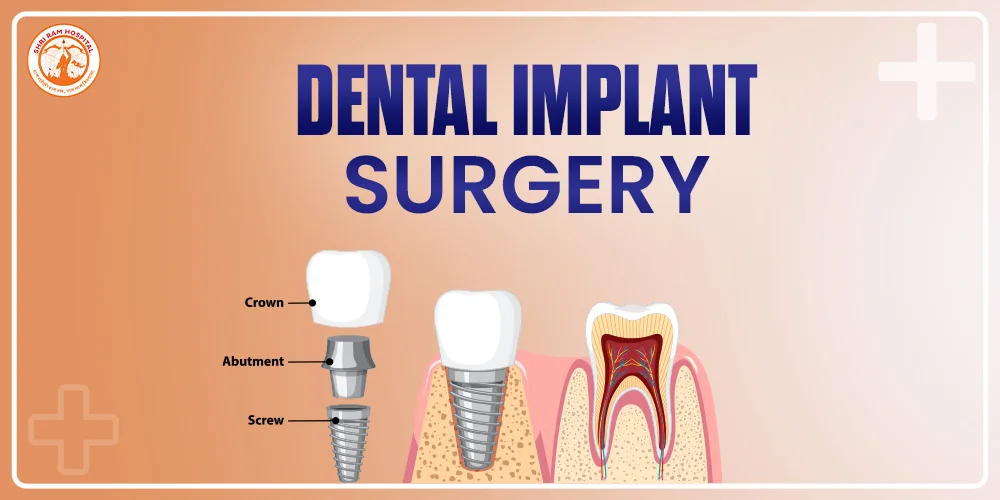
Dental implants: Dental implants are small titanium posts that are surgically placed into the jawbone to replace the root of a missing tooth.
Osseointegration process: Over time, the implant integrates with the jawbone through a process known as osseointegration, which creates a strong and stable foundation for artificial teeth.
Tooth restoration: Once the implant successfully fuses with the bone, a dental crown, bridge, or denture can be attached to restore both the appearance and function of natural teeth.
When Are Dental Implants Recommended?
Missing teeth: Dental implants are commonly recommended for patients who have lost one or more teeth and want a long-term replacement solution.
Difficulty wearing dentures: People who feel discomfort or instability while using dentures may benefit from dental implants.
Healthy gums and sufficient jawbone: Successful implant placement requires healthy gums and adequate jawbone to support the implant structure.
Permanent tooth replacement: Dental implants are ideal for individuals seeking a durable and permanent solution for tooth loss.
Dental implants are widely used because they provide a stable and long-lasting replacement for missing teeth.
Dental Implant Surgery Procedure
Initial dental examination: The process begins with a detailed dental evaluation, including imaging tests to assess the condition of the jawbone and surrounding teeth.
Implant placement: During surgery, the dentist or oral surgeon places the titanium implant into the jawbone where the missing tooth root used to be.
Healing and bone integration: After placement, a healing period is required to allow the implant to integrate with the jawbone and form a strong bond.
Abutment and crown placement: Once healing is complete, an abutment is attached to the implant, followed by the placement of an artificial tooth crown.
The healing process may take several months to ensure proper bonding between the implant and the jawbone.
Benefits of Dental Implants
Improved chewing ability: Dental implants restore strong biting and chewing function similar to natural teeth.
Natural appearance: Implant-supported crowns are designed to match the color and shape of natural teeth.
Preservation of jawbone structure: Implants stimulate the jawbone and help prevent bone loss that can occur after tooth loss.
Long-lasting tooth replacement: With proper care, dental implants can last many years and provide a durable solution.
Improved speech and comfort: Unlike removable dentures, implants remain securely in place, improving speech and overall comfort.
Dental implants also help maintain the position of surrounding teeth and prevent shifting after tooth loss.
Recovery After Dental Implant Surgery
Initial healing period: After implant surgery, patients may experience mild swelling, discomfort, or minor bleeding for a few days.
Bone integration: Complete healing and bone integration may take several months depending on the patient’s overall health and bone condition.
Oral hygiene care: Maintaining proper oral hygiene is essential to prevent infection and ensure implant success.
Diet precautions: Patients are usually advised to avoid hard or crunchy foods during the early healing stage.
Follow-up dental visits: Regular dental checkups help monitor the healing process and ensure proper implant function.
Proper post-surgery care significantly improves the long-term success of dental implants.
Why Choose Shriram Hospital for Dental Implants?
Experienced dental surgeons: The hospital has skilled dental specialists experienced in implant procedures.
Advanced implant technology: Modern implant systems ensure precise placement and improved success rates.
Modern diagnostic equipment: Advanced imaging helps doctors accurately plan the implant procedure.
Personalized dental treatment plans: Each patient receives a customized treatment plan based on their dental condition.
Multispeciality hospital facilities: Patients benefit from comprehensive care within a well-equipped hospital environment.
Shriram Hospital focuses on providing safe, precise, and comfortable dental implant treatments for long-term oral health.
When Should You See a Dentist?
Missing teeth: Individuals who have lost one or more teeth should consult a dentist to explore replacement options.
Difficulty chewing food: Problems while chewing may indicate the need for restorative dental treatment.
Loose dentures or bridges: Unstable dental appliances may require evaluation for implant-supported solutions.
Jawbone loss after tooth extraction: Bone loss in the jaw may affect oral health and require professional treatment.
Early dental consultation helps determine the most suitable treatment option and improves long-term oral health outcomes.
Book an Appointment