In the Beginning
Piles (hemorrhoids) affect millions of people and are among the most common anorectal conditions. They develop when veins in the lower rectum or anus become swollen due to increased pressure caused by constipation, prolonged sitting, pregnancy, obesity, or chronic straining.
While early-stage piles often improve with medications and lifestyle modifications, moderate to severe cases may require surgical treatment. Today, laser treatment for piles in Delhi has become one of the most preferred treatment options because it is minimally invasive, offers faster recovery, causes less pain, and helps patients return to their normal routine sooner.
Key Takeaway
Laser piles surgery is an advanced minimally invasive treatment that shrinks hemorrhoidal tissue using laser energy. Compared with conventional surgery, it generally offers less pain, minimal bleeding, shorter hospital stay, and faster recovery for suitable patients.
Table of Contents
1. What Are Piles?
2. Common Symptoms of Piles
3. What Is Laser Treatment for Piles?
4. Who Needs Laser Surgery?
5. How Is Laser Piles Surgery Performed?
6. Benefits of Laser Treatment
7. Recovery After Laser Surgery
8. Recovery Tips
9. Possible Risks
10. Why Choose Shri Ram Hospital?
11. How to Prevent Recurrence
12. Frequently Asked Questions
What Are Piles?
Piles are swollen blood vessels located inside or around the anus. Depending on their location and severity, they are classified into different types.
Internal Piles
- Located inside the rectum.
- Usually painless.
- Often cause rectal bleeding.
External Piles
- Located around the anus.
- May cause pain.
- Swelling and itching.
- Difficulty while sitting.
Prolapsed Piles
These are internal hemorrhoids that protrude outside the anus and may require procedural or surgical treatment.
Common Symptoms of Piles
You should consult a specialist if you experience:
- Bright red bleeding after bowel movements.
- Pain during passing stools.
- Anal itching.
- Swelling around the anus.
- A lump near the anus.
- Mucus discharge.
- Discomfort while sitting.
- Feeling of incomplete bowel evacuation.
Persistent symptoms should always be evaluated to rule out other colorectal conditions.
What Is Laser Treatment for Piles?
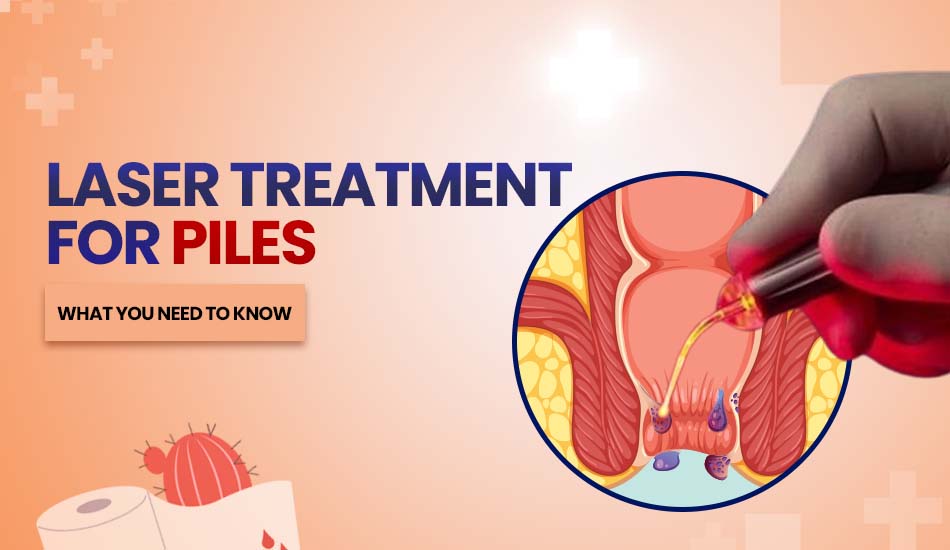
Laser piles surgery (Laser Hemorrhoidoplasty) is a modern procedure that uses focused laser energy to shrink hemorrhoidal tissue by sealing the blood vessels supplying the piles.
Unlike conventional hemorrhoidectomy, laser treatment preserves surrounding healthy tissue, resulting in less trauma, reduced bleeding, and quicker recovery.
Who Needs Laser Surgery for Piles?
Your doctor may recommend laser treatment if you have:
- Grade II hemorrhoids with persistent symptoms.
- Grade III prolapsing piles.
- Selected Grade IV hemorrhoids.
- Recurrent rectal bleeding.
- Chronic pain.
- Failed medical treatment.
- Frequent recurrence.
- Difficulty performing daily activities.
Treatment decisions should always be based on a thorough clinical evaluation.
How Is Laser Piles Surgery Performed?
Step 1 – Clinical Examination
Your surgeon evaluates the grade and severity of hemorrhoids before planning treatment.
Step 2 – Anesthesia
Most procedures are performed under spinal anesthesia or short general anesthesia for patient comfort.
Step 3 – Laser Treatment
A fine laser probe delivers controlled laser energy that shrinks the hemorrhoidal tissue and seals the feeding blood vessels.
Step 4 – Recovery
Patients are usually observed for a few hours before discharge, making laser surgery a commonly performed daycare procedure.
Benefits of Laser Treatment for Piles
Modern laser technology provides several advantages over conventional surgery.
- Minimally invasive procedure.
- Less post-operative pain.
- Minimal bleeding.
- No large surgical cuts.
- Faster wound healing.
- Lower infection risk.
- Short hospital stay.
- Same-day discharge in many cases.
- Earlier return to work.
- Better patient comfort.
| Feature | Laser Treatment |
|---|---|
| Pain | Usually less compared to conventional surgery. |
| Bleeding | Minimal due to laser vessel sealing. |
| Hospital Stay | Mostly daycare procedure. |
| Recovery | Faster return to normal activities. |
| Incisions | No major surgical cuts. |
Recovery After Laser Piles Surgery
Recovery is generally quicker than traditional hemorrhoid surgery.
First 24 Hours
- Mild discomfort.
- Walking is encouraged.
- Drink adequate water.
- Take prescribed pain medications.
First Week
- Resume light daily activities.
- Follow a high-fiber diet.
- Avoid constipation.
- Maintain proper anal hygiene.
2–3 Weeks
Most patients experience significant relief from symptoms, although complete recovery varies according to the severity of the condition and individual healing.
Tips for Faster Recovery
To support healing after surgery:
- Drink plenty of water.
- Eat a fiber-rich diet.
- Avoid straining during bowel movements.
- Walk regularly.
- Avoid prolonged sitting.
- Take medications exactly as prescribed.
- Maintain proper anal hygiene.
- Attend follow-up appointments.
Are There Any Risks?
Laser surgery is generally considered safe when performed by an experienced surgeon. However, possible risks include:
- Temporary pain.
- Mild swelling.
- Minor bleeding.
- Rare infection.
- Recurrence if constipation and lifestyle factors are not managed.
Following your surgeon's advice can significantly reduce these risks.
Why Choose Shri Ram Hospital for Laser Piles Treatment?
Patients trust Shri Ram Hospital because of:
- Experienced laser surgeons.
- Advanced laser technology.
- Daycare laser surgery.
- Personalized treatment plans.
- Modern operation theatres.
- Comprehensive post-operative care.
- Cashless insurance support.
- Multispecialty hospital infrastructure.
How to Prevent Piles from Returning
Healthy lifestyle habits can reduce the chances of recurrence.
- Eat a high-fiber diet.
- Drink 2–3 litres of water daily.
- Exercise regularly.
- Avoid prolonged sitting.
- Maintain a healthy weight.
- Do not delay bowel movements.
- Avoid excessive straining.
Patients looking for long-term relief through piles treatment in Delhi should combine medical treatment with healthy bowel habits and regular follow-up to minimize recurrence.
Frequently Asked Questions (FAQs)
1. Is laser treatment for piles painful?
Laser surgery generally causes less pain than conventional hemorrhoid surgery because it minimizes tissue damage.
2. How long does laser piles surgery take?
The procedure usually takes about 20–30 minutes, depending on the grade and number of hemorrhoids.
3. Can I go home the same day?
Yes. Most laser piles procedures are performed as daycare surgeries, allowing patients to return home on the same day.
4. How soon can I return to work?
Many patients resume office work within 2–5 days, although recovery varies depending on individual healing.
5. Is laser treatment better than traditional surgery?
For appropriately selected patients, laser treatment often provides less pain, minimal bleeding, quicker recovery, and shorter hospital stays than conventional hemorrhoid surgery.