

In the Beginning
Piles, also known as hemorrhoids, affect millions of people worldwide and can cause bleeding, itching, swelling, pain, and discomfort during bowel movements. While traditional treatment methods continue to be effective for certain patients, advances in medical technology have introduced innovative solutions that provide faster recovery, less pain, and improved patient comfort.
The best treatment for piles depends on the severity of symptoms, the grade of hemorrhoids, and the overall health of the patient. Mild cases may respond to lifestyle modifications and medications, while advanced cases may require minimally invasive procedures or surgical intervention.
For individuals seeking modern and effective treatment options, understanding the latest advances can help them make informed decisions about their healthcare journey and long-term recovery.
Understanding Piles And Their Severity
Hemorrhoids develop when veins in the rectum or anus become swollen due to increased pressure. The severity of piles is typically classified into different grades.
| Grade | Description |
|---|---|
| Grade I | Small internal hemorrhoids with occasional bleeding. |
| Grade II | Hemorrhoids that prolapse during bowel movements but return naturally. |
| Grade III | Prolapsed hemorrhoids requiring manual repositioning. |
| Grade IV | Permanently prolapsed hemorrhoids that often require surgical treatment. |
Treatment recommendations vary according to the grade, symptoms, and overall condition of the patient.
Why Choosing The Right Treatment Matters?
Selecting the appropriate treatment at the right stage can significantly improve outcomes, reduce complications, and enhance quality of life.
Modern treatment strategies focus on symptom relief, faster recovery, minimal discomfort, and prevention of recurrence.
Table of Contents
1. Understanding Piles And Their Severity
2. Lifestyle And Dietary Modifications
3. Medical Management
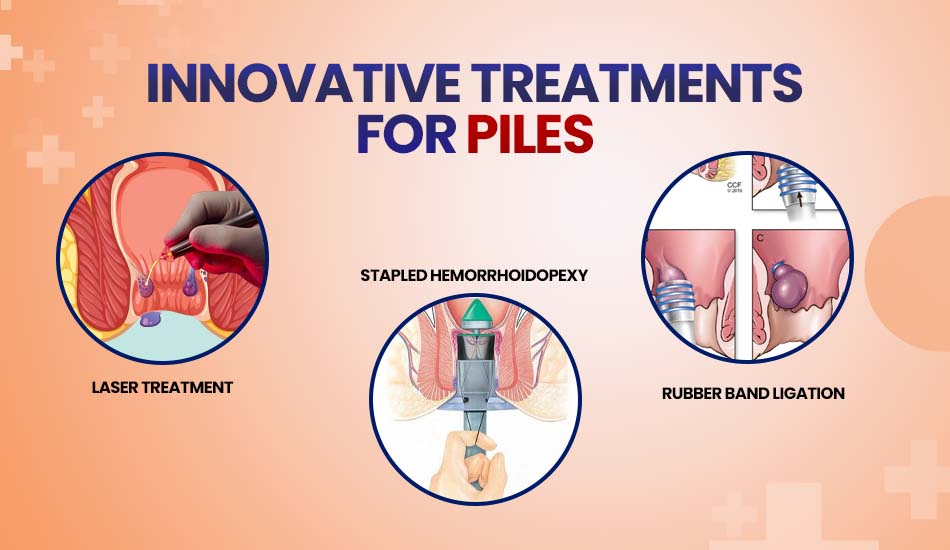
4. Rubber Band Ligation
5. Sclerotherapy
6. Infrared Coagulation
7. Laser Treatment For Piles
8. Advanced Surgical Treatment
9. Comparison Of Modern Treatments
10. When To Consider Laser Treatment
11. Frequently Asked Questions
Treatment Option #1: Lifestyle And Dietary Modifications
For early-stage hemorrhoids, doctors often recommend lifestyle changes before considering procedural treatments.
- High-fiber diet.
- Increased water intake.
- Regular physical activity.
- Avoiding prolonged sitting.
- Managing constipation effectively.
These measures help reduce pressure on rectal veins and may prevent symptom progression.
Treatment Option #2: Medical Management
Medical therapy is commonly used for symptom control in mild to moderate cases.
| Medication Type | Purpose |
|---|---|
| Anti-Inflammatory Medications | Reduce swelling and irritation. |
| Stool Softeners | Reduce straining during bowel movements. |
| Topical Creams | Relieve itching and discomfort. |
| Medicated Suppositories | Support symptom management. |
Medical treatment is often combined with dietary improvements for better outcomes.
Treatment Option #3: Rubber Band Ligation
Rubber band ligation is a minimally invasive procedure used primarily for selected internal hemorrhoids.
A small rubber band is placed around the hemorrhoid to cut off its blood supply, causing it to shrink and eventually fall off.
- Outpatient procedure.
- No major surgery required.
- Effective for selected internal hemorrhoids.
- Short recovery period.
Treatment Option #4: Sclerotherapy
Sclerotherapy involves injecting a specialized solution into hemorrhoidal tissue to shrink swollen veins.
This treatment is commonly recommended for early-stage hemorrhoids and selected patients seeking minimally invasive care.
| Benefit | Advantage |
|---|---|
| Minimal Discomfort | Comfortable treatment experience. |
| Quick Procedure | Short treatment duration. |
| No Major Surgery | Minimally invasive approach. |
Treatment Option #5: Infrared Coagulation
Infrared coagulation uses focused infrared energy to shrink hemorrhoidal tissue and reduce symptoms.
This office-based procedure is commonly used for small hemorrhoids and selected early-stage cases.
- Fast treatment.
- Minimal recovery time.
- No hospital admission required.
- Minimally invasive approach.
Treatment Option #6: Advanced Laser Procedures
One of the most advanced treatment options available today is Laser treatment for piles.
Laser technology uses focused energy to precisely target hemorrhoidal tissue while minimizing damage to surrounding structures.
This approach has become increasingly popular because it combines effectiveness with improved patient comfort.
Benefits Of Laser Treatment
| Benefit | Patient Advantage |
|---|---|
| Minimal Pain | Improved postoperative comfort. |
| Reduced Bleeding | Laser seals blood vessels during treatment. |
| No Major Cuts | Less tissue trauma. |
| Faster Recovery | Earlier return to daily activities. |
| Short Hospital Stay | Often completed as a daycare procedure. |
Treatment Option #7: Advanced Surgical Treatment
For severe, recurrent, or advanced hemorrhoids, surgery may remain the most appropriate treatment option.
| Surgical Procedure | Description |
|---|---|
| Hemorrhoidectomy | Removal of large or advanced hemorrhoids. |
| Stapled Hemorrhoidopexy | Repositions prolapsed hemorrhoids and reduces blood flow. |
These procedures are generally reserved for cases where other treatments are unlikely to provide lasting relief.
Comparison Of Modern Piles Treatments
| Treatment | Best For | Recovery | Invasiveness |
|---|---|---|---|
| Lifestyle Changes | Early piles | Immediate | Non-invasive |
| Medications | Mild symptoms | Quick | Non-invasive |
| Rubber Band Ligation | Internal piles | Few days | Minimally invasive |
| Sclerotherapy | Early-stage piles | Few days | Minimally invasive |
| Infrared Coagulation | Small hemorrhoids | Few days | Minimally invasive |
| Laser Procedure | Moderate to advanced piles | Fast | Minimally invasive |
| Surgery | Severe piles | Longer | Surgical |
When Should You Consider Laser Treatment?
You may be a suitable candidate for laser treatment if:
- Symptoms recur frequently.
- Bleeding persists despite treatment.
- Medications fail to provide lasting relief.
- Hemorrhoids have progressed to Grade III or Grade IV.
- You prefer faster recovery and less postoperative discomfort.
Modern laser procedures continue to gain popularity because of their precision, effectiveness, and recovery advantages.
Why Early Treatment Matters?
Seeking professional piles treatment in Delhi during the early stages can help prevent disease progression and reduce the need for extensive surgery.
| Benefit Of Early Treatment | Outcome |
|---|---|
| Reduced Bleeding | Lower risk of anemia. |
| Improved Comfort | Better quality of life. |
| Fewer Complications | Reduced disease progression. |
| Access To Minimally Invasive Options | Faster recovery. |
Early diagnosis allows patients to explore modern treatment options before symptoms become severe.
A Guide To Choosing The Right Treatment
The best treatment for piles depends on the severity of symptoms, the grade of hemorrhoids, and individual patient needs. While mild cases often improve with dietary changes and medications, advanced hemorrhoids may require procedural treatment. Modern technologies have expanded the range of available options, allowing patients to benefit from safer, more comfortable, and faster recovery-focused solutions.
FAQs
1. What is the latest treatment for piles?
Laser-based procedures are among the most advanced options available because they are minimally invasive and often provide faster recovery.
2. Is laser treatment better than traditional piles surgery?
For suitable patients, laser treatment may offer less pain, reduced bleeding, and quicker recovery compared with conventional surgery.
3. Can piles be treated without surgery?
Yes. Many cases respond to lifestyle modifications, medications, rubber band ligation, sclerotherapy, or infrared coagulation.
4. Which treatment is best for chronic piles?
The most appropriate treatment depends on the grade and severity of hemorrhoids. Advanced cases may require procedural intervention.
5. When should I consult a specialist?
You should seek medical evaluation if symptoms persist, recur frequently, or significantly affect your daily activities and quality of life.