


Best Hospital for Prostate Treatment in Delhi – Expert Care for Enlarged Prostate (BPH)
An enlarged prostate, medically known as Benign Prostatic Hyperplasia (BPH), is one of the most common urological conditions affecting men over the age of 50. As the prostate gland enlarges, it can compress the urethra and interfere with normal urine flow, leading to bothersome urinary symptoms that affect daily life and sleep.
If you are searching for the prostate surgery cost in Delhi, or looking for an experienced prostate specialist doctor in Delhi, choosing a hospital with skilled urologists, advanced diagnostic facilities, and modern surgical technology is essential. At Shri Ram Hospital, our urology team provides comprehensive diagnosis and treatment for enlarged prostate, including medications, minimally invasive procedures, TURP, and advanced laser prostate surgery, based on each patient's individual condition.
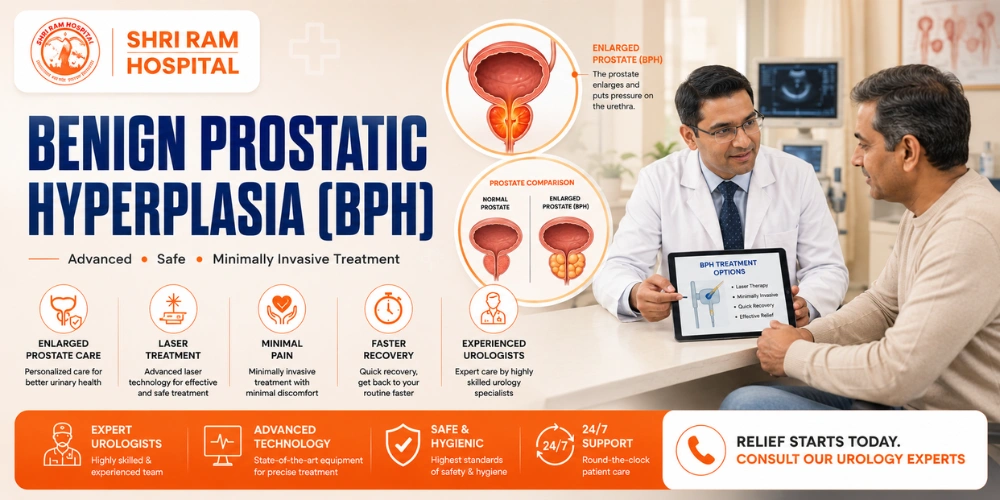
What Is an Enlarged Prostate (BPH)?
The prostate is a small walnut-shaped gland located just below the bladder that surrounds the urethra, the tube responsible for carrying urine out of the body. As men grow older, the prostate gland naturally increases in size. This non-cancerous enlargement is known as Benign Prostatic Hyperplasia (BPH) or an enlarged prostate.
Although BPH is not prostate cancer, it can significantly affect a man's quality of life by obstructing the normal flow of urine. Without timely diagnosis and treatment, an enlarged prostate may lead to urinary retention, recurrent urinary tract infections, bladder stones, or even kidney damage.
Early evaluation by an experienced urologist helps determine the severity of the condition and allows appropriate treatment before serious complications develop.
What Happens When the Prostate Enlarges?
Compression of the Urethra: As the prostate enlarges, it presses against the urethra, making it difficult for urine to flow normally.
Bladder Changes: The bladder muscles work harder to push urine through the narrowed urethra, which may eventually weaken bladder function.
Urinary Symptoms: Patients may experience frequent urination, weak urine flow, difficulty emptying the bladder, and increased nighttime urination.
Reduced Quality of Life: Untreated BPH can interfere with sleep, work, travel, and daily activities because of persistent urinary symptoms.
Symptoms of Enlarged Prostate
The symptoms of Benign Prostatic Hyperplasia (BPH) usually develop gradually and become more noticeable as the prostate continues to enlarge. While some men experience only mild urinary symptoms, others may develop significant bladder obstruction requiring medical or surgical treatment.
Persistent urinary problems should never be ignored and should always be evaluated by a qualified urologist.
Common Symptoms of Enlarged Prostate
Frequent Urination, Especially at Night: Many patients need to urinate several times during the night, which can disturb sleep and reduce quality of life.
Difficulty Starting Urination: Patients may have to wait before urine begins to flow despite feeling the urge to urinate.
Weak Urine Stream: The urine stream becomes slow or weak because the enlarged prostate partially blocks the urethra.
Interrupted Urine Flow: Urination may stop and start several times before the bladder is completely emptied.
Dribbling After Urination: Small amounts of urine may continue to leak after finishing urination.
Feeling That the Bladder Is Not Completely Empty: Many men continue to feel the urge to urinate even after passing urine.
Sudden Urge to Urinate: An urgent need to pass urine may occur with little warning and can sometimes be difficult to control.
Straining While Passing Urine: Extra effort may be required to begin or maintain urine flow.
Urinary Tract Infections (UTIs): Incomplete bladder emptying increases the risk of repeated urinary infections.
Blood in Urine: Some patients may notice blood in the urine due to enlarged prostate-related changes or associated complications.
If urinary symptoms become severe or you are unable to pass urine, seek immediate medical attention as this may require emergency treatment.
Causes and Risk Factors
The exact cause of Benign Prostatic Hyperplasia (BPH) is not completely understood, but hormonal changes associated with aging are believed to play a major role. Several medical conditions and lifestyle factors can also increase the likelihood of developing an enlarged prostate.
Common Causes and Risk Factors
Age Above 50 Years: The risk of prostate enlargement increases significantly after the age of 50 and continues to rise with advancing age.
Family History: Men with close relatives who have experienced BPH may have a higher genetic risk of developing the condition.
Hormonal Changes: Age-related hormonal changes contribute to gradual enlargement of the prostate gland.
Obesity: Excess body weight is associated with hormonal imbalance and increased risk of prostate enlargement.
Diabetes: Men with diabetes are more likely to develop urinary symptoms related to BPH.
High Blood Pressure: Hypertension has been associated with an increased risk of prostate enlargement in many patients.
Lack of Physical Activity: A sedentary lifestyle may contribute to obesity and metabolic disorders that increase the risk of BPH.
Metabolic Syndrome: Conditions such as obesity, diabetes, hypertension, and abnormal cholesterol levels may collectively increase the likelihood of prostate enlargement.
Early diagnosis and treatment can help prevent complications such as urinary retention, bladder stones, recurrent urinary tract infections, and kidney damage.
Diagnosis of Enlarged Prostate
At Shri Ram Hospital, diagnosing an enlarged prostate begins with a detailed medical evaluation performed by an experienced urologist. A combination of clinical examination and advanced diagnostic tests helps determine the severity of prostate enlargement and identify the most appropriate treatment option.
Accurate diagnosis is essential to rule out other urinary conditions, evaluate bladder function, and plan personalized treatment for every patient.
Investigations Used to Diagnose Enlarged Prostate
| Diagnostic Test | Purpose |
|---|---|
| Medical History | Assessment of urinary symptoms, medical history, medications, and overall health. |
| Physical Examination | General clinical examination to evaluate urinary symptoms and associated health conditions. |
| Digital Rectal Examination (DRE) | Allows the urologist to assess the size, shape, and consistency of the prostate gland. |
| Urine Examination | Helps detect urinary tract infections, blood in urine, or other urinary abnormalities. |
| Blood Tests | Evaluate kidney function and overall health before planning treatment. |
| PSA (Prostate-Specific Antigen) | Performed when clinically indicated to help evaluate prostate health and rule out other prostate conditions. |
| Ultrasound | Provides detailed imaging of the prostate, bladder, and urinary tract. |
| Uroflowmetry | Measures the speed and strength of urine flow to assess the degree of urinary obstruction. |
| Post-Void Residual Urine Measurement | Determines the amount of urine remaining in the bladder after urination. |
| Cystoscopy (Selected Cases) | A thin camera is used to examine the urethra and bladder when further evaluation is required. |
These investigations help determine the severity of prostate enlargement, evaluate bladder function, and enable the urologist to recommend the safest and most effective treatment plan for each patient.
Treatment for Enlarged Prostate
The treatment for Benign Prostatic Hyperplasia (BPH) depends on the severity of urinary symptoms, prostate size, overall health, and the impact of the condition on the patient's daily life. At Shri Ram Hospital, every patient undergoes a detailed clinical evaluation before a personalized treatment plan is recommended.
Patients with mild symptoms may benefit from conservative management, while those with moderate to severe urinary obstruction may require medication or surgical intervention for long-term relief.
Lifestyle Modifications
Men with mild prostate enlargement and minimal urinary symptoms may improve their condition by making certain lifestyle changes under medical supervision.
Lifestyle Changes That May Help
Limit Fluids Before Bedtime: Reducing fluid intake in the evening may help decrease frequent nighttime urination (nocturia).
Reduce Caffeine and Alcohol Intake: Caffeine and alcohol may irritate the bladder and increase urinary frequency and urgency.
Regular Physical Activity: Routine exercise helps improve overall health, maintain a healthy weight, and may reduce urinary symptoms.
Bladder Training: Timed voiding and bladder training techniques may help improve bladder control and reduce urinary urgency.
Maintain a Healthy Weight: Weight management helps reduce pressure on the bladder and lowers the risk of worsening urinary symptoms.
Medications
For patients with mild to moderate enlarged prostate symptoms, medications are often the first line of treatment. The type of medicine prescribed depends on prostate size, urinary symptoms, and the patient's overall health.
Benefits of Medical Treatment
Relax the Prostate Muscles: Certain medications help relax the muscles around the prostate and bladder neck, making urination easier.
Reduce Prostate Size: Some medicines gradually shrink the enlarged prostate, reducing urinary obstruction over time.
Improve Urine Flow: Medical therapy can strengthen urine flow and reduce difficulty during urination.
Reduce Urinary Frequency: Medications may decrease frequent urination, urgency, and nighttime urination, improving quality of life.
Medication is effective for many patients; however, it may not provide adequate relief in cases of advanced prostate enlargement or severe urinary obstruction.
When Is Prostate Surgery Needed?
Surgery is usually recommended when medications no longer provide adequate symptom relief or when the enlarged prostate causes significant urinary obstruction or other complications. Early surgical treatment helps prevent permanent bladder damage and protects kidney function.
Common Reasons for Prostate Surgery
| Condition | Reason for Surgery |
|---|---|
| Severe Urinary Obstruction | Difficulty passing urine due to significant blockage caused by the enlarged prostate. |
| Recurrent Urinary Retention | Repeated inability to empty the bladder requiring catheterization. |
| Repeated Urinary Tract Infections | Persistent bladder obstruction increases the risk of recurrent infections. |
| Bladder Stones | Incomplete bladder emptying may lead to stone formation. |
| Blood in Urine | Persistent bleeding related to enlarged prostate may require surgical treatment. |
| Kidney Function Changes | Long-standing urinary obstruction may affect kidney function and require prompt treatment. |
| Failure of Medication | Surgery may be necessary when medicines fail to adequately control urinary symptoms. |
The most appropriate surgical procedure is selected after evaluating the prostate size, severity of symptoms, bladder function, and the patient's overall medical condition.
Types of Prostate Surgery
Several surgical techniques are available for treating Benign Prostatic Hyperplasia (BPH). The choice of procedure depends on prostate size, urinary obstruction, overall health, and the surgeon's clinical assessment.
TURP (Transurethral Resection of the Prostate)
TURP is one of the most established and widely performed surgical procedures for enlarged prostate treatment. During the procedure, excess prostate tissue is removed through the urethra without making any external incisions, improving urine flow and relieving urinary obstruction.
TURP has been successfully performed for many years and remains an effective treatment option for appropriately selected patients.
Laser Prostate Surgery
Laser prostate surgery uses advanced laser technology to remove or vaporize enlarged prostate tissue while minimizing damage to surrounding structures. It has become an increasingly popular minimally invasive treatment option for many patients with BPH.
Benefits of Laser Prostate Surgery
Minimal Bleeding: Laser energy seals blood vessels during surgery, reducing blood loss.
Faster Recovery: Most patients recover more quickly compared to conventional surgery.
Shorter Hospital Stay: Many patients can be discharged earlier depending on their recovery.
Less Postoperative Discomfort: Smaller tissue injury often results in reduced pain and quicker healing.
Improved Urine Flow: Removal of obstructing prostate tissue allows urine to pass more freely and relieves urinary symptoms.
Laser prostate surgery may be particularly beneficial for many eligible patients, including some individuals taking blood-thinning medications, depending on detailed clinical assessment by the treating urologist.
Prostate Surgery Cost in Delhi
One of the most common questions patients ask is about the prostate surgery cost in Delhi. The overall treatment cost varies because every patient has different clinical needs and may require a different surgical approach.
Factors Affecting Prostate Surgery Cost
| Factor | How It Influences the Cost |
|---|---|
| Type of Surgery | TURP and laser prostate surgery involve different techniques and technologies. |
| Size of the Prostate | Larger prostates may require more complex surgical management. |
| Severity of Urinary Obstruction | Advanced obstruction may require additional investigations and specialized treatment. |
| Hospital Stay | The duration of hospitalization varies depending on recovery and the procedure performed. |
| Diagnostic Investigations | Pre-operative tests are essential for accurate surgical planning. |
| Operating Theatre Charges | Advanced surgical facilities and equipment contribute to the treatment package. |
| Surgeon's Expertise | The experience and specialization of the urologist play an important role in treatment quality. |
| Medical Condition of the Patient | Additional medical conditions may require specialized perioperative care. |
| ICU Care (If Required) | Patients requiring intensive monitoring after surgery may incur additional charges. |
A detailed cost estimate is provided after consultation, clinical examination, and diagnostic evaluation.
Factors That Affect Prostate Surgery Cost
Every patient has unique treatment requirements, and therefore the overall cost of prostate surgery may vary. The final treatment package is determined after evaluating the patient's clinical condition and surgical needs.
Additional Factors Influencing Treatment Cost
Pre-operative Investigations: Blood tests, ultrasound, uroflowmetry, and other investigations help ensure safe surgical planning.
Type of Anesthesia: The anesthesia technique used during surgery contributes to the overall treatment cost.
Surgical Equipment: Modern endoscopic and minimally invasive equipment improves precision and patient safety.
Laser Technology Used: Advanced laser systems may influence the overall treatment package for laser prostate surgery.
Hospital Facilities: Modern modular operation theatres and advanced medical infrastructure contribute to comprehensive patient care.
Duration of Hospitalization: The length of hospital stay depends on the patient's recovery and overall health condition.
Medicines: Medications prescribed before and after surgery support recovery and reduce the risk of complications.
Follow-Up Consultations: Regular post-operative visits help monitor healing and ensure long-term urinary health.
Rather than focusing only on price, patients should choose a hospital with experienced urologists, advanced surgical technology, and comprehensive postoperative care to achieve the best long-term treatment outcomes.
Recovery After Prostate Surgery
Recovery after prostate surgery depends on the type of procedure performed, the size of the prostate, the patient's overall health, and any underlying medical conditions. Most patients experience gradual improvement in urinary symptoms as healing progresses, particularly after the urinary catheter is removed.
Following your urologist's postoperative instructions, taking prescribed medications, maintaining good hydration, and attending regular follow-up appointments are essential for achieving the best possible recovery and long-term urinary health.
What to Expect After Prostate Surgery
| Recovery Milestone | Expected Outcome |
|---|---|
| Hospital Stay | The duration of hospitalization depends on the type of surgery performed, the patient's recovery, and overall medical condition. |
| Improved Urine Flow | Most patients notice significant improvement in urine flow after the urinary catheter is removed and healing begins. |
| Return to Daily Activities | Light daily activities can usually be resumed gradually according to the surgeon's advice and the patient's recovery progress. |
| Regular Follow-Up | Scheduled follow-up visits allow the urologist to monitor healing, urinary function, and long-term treatment outcomes. |
| Temporary Urinary Symptoms | Some patients may experience mild burning during urination, urinary urgency, or increased frequency temporarily while the urinary tract heals. |
Drinking adequate fluids, avoiding strenuous physical activity during the initial recovery period, and carefully following all postoperative instructions help promote faster healing and reduce the risk of complications.
Why Choose Shri Ram Hospital?
Patients looking for a prostate specialist doctor in Delhi or the best hospital for prostate treatment in Delhi choose Shri Ram Hospital because of our experienced urology team, advanced surgical technology, and commitment to providing personalized, evidence-based care for every patient.
From comprehensive diagnosis to advanced minimally invasive prostate surgery and long-term follow-up, our multidisciplinary team focuses on improving urinary health while ensuring patient safety, comfort, and faster recovery.
Why Patients Trust Shri Ram Hospital
| Our Expertise | Patient Benefits |
|---|---|
| Experienced Urology Specialists | Highly qualified urologists with extensive experience in diagnosing and treating enlarged prostate (BPH) and other urological disorders. |
| Comprehensive Prostate Evaluation | Advanced clinical assessment and diagnostic investigations help determine the most appropriate treatment plan. |
| Advanced Laser Prostate Surgery | Modern laser technology offers minimally invasive treatment with less bleeding and faster recovery for eligible patients. |
| TURP Surgery | Established endoscopic surgical treatment performed using advanced equipment to improve urine flow without external incisions. |
| Modern Modular Operation Theatres | State-of-the-art operation theatres designed to support safe and precise urological procedures. |
| Advanced Diagnostic Facilities | Comprehensive investigations including ultrasound, uroflowmetry, laboratory tests, and endoscopic evaluation under one roof. |
| Personalized Treatment Plans | Individualized treatment based on prostate size, urinary symptoms, overall health, and patient preferences. |
| ICU and Emergency Support | Advanced critical care facilities available for patients requiring specialized postoperative monitoring. |
| NABH-Standard Quality Care | Strict patient safety protocols and internationally accepted quality standards followed throughout treatment. |
| Comprehensive Post-Operative Follow-Up | Regular follow-up consultations ensure proper healing, monitor urinary function, and support long-term recovery. |
Our goal is to provide safe, evidence-based prostate treatment with advanced technology, compassionate care, and faster recovery so patients can return to a healthier and more comfortable life.
How to Choose the Right Prostate Specialist Doctor in Delhi
Selecting the right prostate specialist doctor in Delhi is essential for receiving an accurate diagnosis, choosing the most appropriate treatment, and achieving the best long-term urinary health outcomes. An experienced urologist can evaluate your condition thoroughly and recommend personalized treatment based on your symptoms and overall health.
Before deciding on treatment, patients should consider the doctor's expertise, available technology, hospital infrastructure, and quality of postoperative care rather than focusing only on treatment costs.
Factors to Consider While Choosing a Prostate Specialist
Experience in Treating Enlarged Prostate (BPH): Choose a urologist with extensive experience in managing benign prostatic hyperplasia and other urinary disorders.
Expertise in TURP and Laser Prostate Surgery: A specialist trained in both conventional and advanced minimally invasive procedures can recommend the most suitable treatment option.
Access to Advanced Diagnostic Technology: Modern investigations such as ultrasound, uroflowmetry, PSA testing, and cystoscopy help ensure accurate diagnosis and treatment planning.
Comprehensive Postoperative Care: Regular follow-up appointments and long-term monitoring are essential for successful recovery and continued urinary health.
Transparent Discussion of Treatment Options: A good urologist explains the advantages, possible risks, expected outcomes, and available alternatives before recommending surgery or medication.
Hospital Infrastructure and Patient Safety Standards: Choosing a hospital with advanced operation theatres, modern equipment, NABH-standard protocols, and emergency support helps ensure safer treatment and better outcomes.
After a detailed clinical evaluation, an experienced urologist will recommend the most appropriate treatment plan based on the size of the prostate, severity of symptoms, bladder function, and your overall health, helping you achieve lasting relief and improved quality of life.
Book an Appointment